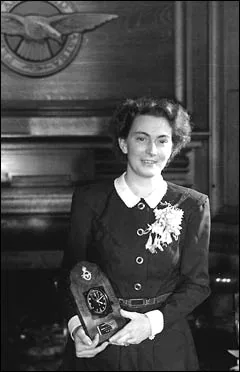
At twenty-four, she walked downed airmen five hundred miles through Nazi territory, crossed the Pyrenees twenty-four times, and saved 118 lives before the Gestapo finally caught her.In August 1941, a tiny young woman walked into the British consulate in Bilbao, Spain, accompanied by three men — two Belgian soldiers and one British serviceman.She told the British diplomats that she had escorted the men all the way from Brussels, through Nazi-occupied Belgium and France, over the Pyrenees mountains, and into Spain.The diplomats didn’t believe her.How could this slight, twenty-four-year-old woman have possibly done such a thing? They suspected she was a German plant — a trap.For three weeks, British officials interrogated her and investigated her story.
Eventually, they confirmed the truth: Andrée de Jongh had done exactly what she claimed. And she wanted to do it again — and again.All she asked for was money to cover expenses and a promise that the British would take care of the men once they reached Spain. She refused any other help or advice. She would run the operation her way.Andrée de Jongh was born in Brussels on November 30, 1916, during the German occupation of World War I. Her father, a schoolteacher, told her stories about Edith Cavell, the British nurse who helped hundreds of Allied soldiers escape before being executed by the Germans. Cavell became Andrée’s hero.When Germany invaded Belgium again on May 10, 1940, twenty-three-year-old Andrée immediately quit her job, moved to Brussels, and began working as a nurse.
She helped wounded British soldiers send letters home, found them safe houses, and arranged false identity papers.By the spring of 1941, she realized that hiding them wasn’t enough — they needed to get back to Britain.She founded what became known as the Comet Line, the most successful escape network of World War II.The journey was extremely dangerous: by train from Brussels to Paris, then overnight to Bayonne, followed by a grueling trek on foot across the Pyrenees. The route involved steep ravines, dense forests, freezing temperatures, and paths guarded by German soldiers, French police, and Spanish border patrols. Andrée wore simple rope-soled canvas shoes. She dressed the airmen as blue-collar workers and gave them walking sticks. They moved at night, guided by Basque smugglers who knew every hidden trail.The mountain crossing alone took eight to ten hours of climbing in darkness. One wrong step could mean capture, torture, and death.Andrée made that journey twenty-four times.She started small — three airmen in October 1941, three more in November, eleven in December.
The pace continued through 1942. Hundreds of ordinary people joined the network: nuns, students, teenagers. Nineteen-year-old Andrée Dumon became the main courier between Brussels and Paris. Volunteers were warned they would likely be arrested within six months. Still, they joined.On January 15, 1943, Andrée was leading three British airmen toward the border when they arrived at a safe house. The Gestapo was waiting.She was arrested and tortured. She admitted to being the leader of the Comet Line, but the Germans refused to believe her. They could not accept that this petite young woman had built and run such a vast operation. They assumed she was protecting a more important man.That disbelief saved her life. Instead of immediate execution, she was sent to Ravensbrück concentration camp and later Mauthausen. She endured two years of starvation, disease, and forced labor.In April 1945, Allied forces liberated the camps.
Andrée survived, though she was desperately ill.After the war, she was awarded the George Medal by Britain, the Medal of Freedom by the United States, and was made a Countess by Belgium in 1985. She later worked in leper hospitals in the Belgian Congo and continued humanitarian work across Africa.In total, the Comet Line helped more than 700 people escape Nazi-occupied Europe.Andrée de Jongh died in Brussels on October 13, 2007, at the age of ninety.She was only twenty-four when she started her extraordinary work — and twenty-four when she first convinced skeptical British officials to trust her. At that same young age, she built a network that saved hundreds of lives.The Germans tortured her, imprisoned her, starved her, and worked her to the brink of death.They never broke her.And even after all that, they still couldn’t quite believe she had done it.