The Street by Ann Petry: How a Harlem Journalist’s Debut Novel Became a Million-Copy Bestseller

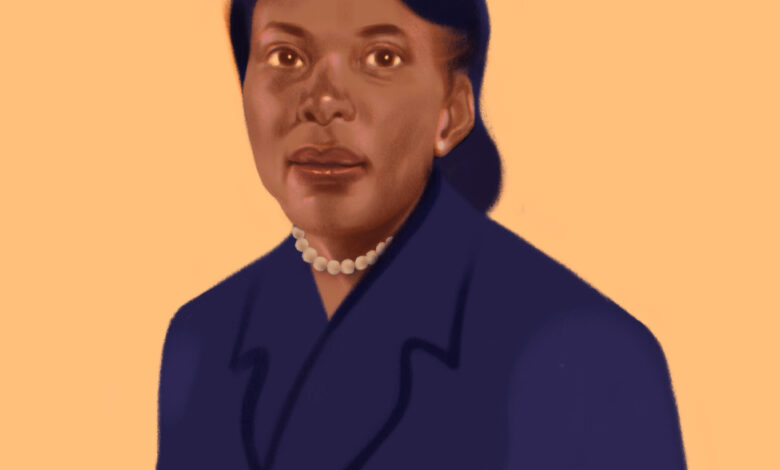
In late January 1946, the Boston publishing house Houghton Mifflin shipped the first hardcover copies of a debut novel by Ann Petry, a thirty-seven-year-old Black journalist. By the end of 1948, that single novel had sold over one million copies in the United States. It was the first novel by a Black American woman to reach that milestone in the recorded commercial history of American publishing.She was born Anna Houston Lane on October 12, 1908, in the small shoreline town of Old Saybrook, Connecticut. The youngest of three daughters, she grew up in one of the few Black families in a town that was, according to the 1910 federal census, ninety-nine percent white. Her father, Peter Clark Lane, owned the town’s main pharmacy on Main Street. Her mother ran a small home-linens business from the same building.
Her aunt, Anna Louise James, was one of the first licensed Black female pharmacists in the United States and ran a pharmacy in Hartford. The family lived in an apartment directly above the drugstore.Despite the classic New England setting, life was not free of racism. When Petry was around ten years old, her father had to write a formal complaint to The Crisis, the NAACP magazine, after a local teacher refused to teach his daughters and niece. Petry herself later wrote about being confronted by a racist on a public beach. From her upbringing, she carried forward the New England values of self-reliance, thrift, and discipline, but eventually distanced herself from the racial constraints of small-town life.At her family’s insistence, she studied pharmacy — a practical choice during the Depression. She graduated from the Connecticut College of Pharmacy around 1931 and spent the next seven years working behind the counter in her father’s and aunt’s pharmacies.In her spare time, she wrote short stories, never telling her family.On February 22, 1938, at age twenty-nine, she married George D. Petry, a Louisiana-born man living in Harlem.
They soon moved to New York City. Ann took a job selling classified ads at the Harlem newspaper The Amsterdam News — the only position they would initially give her. She quickly moved into writing, and within three years became a reporter for The People’s Voice, a newspaper owned by the rising political figure Adam Clayton Powell Jr.Her years as a Harlem journalist exposed her to a harsh urban reality her middle-class Connecticut upbringing had not prepared her for. She saw overcrowded tenements, exploitative rents, high prices, poor schools, and systemic poverty. Beginning in 1944, she took creative writing courses at Columbia University while also working in an after-school program at a Harlem elementary school, where she interacted daily with the children of the families she had been reporting on.In December 1944, she submitted the first five chapters and a synopsis of a novel to a literary contest run by Houghton Mifflin.
The novel centered on Lutie Johnson, a single Black mother trying to raise her eight-year-old son in a 116th Street tenement during World War II. Houghton Mifflin awarded her the literary fellowship and a $2,400 prize — enough to live on for a year — to finish the book. Her husband George was serving overseas in the U.S. Army during much of the writing period.The Street was published in late January 1946.The novel did something groundbreaking. Petry took the hard data she had gathered as a journalist — rent prices, wages, housing conditions, and systemic inequality — and wove them into a powerful, unflinching story of one Black mother’s struggle in Harlem. Unlike many contemporary works, it offered no easy redemption. The system Lutie faced was designed to defeat her, and it did.The Street became a massive commercial success.
The first print run sold out quickly, followed by continuous reprints. By the end of 1948, it had sold over a million copies. Including later paperback editions, total sales reached approximately 1.5 million.Critical acclaim followed. Major newspapers reviewed it positively, and Petry was interviewed widely and sent on a national lecture tour. However, she hated the publicity. In the spring of 1947, at the peak of her success, she left New York City and moved back to Old Saybrook, Connecticut, into a house near the pharmacy where she had grown up. She unlisted her phone number and largely withdrew from public life.She continued writing. In 1947 she published Country Place, set in a small Connecticut town. She wrote children’s books, including
The Drugstore Cat (1949), and in 1953 released what many consider her finest novel, The Narrows. She also published acclaimed biographies for young readers about Harriet Tubman and Tituba of Salem Village. In 1971 she released the short story collection Miss Muriel and Other Stories.None of her later books matched the commercial success of The Street, and by her own account, she preferred it that way.Ann Petry died at her home in Old Saybrook on April 28, 1997, at the age of eighty-eight. The Street remained continuously in print for all fifty-one years after its publication and continues to be in print today.The James Pharmacy building on Main Street in Old Saybrook — the same building where Petry was born — was added to the National Register of Historic Places in 1994, recognizing both her literary legacy and her aunt’s pioneering role as a Black female pharmacist.