“Forged in Pain: Mickey Rourke’s Brutal Journey from Broken Boy to Hollywood’s Most Dangerous Comeback”

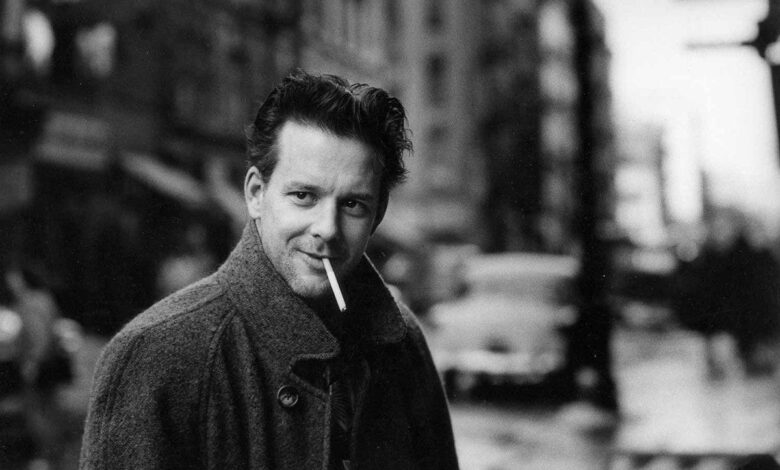
Mickey Rourke’s story is one of relentless survival and raw intensity forged in the fires of a painful childhood.His father abandoned the family when Mickey was only six years old, vanishing without explanation or goodbye. Not long after, his mother remarried. The new stepfather was a large, imposing man — a former Navy veteran and a Miami Beach police officer who enforced strict, often brutal discipline. Years later, Rourke spoke openly about the abuse. His stepfather would crack his head open simply because he felt like it.
He was violently abusive toward Mickey’s mother as well. At just seven years old, Mickey felt powerless to protect her, a rage and helplessness that stayed with him for decades.”It took my whole life to forgive myself for calling him Daddy,” he once said. “I took it out on everyone else and became hard.”At the age of twelve, Mickey discovered a speed punching bag at a local community services center in South Florida. That bag became far more than a piece of equipment to him. “To me, it represented a ticket to manhood,” he recalled later. He began training seriously at the Boys Club of Miami and eventually at the legendary 5th Street Gym in Miami Beach — the same gym where Muhammad Ali had trained. Between 1964 and 1973, he built an impressive amateur boxing record: 27 wins, 17 by knockout, and only 3 losses. At one stage, he achieved 12 consecutive first-round knockouts.The repeated concussions eventually took their toll.
Doctors issued repeated warnings, and reluctantly, he stepped away from the ring.With little money and big dreams, he borrowed four hundred dollars from his sister and moved to New York. He took whatever odd jobs he could find while studying acting. His first audition at the Actors Studio left a lasting impression. Director Elia Kazan described it as the best audition he had seen in thirty years.Rourke brought something authentic and visceral to every role — a dangerous rawness, an unpredictable edge, and an emotional intensity that felt impossible to fake. Throughout the 1980s, he emerged as one of Hollywood’s most electrifying and volatile talents. Films like Diner, Rumble Fish, The Pope of Greenwich Village, 9½ Weeks, Angel Heart, and Barfly showcased a performer who lived on the screen rather than merely acted. Critics and directors alike saw in him a rare, almost primal quality.Yet his personal demons never stayed quiet for long. By the late 1980s, Rourke was turning down major opportunities and gaining a reputation for being extremely difficult to work with. In 1991, at age thirty-eight, he walked away from acting altogether and returned to professional boxing. He earned just two hundred and fifty dollars for his pro debut. He fought eight bouts before retiring in 1994, still chasing the big title fight that never came.
The years in the ring left him with serious facial injuries. He underwent multiple surgeries, including reconstructive work on his nose using cartilage taken from his ear.When he tried to return to acting, the roles were few and far between. The magnetic young star of the 1980s seemed to have faded into obscurity.Then, in 2008, everything changed. Director Darren Aronofsky cast him as Randy “The Ram” Robinson in The Wrestler — an aging, broken-down professional wrestler trying to reclaim some dignity after years of self-destruction. The parallels to Rourke’s own life were unmistakable and deeply moving. His performance was heartbreakingly honest, vulnerable, and powerful. He won a Golden Globe and a BAFTA, and earned an Academy Award nomination for Best Actor.The comeback was genuine, but it carried the weight of everything that had come before it.Mickey Rourke had been fighting his entire life — against the ghost of an absent father, against a violent stepfather, inside the boxing ring, against the Hollywood system, and most of all, against himself.
The same intensity that made him one of the most compelling actors of his generation was never manufactured in a classroom. It came from that seven-year-old boy who watched his mother suffer and could do nothing to stop it. For the next fifty years, he channeled that pain, anger, and unresolved trauma into his work.For anyone who found their own punching bag at exactly the right moment and instantly understood what it meant, for those who recognize that the “raw edge” critics praise almost always comes from real wounds no acting technique can replicate, and for those who know how heavy it is to carry the guilt of a powerless childhood — Mickey Rourke’s journey in The Wrestler feels profoundly personal. That four hundred dollars borrowed from his sister, that unforgettable audition, and every struggle that followed were part of a long, painful path that nearly ended many times before the world finally saw the full depth of what he had survived. The early experiences that shape us often leave scars we never asked for, yet those same scars can become the source of the fire that defines our greatest work.