“The Simple Hawaiian Curiosity That Led to the Biggest Genetic Breakthrough of the 21st Century”

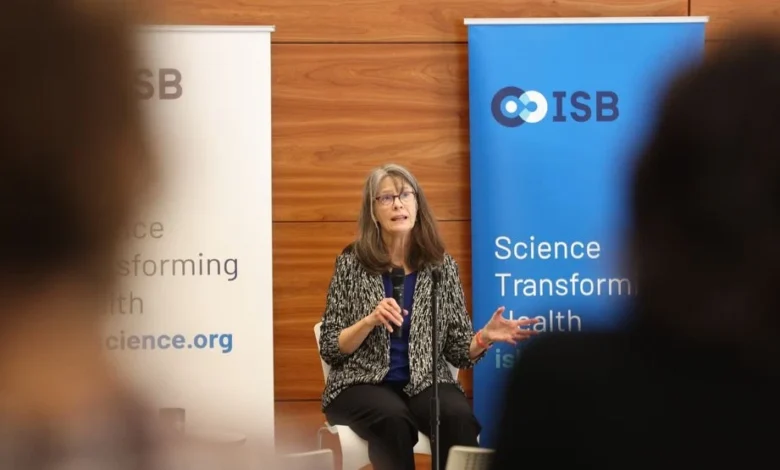
Jennifer Doudna grew up in a small town in Hawaii, surrounded by the breathtaking beauty of nature. As a curious child, she spent much of her time exploring the islands’ unique ecosystems, fascinated by the evolution of native plants and animals that had adapted so perfectly to their environment. Although she didn’t yet understand the concept of DNA, this early wonder about the chemistry of living things planted the seeds for what would become an extraordinary scientific career.During her university years, Doudna first studied chemistry as an undergraduate.
She then moved into biochemistry during graduate school. While pursuing her PhD, she focused intensely on RNA — its complex structure and vital biological functions. This deep expertise in RNA would later prove to be the foundation of her groundbreaking work.In 2012, Doudna teamed up with French scientist Emmanuelle Charpentier. Together, they developed a revolutionary method for high-precision genome editing.
Their discovery was inspired by the sophisticated immune system of bacteria, which protects itself from viruses by cutting viral DNA using a precise molecular tool often described as “genetic scissors.”By extracting and reprogramming these bacterial genetic scissors — known as CRISPR/Cas9 — Doudna and Charpentier transformed a natural defense mechanism into a powerful, programmable tool that could be used to edit DNA with remarkable accuracy in virtually any organism.
Today, CRISPR/Cas9 is transforming the world of science and medicine. It is being used to develop greener and more resilient crops, create new treatments for cancer, and offer hope for curing previously untreatable genetic diseases. The technology has opened up possibilities that were once considered science fiction.In recognition of their pioneering work, Jennifer Doudna and Emmanuelle Charpentier were awarded the 2020 Nobel Prize in Chemistry — one of the highest honors in science.