Daughter of a Russian Aristocrat Dropped Out of Teacher College and Won an Oscar at 60

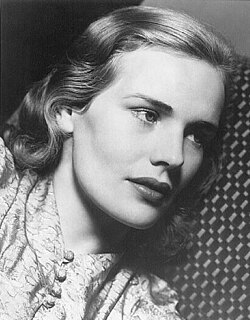
Her father changed the family name so his children could fit in more easily. She spent the next sixty years refusing to fit in anywhere. She won an Oscar at sixty, a Tony Award on Broadway, became a Dame, and started life as the daughter of a Russian aristocrat who enrolled her in teacher training college — only for her to walk out the door and never look back.Her real name was Ilyena Lydia Mironoff.She was just nine years old when her father — a Russian aristocrat whose family had fled the Bolshevik Revolution and settled in working-class England — quietly changed the family surname to something less foreign and more inconspicuous. He hoped it would make life easier for his children in a country that didn’t quite know what to do with them.
That was how Ilyena became Helen Mirren.What happened next was unplanned.At thirteen, she saw a production of Hamlet at a local theater. Her family had no television and rarely went to the cinema. But that night in the theater, something inside her changed forever. The world on stage felt larger, more intense, and more alive than anything she had known. She walked out knowing — not hoping, but truly knowing — that she had to be part of that world.Her parents had other plans. Having survived economic depression, war, and the struggle of rebuilding their lives from almost nothing, they wanted security and stability for their children. Her sister became a teacher, and Helen was enrolled in teacher training college to follow the same path.She left.At eighteen, she auditioned for the National Youth Theatre and was accepted with no formal drama training, no degree, and no connections. She eventually joined the Royal Shakespeare Company on sheer talent alone — one of the most prestigious theater companies in the world.She played Cleopatra.
She played Lady Macbeth. She stood on stages alongside the greatest actors of her generation and proved she belonged there.Yet the industry barely noticed.For two decades, even critics who praised her performances often seemed surprised that someone who looked like her could act with such depth and power. The roles available to women in the 1970s and 80s were limited, focused more on youth and appearance than on the complex, demanding work she was capable of delivering.In her mid-twenties, she fell into a deep depression, unsure whether she had made the right choice by leaving teacher training college.Then, in a rundown neighborhood, a palm reader told her that her greatest success would not come until her late forties. She held onto those words.She kept working — through unworthy roles, through reviews that focused on her looks instead of her craft, and through years when the industry consistently underestimated her.
Then came 1991.Prime Suspect premiered on British television. Helen Mirren played Detective Chief Inspector Jane Tennison — a brilliant, flawed, and uncompromising woman battling both criminals and the deeply sexist institutions around her. It was groundbreaking. Tennison was difficult, driven, and fully human. The performance was raw, precise, and fearless.The awards poured in: BAFTAs, Emmys, and widespread critical acclaim. She was in her mid-forties. The palm reader had been right.Fifteen years later, she delivered another iconic performance as Queen Elizabeth II in The Queen. She didn’t imitate the monarch — she revealed the human being beneath the crown, the private grief behind the public composure.
The performance was so authentic it felt almost invasive.In 2007, at the age of sixty, Helen Mirren won the Academy Award for Best Actress.Some actors peak in their thirties. Some in their forties. Helen Mirren won her Oscar at sixty — after six decades of dedication, after battling depression and years of being undervalued.She hasn’t stopped since. Catherine the Great. Alma Hitchcock. A Tony Award on Broadway. Dame Commander of the British Empire. Her roles continue to grow in range and ambition long after most careers wind down.Helen Mirren’s story shows something powerful:Her father changed the family name so she could fit in. Instead, she built a career defined by refusing to fade into the background. She demanded to be seen fully — for her talent, her strength, and her depth.The palm reader in that rundown neighborhood gave her something to believe in during the hardest years. She believed. She held on. And she kept going long after others would have quit.Ilyena Mironoff — daughter of a man who changed his name so his children could fit in — grew up to prove that fitting in was never the point.She never waited for permission.