The popular narrative often portrays Henrietta King as being in day-to-day operational command of the King Ranch. The historical record shows something more precise: she held ownership and ultimate authority, while her son-in-law managed daily operations.In August 1901, the Brownsville Daily Herald reported that Mrs. King took no active part in the management of her estate, and that Robert J. Kleberg had been in complete charge of every detail for the previous twelve or fourteen years. Henrietta retained final authority.
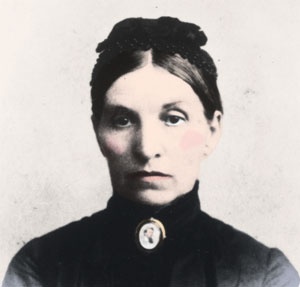
The daily decisions belonged to Kleberg.Henrietta Maria Morse Chamberlain was born on July 21, 1832, in Boonville, Missouri. Her father, Reverend Hiram Chamberlain, was a Presbyterian minister. In 1849, she moved with her family to Brownsville, Texas. There she met steamboat captain Richard King after he tried to dock his boat where her family’s houseboat was moored. He swore at her family. Despite the rocky start, they married on December 10, 1854.They had five children and built the Santa Gertrudis Ranch on land Richard King had begun acquiring in 1853. Richard King died of stomach cancer on April 14, 1885, at the Menger Hotel in San Antonio, at the age of sixty. Henrietta was widowed at fifty-two.She inherited an estate of roughly 500,000 acres of South Texas ranchland—and approximately $500,000 in debt.While popular accounts place Henrietta in operational command for the next forty years, the contemporaneous record tells a more nuanced story.Richard King’s attorney had been a young lawyer named Robert Justus Kleberg, born December 5, 1853, in DeWitt County, Texas. Kleberg first caught King’s attention as opposing counsel in one of the ranch’s many lawsuits. King later hired him to handle the ranch’s legal affairs. After Richard’s death, Henrietta retained Kleberg to manage the ranch.On June 17, 1886—about a year after Richard King’s death—Robert Kleberg married Henrietta and Richard’s youngest daughter, Alice Gertrudis King, becoming Henrietta’s son-in-law.The Brownsville Daily Herald reported in 1901 that Mrs. King took no active role in management, with Robert J. Kleberg holding complete operational control for over a decade. Frank Goodwyn, who wrote a first-hand history of the ranch, made similar observations.A clear understanding of the King Ranch’s achievements in the late 19th and early 20th centuries requires distinguishing between Henrietta’s contributions and Robert Kleberg’s.Kleberg paid off the entire $500,000 inherited debt within roughly a decade. In the summer of 1899, he drilled the first successful artesian well in South Texas after multiple failures.
He led the adoption of barbed-wire fencing, directed cattle-tick eradication programs, and oversaw early cattle-breeding experiments.The famous Santa Gertrudis breed—the ranch’s most significant innovation—was developed primarily by Robert Kleberg’s son (and Henrietta’s grandson), Robert Justus Kleberg Jr., born in 1896. The breed was officially recognized by the U.S. Department of Agriculture in 1940, fifteen years after Henrietta’s death.Henrietta King’s actual role was substantial and clearly defined: she held ownership and ultimate authority for forty years of widowhood, made major strategic decisions regarding land, supervised housing and education programs for the Kineños (the multi-generational Mexican-American vaquero community on the ranch), and directed significant philanthropic efforts in Kingsville and across South Texas.Her philanthropy was both visionary and practical. She personally helped found the town of Kingsville in 1904 in conjunction with the St. Louis, Brownsville and Mexico Railway. She donated land and funds for the First Presbyterian Church and lots for Baptist, Methodist, Episcopal, and Catholic churches.
She built and donated the public high school, supported the founding of what is now Texas A&M University-Kingsville, and funded the Spohn Sanitarium and the Texas-Mexican Industrial Institute. She also invested in local companies including the Kingsville Ice and Milling Company, Kingsville Publishing Company, Kingsville Power Company, and others.The Kineños called her La Patrona. The more romantic title La Reina (“The Queen”) came later.Henrietta King died at the King Ranch on March 31, 1925, at the age of ninety-two. By then the ranch had grown to approximately 1.173 million acres.
She was one of the wealthiest women in the world.Her funeral featured an honor guard of two hundred Kineños on horseback at the Kingsville Cemetery. Each rider cantered once around the open grave, hat held at his side. Some had ridden for two days across the ranch to be there.That honor guard reflected a deep, multigenerational relationship between the King-Kleberg family and the Kineños, who lived and worked on the ranch for generations. Henrietta’s specific role with them was as supervisor of housing and education—she had learned Spanish to teach the children. The relationship was both protective and paternalistic.After her death, the ranch was divided among her heirs. Her daughter Alice and son-in-law Robert Kleberg retained more than 800,000
Compose
Shkruaj te Esat Esat