$20,000 Fixer-Upper in Kirksville, Missouri: A Gutted 3-Bedroom Home Ready for a Complete Redesign

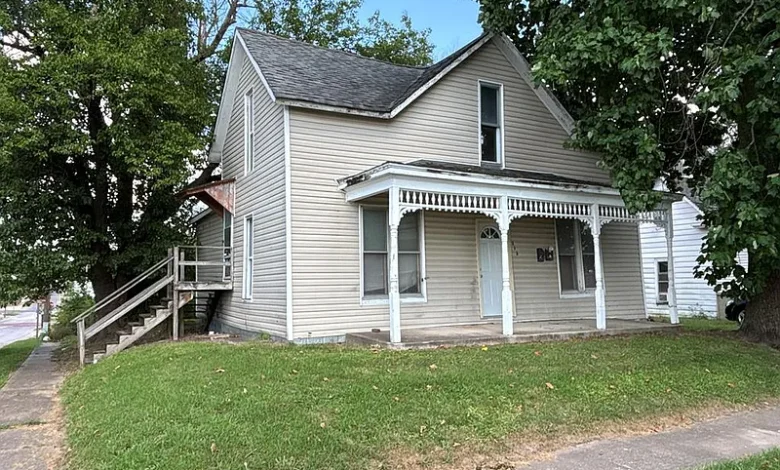
For buyers searching for an extremely affordable fixer-upper, renovation project, or investment property in Missouri, 616 N Elson St, Kirksville, MO 63501 is a real estate listing that immediately stands out because of its unusually low asking price.
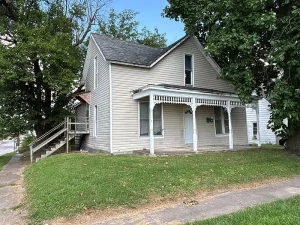
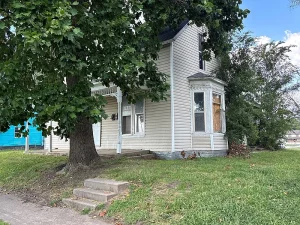
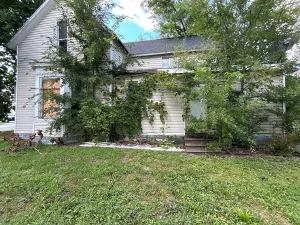
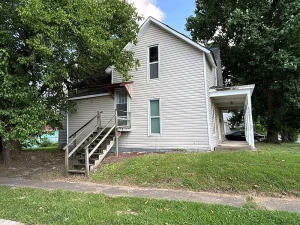
Listed for $20,000, this historic single-family residence offers approximately 1,468 square feet of living space, three bedrooms, two bathrooms, and a 7,236-square-foot corner lot. Built in 1920, the one-and-a-half-story house has been completely gutted and is being offered as an “As-Is, Where-Is” property.
That distinction is important. This is not a conventional move-in-ready home requiring a few cosmetic improvements. Instead, the property represents an opportunity to start with an existing structure and create a substantially new interior design.
For experienced renovators, contractors, real estate investors, or buyers who have been searching for a low-cost project, the property may be worth investigating. At the same time, its unfinished condition means prospective buyers should carefully evaluate construction costs, permits, utilities, structural condition, financing, insurance, and local property values before making an offer.
Here is a closer look at this $20,000 Kirksville property and the possibilities—and challenges—that come with purchasing a gutted century-old home.
Property Overview: 616 N Elson St, Kirksville, MO
The property is located at 616 N Elson St in Kirksville, Missouri 63501 and was placed on the market on September 16, 2026.
According to the listing information, the major property details include:
Asking Price: $20,000
Property Type: Single-Family Residence
Bedrooms: 3
Bathrooms: 2 full bathrooms
Living Area: 1,468 square feet
Lot Size: 7,236 square feet
Lot Dimensions: Approximately 67 x 108 feet
Year Built: 1920
Stories: One and one-half
Price Per Square Foot: Approximately $14
Roof: Asphalt
Exterior: Vinyl siding
Foundation/Basement: Crawl space
Garage: None
Heating: None
Cooling: None
Water: Public
Sewer: Public sewer
HOA: None
Subdivision: Wilsons
Road Surface: Paved
Reported Tax Assessed Value: $58,100
Reported Annual Property Tax: $591
The listing’s defining feature is that the interior has already been completely gutted, creating a blank canvas for a future renovation.
Why This $20,000 Missouri Home Is Getting Attention
A single-family home listed for $20,000 naturally attracts attention in today’s real estate market.
At approximately $14 per square foot, the asking price is far below what buyers typically associate with completed residential properties. However, the low purchase price needs to be considered alongside the substantial work required to make the house functional and habitable.
The listing specifically describes the home as having been completely gutted.
For the right buyer, that can actually be an advantage.
Renovating an older property often involves spending significant time and money removing outdated materials before reconstruction can begin. With a gutted house, much of that demolition may already have occurred.
On the other hand, a gutted property generally requires significant investment before it can become a finished residence.
The $20,000 price should therefore be considered the starting point of the project rather than the final cost of acquiring a usable home.
A 1920 Home With More Than a Century of History
Constructed in 1920, this Kirksville residence is more than 100 years old.
Homes from this period can offer architectural character that is difficult to reproduce in newer construction. Their proportions, porches, windows, rooflines, and traditional designs can make them attractive renovation candidates.
But age also creates important considerations.
A century-old property may have experienced multiple renovations, repairs, modifications, and periods of deferred maintenance. Even after the interior has been removed, buyers should investigate the condition of the remaining structural components.
That includes framing, floor systems, roof structure, crawl space, foundation components, exterior siding, windows, drainage, and other elements.
Older does not automatically mean structurally unsound, just as an attractive exterior does not guarantee that everything underneath is in good condition.
A professional evaluation can help determine exactly what remains usable.
1,468 Square Feet Offers Room for a Creative Renovation
With approximately 1,468 square feet of interior living area, this property provides substantially more space than many inexpensive fixer-uppers.
The advertised configuration includes three bedrooms and two full bathrooms.
Because the interior has been gutted, a buyer may have greater flexibility when planning the future interior than would normally be possible in a completed home.
Depending on structural walls, plumbing locations, electrical requirements, local codes, permits, and budget, the renovation could potentially emphasize an efficient modern floor plan while preserving the traditional exterior character.
The existing square footage could accommodate bedrooms, bathrooms, living areas, a kitchen, storage, and other essential residential spaces.
Exactly how those areas should be arranged would require professional planning based on the actual structure.
Three Bedrooms Could Provide Flexible Living Space
Three bedrooms can make a property useful for many different household configurations.
A future owner could potentially maintain the three-bedroom layout or investigate whether a different configuration better suits the building.
Bedrooms can also provide flexibility beyond sleeping space. A secondary bedroom might function as a home office, guest room, hobby room, children’s room, or multipurpose space.
For an investor considering future resale or rental use, bedroom configuration can also influence the property’s potential market.
However, buyers should verify what is legally permitted and what improvements would be required for rooms to qualify as bedrooms under applicable building and housing standards.
Two Full Bathrooms
The listing identifies the property as having two full bathrooms.
For a 1,468-square-foot, three-bedroom house, two bathrooms could provide a practical layout after renovation.
Because the property is gutted, reconstruction may provide an opportunity to install new plumbing fixtures, flooring, wall finishes, lighting, ventilation, vanities, showers, tubs, and other bathroom components.
Plumbing layout can significantly influence renovation expenses.
Moving drains and supply lines can cost considerably more than rebuilding bathrooms around existing plumbing locations. Buyers should therefore investigate the current plumbing infrastructure before deciding on a final floor plan.
A Corner Lot With 7,236 Square Feet
One of the highlighted characteristics of 616 N Elson St is its corner lot.
The parcel contains approximately 7,236 square feet, with reported dimensions of roughly 67 feet by 108 feet.
Corner lots can offer greater street exposure and a different sense of openness compared with lots surrounded by neighboring properties on both sides.
The available outdoor space may also provide opportunities for landscaping, gardens, recreational areas, outdoor seating, or other improvements.
Any plans for fences, driveways, garages, sheds, additions, or other structures should first be checked against local zoning rules, setbacks, utility easements, and permitting requirements.
Front Porch Adds Traditional Character
The property includes a front porch, an architectural element commonly associated with traditional American homes from this period.
A renovated porch could become an important part of the home’s curb appeal.
Depending on its current condition, improvements could potentially involve structural repairs, decking, railings, steps, paint, lighting, or other details.
Exterior improvements are especially relevant for renovation projects because the exterior creates the first impression for future occupants, renters, or buyers.
A well-maintained porch combined with refreshed siding, landscaping, and clean exterior details can dramatically change how an older home presents itself.
Vinyl Siding and Asphalt Roofing
According to the listing, the exterior uses vinyl siding, while the roof material is asphalt.
Both components should be inspected rather than judged solely by appearance.
Buyers should determine the approximate age and condition of the roof, whether there are signs of leaks or moisture intrusion, and whether flashing and drainage systems are functioning properly.
The siding should also be examined for damage and for any evidence of moisture issues behind exterior materials.
Because the property is already undergoing major renovation, addressing exterior deficiencies during construction may be more efficient than postponing them.
No Heating or Cooling System
One of the most important facts about this house is that the listing identifies no existing heating system and no cooling system.
That means a renovation budget may need to include installation of an appropriate HVAC solution.
Heating is particularly important in Missouri, where winter temperatures can make an adequate heating system essential for occupancy.
A buyer may investigate several possible systems depending on the structure and local requirements.
Options might include a conventional forced-air HVAC system, ductless mini-split equipment, heat pumps, or another appropriate solution.
The best option would depend on installation costs, energy efficiency, electrical capacity, insulation, layout, climate considerations, and applicable building codes.
No Water Heater or Appliances Included
The listing states that there are no included appliances and no water heater.
This reinforces the fact that buyers are dealing with a renovation project rather than a finished residence.
A complete reconstruction budget may need to include a water heater, refrigerator, range, dishwasher if desired, ventilation equipment, washer and dryer arrangements, and other household equipment.
The listing also reports no current laundry hookup.
If laundry facilities are part of the renovation plan, plumbing, electrical connections, drainage, ventilation, and appropriate space may need to be created.
These expenses can appear relatively small individually, but they add up quickly when renovating an entire house.
Public Water and Public Sewer
An important feature in the listing is the availability of public water and public sewer.
For a renovation property, understanding utility connections is critical.
Buyers should still verify the condition of existing water and sewer lines, determine whether services are currently active, and investigate whether any repairs or connection work will be required.
The property information also notes that cable service is available.
Gas is listed as none.
A future owner planning mechanical systems should account for the available utilities when deciding how the house will be heated, how water will be heated, and what type of kitchen appliances will be installed.
No Garage
The property does not include a garage.
Depending on the buyer, that may or may not matter.
Some homeowners prioritize enclosed parking and storage, while others are comfortable with outdoor parking.
Anyone considering constructing a garage, carport, or other accessory structure should verify whether the lot has sufficient buildable space and whether local zoning regulations permit the proposed structure.
Construction costs should also be included in the overall renovation budget.
No HOA
The property is listed as having no homeowners association.
This means there is no HOA fee identified in the listing.
For buyers attempting to minimize recurring ownership expenses, the absence of monthly or annual HOA dues may be appealing.
However, having no HOA does not mean there are no restrictions on what can be done with the property.
Municipal building codes, zoning rules, safety requirements, permits, and potentially other recorded restrictions can still apply.
Understanding the $14 Per Square Foot Price
At $20,000 for approximately 1,468 square feet, the advertised price works out to roughly $14 per square foot.
That number is eye-catching, but it requires context.
Price-per-square-foot comparisons work best when comparing properties of similar size, condition, age, and location.
A gutted house requiring extensive reconstruction cannot reasonably be compared dollar-for-dollar with a fully renovated property simply because they have similar square footage.
The future value of the property would depend on the quality and cost of the renovation as well as the local real estate market.
Before investing, buyers may want to research recent sales of both distressed properties and renovated homes in the surrounding area.
Reported Tax Assessed Value of $58,100
Another interesting number in the listing is the reported tax assessed value of $58,100.
That figure is considerably higher than the current $20,000 asking price.
However, a tax assessment should not be confused with current market value.
Tax assessments are used for taxation purposes and may be calculated using methods and schedules that differ from current real estate transactions.
The home’s unfinished condition can also significantly affect what buyers are willing to pay.
Prospective buyers should therefore avoid assuming that the difference between the $20,000 asking price and $58,100 assessment automatically represents instant equity.
Current comparable sales and the property’s actual condition provide much more useful context.
Annual Property Taxes Reported at $591
The listing reports annual property taxes of approximately $591.
That number may appear relatively low compared with more expensive homes, but buyers should independently verify current taxes.
Future property taxes could potentially change after a sale, reassessment, or major renovation.
Anyone creating an investment budget should use verified tax information rather than assuming historical tax expenses will remain unchanged indefinitely.
What Does “As-Is, Where-Is” Mean for Buyers?
The house is explicitly being sold “As-Is, Where-Is.”
In practical terms, buyers should approach the transaction expecting the property in its current condition rather than assuming the seller will complete repairs or upgrades before closing.
The precise legal implications can vary, so buyers should review the purchase agreement and seek appropriate professional guidance.
For a renovation property, inspections and due diligence remain extremely important.
An inexpensive purchase can become significantly more expensive if major structural or utility problems are discovered after closing.
How Much Could a Complete Renovation Cost?
There is no responsible way to determine the total renovation cost from listing information alone.
A gutted 1,468-square-foot house could require work involving framing, roofing, insulation, electrical wiring, plumbing, HVAC, drywall, flooring, doors, windows, kitchen cabinets, countertops, bathroom fixtures, appliances, lighting, painting, trim, exterior repairs, and landscaping.
Labor costs can also vary considerably.
The project’s true economics therefore depend much more on contractor estimates and the building’s condition than on the $20,000 acquisition price alone.
A useful calculation for investors is:
Purchase Price + Closing Costs + Inspection Costs + Renovation + Permits + Financing + Taxes + Insurance + Contingency = Total Project Cost
Only after estimating the total project cost does it become meaningful to compare the project with potential resale or rental values.
A Property That Could Appeal to DIY Renovators
Experienced DIY renovators may find a gutted property particularly interesting because it provides an opportunity to participate in many aspects of reconstruction.
However, not every job is appropriate for DIY work.
Structural modifications, electrical systems, plumbing, HVAC installation, and other regulated work may require licensed professionals and permits.
Buyers should determine what they are legally permitted and technically capable of completing themselves.
Saving money on labor can be valuable, but improperly completed work can create safety issues and potentially reduce the property’s value.
Potential Investment Strategies
Investors evaluating 616 N Elson St could potentially consider several strategies after researching the local market.
One approach would be renovating the property for resale. Under this strategy, the investor would estimate the property’s after-repair value, subtract renovation and transaction costs, and determine whether an acceptable margin remains.
Another possibility is renovating it as a long-term rental property.
That strategy requires researching realistic local rents and comparing them against taxes, insurance, maintenance, vacancy, property management, financing, and capital expenses.
A third possibility is renovating the house for personal use.
For an owner-occupant who enjoys restoration projects, the goal may be less about short-term profit and more about creating a customized home at a manageable overall cost.
Financing a Gutted Property Can Be Different
Buyers should not assume that financing a $20,000 unfinished property works exactly like obtaining a conventional mortgage for a move-in-ready home.
Property condition can influence whether a lender is willing to finance a transaction.
Some buyers of very inexpensive fixer-uppers use cash, while others investigate renovation-oriented financing or other lending options.
Availability and eligibility vary considerably.
Anyone interested in financing the purchase should speak directly with qualified lenders before making assumptions about monthly payments or loan approval.
Important Inspections Before Purchasing
Because the home dates to 1920 and has been gutted, professional evaluation can be especially valuable.
Potential buyers may want to investigate the foundation and crawl space, framing, roof, drainage, electrical infrastructure, plumbing, water and sewer connections, windows, exterior siding, moisture damage, pest activity, and overall structural integrity.
Older properties can also involve building materials or construction practices that require specialized evaluation.
The exact inspections needed should be determined based on the property’s condition and professional recommendations.
Is This $20,000 Kirksville House Worth Exploring?
For someone looking specifically for a finished, move-in-ready house, this property clearly presents substantial additional work.
For someone searching for a renovation opportunity, however, the situation is different.
The $20,000 asking price, 1,468 square feet, three-bedroom and two-bathroom configuration, corner lot, and already-gutted interior create an unusual starting point for a project.
The question is not simply whether $20,000 sounds inexpensive.
The more important question is what the property will cost after everything required to make it safe, functional, attractive, and legally habitable has been completed.
That is the number buyers should compare with local property values.
Final Thoughts on 616 N Elson St
At $20,000, 616 N Elson St in Kirksville, Missouri is likely to capture the attention of bargain-home hunters, contractors, DIY enthusiasts, and investors looking for properties with substantial renovation potential.
The century-old home offers approximately 1,468 square feet, three bedrooms, two bathrooms, a front porch, and a 7,236-square-foot corner lot.
Its interior has already been gutted, potentially allowing a future owner to redesign significant portions of the house from the ground up.
But this flexibility comes with responsibility and expense.
There is currently no heating or cooling system listed, no water heater, no appliances, no garage, and no laundry hookup. The property is being sold As-Is, Where-Is, making careful inspection and realistic budgeting especially important.
A buyer should verify structural condition, utility systems, permitting requirements, property taxes, insurance availability, financing options, renovation estimates, zoning restrictions, and comparable local sales before making a financial commitment.
For the right person, this could be an opportunity to transform a 1920 structure into a dramatically updated residence. For another buyer, the scope of reconstruction may be more extensive than desired.
Either way, this property is a good example of why the lowest-priced real estate listings often require the most careful analysis. The $20,000 purchase price tells only one part of the story; the condition of the structure, total renovation budget, and eventual value of the completed property are equally important.