Historic Four-Unit Investment Property in Rochester, NY – 33 Kenwood Avenue Listed for $199,000
Discover a Unique Multifamily Real Estate Opportunity in Rochester, New York
Located at 33 Kenwood Avenue, Rochester, NY 14611, this historic four-unit multifamily property presents an interesting opportunity for real estate investors, rental property owners, and buyers interested in combining residential ownership with potential rental income.
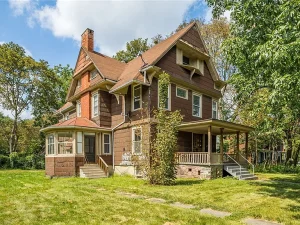
Listed for $199,000, the property offers approximately 4,857 square feet of interior living space, five bedrooms, four full bathrooms, and four separate residential apartments. Originally constructed in 1900, the building combines architectural details from the early twentieth century with practical features that may appeal to modern rental property owners.
Situated in Rochester’s established 19th Ward neighborhood, this quadruplex offers an opportunity to acquire multiple rental units within a single building. Its combination of historic character, existing rental income, separate utilities, and off-street parking makes it worth examining for buyers considering long-term real estate investments.
The property also offers an additional possibility: a neighboring four-unit building at 45 Kenwood Avenue is being marketed separately, with a reported combined asking price of $404,000 for both properties.
For investors looking to build a rental portfolio, evaluate multifamily financing, or explore opportunities in the Rochester housing market, 33 Kenwood Avenue provides several important features to consider.
Property Overview: Key Details and Features
Before examining the property’s investment potential, it is helpful to review the main information provided in the real estate listing.
| Property Detail | Information |
|---|---|
| Address | 33 Kenwood Ave, Rochester, NY 14611 |
| Asking Price | $199,000 |
| Property Type | Quadruplex / Multifamily |
| Residential Units | 4 |
| Bedrooms | 5 total |
| Bathrooms | 4 full |
| Interior Living Area | 4,857 sq. ft. |
| Year Built | 1900 |
| Lot Size | 0.36 acres |
| Price per Square Foot | Approximately $41 |
| Garage | Two-car garage |
| Heating | Gas, forced air |
| Basement | Full basement |
| Annual Property Taxes | $5,556 |
| Tax Assessed Value | $205,000 |
| Listing Date | August 31, 2026 |
| MLS Number | R1705754 |
These characteristics distinguish the property from a typical single-family residence. Rather than relying on one household or one rental agreement, a four-unit property can potentially generate income from several separate apartments.
However, purchasing a multifamily building also introduces responsibilities involving tenant management, maintenance, insurance, financing, and compliance with local rental housing requirements.
Understanding these factors is essential before making a purchase decision.
Historic Architecture and Original Interior Character
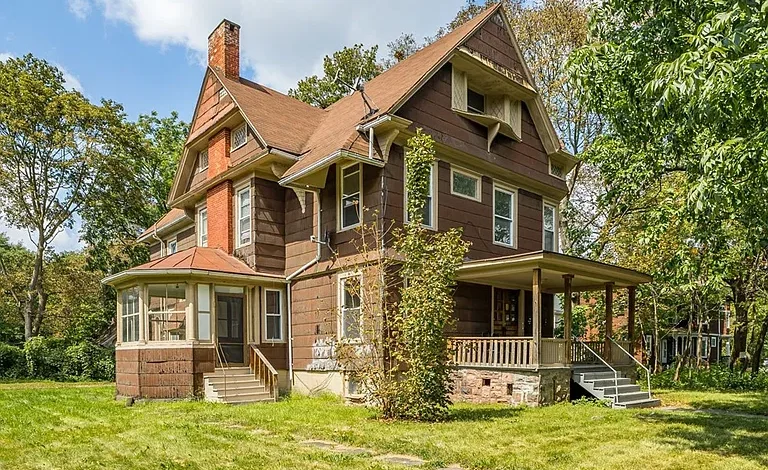
One of the most notable aspects of 33 Kenwood Avenue is its historic architectural character.
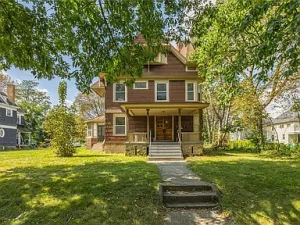
Built in 1900, the property reflects a period when residential buildings frequently featured decorative woodwork, distinctive windows, substantial entryways, and detailed interior finishes.
According to the listing, the building retains several architectural elements that contribute to its appearance and personality.
These include high beamed ceilings, stained glass windows, original pocket doors, hardwood flooring, decorative fireplaces, and a grand foyer featuring an attractive staircase.
Such details can be difficult or expensive to reproduce in modern construction.
The stained glass and leaded glass windows, for example, provide a visual feature that can distinguish the property from more conventional apartment buildings.
Original pocket doors offer another interesting design element. Unlike traditional swinging doors, pocket doors slide into the wall, potentially helping separate interior spaces while preserving usable floor area.
Hardwood flooring contributes to the property’s classic appearance and may offer durability when properly
The listing also mentions vintage ceramic tile bathrooms, adding to the building’s historical identity.
Although these original features may be appealing, buyers should carefully evaluate their condition. Historic architectural elements sometimes require specialized restoration, particularly when repairs involve original woodwork, older windows, or decorative finishes.
A professional inspection can help determine which features are in good condition and which may require future investment.
Four Separate Apartments With Rental Income Potential
The property’s four-unit configuration is one of its primary investment characteristics.
A quadruplex contains four residential units within one property, allowing an owner to potentially collect rent from several households.
At 33 Kenwood Avenue, the listing identifies four separate apartments and states that the building has separate utilities.
This arrangement may simplify certain aspects of property management, depending on how the individual utility systems and accounts are configured.
The listing provides the following monthly rental figures:
| Apartment | Reported Monthly Rent |
|---|---|
| Unit 1 | $725 |
| Unit 2 | $700 |
| Unit 3 | $675 |
| Unit 4 | Vacant; previously rented for $900 |
| Potential Monthly Total | $3,000 |
The three reported occupied-unit rents total $2,100 per month.
f the vacant apartment were rented again for its previous monthly rate of $900, the property’s potential gross scheduled rental income would reach approximately $3,000 per month.
That would represent approximately $36,000 annually before operating expenses, vacancies, repairs, taxes, insurance, financing, and other ownership costs.
It is important to distinguish between existing income and potential income. The vacant apartment is not currently generating the previously reported $900 monthly rent.
Additionally, rental figures should be verified through current lease agreements, payment histories, and property management records.
For prospective investors, reviewing the rent roll and confirming actual collections should be an essential part of the due diligence process.
Understanding the Potential Rental Income and Gross Yield
Multifamily investors often begin their financial analysis by comparing the property’s purchase price with its potential rental revenue.
At an asking price of $199,000 and a potential annual gross rental income of $36,000, 33 Kenwood Avenue presents an interesting starting point for evaluating rental returns.
The calculation is straightforward:
Potential Annual Gross Rental Income: $36,000
Asking Price: $199,000
Potential Gross Rental Yield: Approximately 18.1%
This figure is a gross yield calculation, not an estimate of actual investment profit.
It does not account for the many expenses involved in owning and operating an apartment building.
A property may generate substantial rental revenue while still requiring significant expenditures for maintenance, taxes, utilities, financing, or capital improvements.
Furthermore, the gross yield assumes that all four units are rented at the reported or previously achieved rental amounts for an entire year.
Actual rental income could be lower due to vacancy, unpaid rent, concessions, or changes in lease terms.
Nevertheless, gross yield can serve as an initial comparison tool when evaluating different multifamily properties.
Investors should supplement this calculation with a detailed operating budget and an assessment of the building’s physical condition.
Operating Expenses Every Multifamily Investor Should Consider
Purchasing an income-producing property involves more than collecting monthly rent.
The owner must also budget for recurring operating expenses and unexpected repairs.
At 33 Kenwood Avenue, the listing reports annual property taxes of approximately $5,556.
That amount represents an important component of the property’s potential operating costs.
Other expenses may include property insurance, routine maintenance, landscaping, snow removal, common-area electricity, water or sewer charges, pest control, administrative costs, and professional property management.
Although the building reportedly has separate utilities, buyers should confirm which services are paid directly by tenants and which remain the owner’s responsibility.
Older properties may also require periodic repairs involving plumbing, heating equipment, electrical systems, roofing, masonry, or exterior siding.
Because the building dates to 1900, its age should be considered when estimating future maintenance requirements.
A useful investment analysis should include a reserve for capital expenditures, even when major repairs are not immediately necessary.
Capital expenditures may involve replacing a roof, upgrading heating systems, repairing foundations, or undertaking other substantial improvements.
These costs are different from ordinary day-to-day maintenance and can significantly affect long-term investment performance.
Example of a Rental Property Cash Flow Analysis
To understand how rental income translates into potential operating performance, investors can prepare a preliminary financial model.
Consider a hypothetical scenario in which all four apartments are occupied and generate the reported potential gross rent of $3,000 per month.
The annual gross scheduled income would be $36,000.
Assuming a hypothetical 5% vacancy and collection allowance, the estimated effective gross income would be approximately $34,200 annually.
For illustration, suppose the property incurs the following expenses:
| Expense Category | Illustrative Annual Amount |
|---|---|
| Property Taxes | $5,556 |
| Insurance | $2,400 |
| Maintenance and Repairs | $3,000 |
| Property Management | $2,736 |
| Common Utilities and Miscellaneous | $1,500 |
| Capital Replacement Reserve | $2,000 |
| Total Estimated Expenses and Reserve | $17,192 |
Under this illustrative scenario, the property would generate approximately $17,008 annually after the listed expenses and reserve, but before mortgage payments and income taxes.
Excluding the $2,000 capital reserve from operating expenses produces an illustrative net operating income of approximately $19,008.
These figures are examples rather than verified financial results for 33 Kenwood Avenue.
Actual expenses could be substantially different.
Insurance premiums, utility responsibilities, maintenance needs, and management costs should all be confirmed before relying on any projected return.
A complete investment analysis should also consider financing costs and the buyer’s expected cash investment.
Rochester’s 19th Ward Neighborhood and Residential Appeal
33 Kenwood Avenue is located in Rochester’s 19th Ward, an established residential area known for its older housing stock and architectural variety.
The neighborhood contains a mixture of single-family residences and multifamily properties, creating opportunities for different types of homeowners and rental property investors.
Rochester itself is a major city in western New York, with an economy that includes healthcare, education, manufacturing, professional services, and other industries.
For rental property owners, the surrounding employment market and local housing demand are important considerations.
Potential tenants often evaluate properties based on their proximity to workplaces, schools, public transportation, shopping, and essential services.
The appeal of a particular apartment also depends on its condition, layout, affordability, and available amenities.
Investors evaluating 33 Kenwood Avenue should research current rental demand within the immediate neighborhood rather than relying solely on broader citywide housing statistics.
Comparable apartment listings can help determine whether the existing rents are consistent with local market conditions.
Neighborhood-level vacancy rates, recent leasing activity, and rental trends may provide additional insight.
Because real estate markets can change, prospective buyers should obtain current information before making financial projections.
A Spacious Building With 4,857 Square Feet
With approximately 4,857 square feet of reported interior living space, the property offers a substantial amount of residential area.
The building’s size is particularly relevant because it contains four separate apartments.
Larger multifamily properties may provide flexibility in apartment layouts, storage arrangements, and common spaces.
However, the listing does not specify the exact square footage of each individual unit.
Prospective buyers should request detailed floor plans or measure the apartments during an inspection.
Understanding each unit’s layout is important for determining rental appeal.
For example, apartment size, bedroom configuration, natural lighting, kitchen functionality, and bathroom access can influence tenant demand.
The property’s total of five bedrooms and four bathrooms is distributed across the four residential units, although the exact bedroom allocation is not provided.
A walkthrough can help investors evaluate whether the current layouts are practical and whether any improvements could enhance the apartments’ functionality.
Any proposed changes to unit configurations should be reviewed against local building codes and permitting requirements.
Separate Utilities and Their Importance for Property Management
The listing highlights separate utilities as one of the building’s practical features.
For multifamily investors, utility arrangements can have a meaningful impact on operating expenses.
When apartments have separately metered services and tenants are responsible for their own usage, owners may have greater predictability regarding certain monthly costs.
However, the phrase “separate utilities” does not automatically confirm that every utility is individually metered or paid by tenants.
Buyers should determine whether electricity, gas, water, sewer, and heating costs are allocated separately.
They should also review any common-area utility accounts.
For example, hallway lighting, basement equipment, exterior lighting, or shared systems may create expenses that remain the owner’s responsibility.
The property reportedly uses gas forced-air heating and includes a gas water heater.
The number and condition of the heating systems should be confirmed during the inspection.
Understanding the utility configuration will help investors prepare a more accurate operating budget.
Two-Car Garage and Off-Street Parking
Parking is another feature that may improve the property’s appeal to potential tenants.
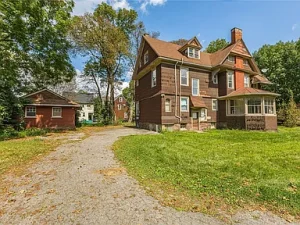
According to the listing, 33 Kenwood Avenue includes a two-car garage, driveway parking, and additional off-street parking opportunities.
The formal property details identify two garage spaces and mention paved parking, on-street parking, and space for two or more vehicles.
In residential neighborhoods, access to convenient parking can influence tenant satisfaction and apartment desirability.
Off-street parking may be especially valuable during winter months when street parking can become less convenient.
A garage may also offer additional storage possibilities, subject to lease terms, local regulations, and the condition of the structure.
Investors should confirm the garage’s physical condition and determine whether parking spaces are assigned to particular apartments.
It is also important to review whether existing leases include parking rights or separate parking charges.
Any opportunity to generate additional parking revenue should be evaluated carefully rather than assumed.
Exterior Construction, Lot Size, and Outdoor Space
The property occupies a reported 0.36-acre lot with dimensions of approximately 115 by 137 feet.
For a multifamily building in an established urban neighborhood, this outdoor area may provide useful space for parking, landscaping, and tenant access.
The listing identifies composite siding and wood siding as exterior construction materials.
These materials have different maintenance requirements, making an exterior inspection important.
Wood siding may require periodic painting, sealing, or replacement of damaged sections.
Composite siding may offer different durability characteristics depending on its type, installation, and age.
The property also includes a covered porch, which adds another architectural feature.
Covered porches can contribute to a building’s appearance and provide sheltered outdoor access.
Buyers should inspect porch supports, railings, steps, decking, and any exposed structural elements.
Drainage around the property is another important consideration, particularly for an older building with a full basement.
Proper grading and functioning gutters can help reduce the risk of moisture problems.
Full Basement and Building Infrastructure
33 Kenwood Avenue includes a full basement, an important feature for understanding the property’s mechanical systems and overall condition.
In older multifamily buildings, basements often contain heating equipment, water heaters, plumbing connections, electrical components, and storage areas.
The listing does not provide detailed information about the basement’s condition or whether it has experienced water intrusion.
Prospective buyers should therefore arrange a thorough inspection.
A qualified inspector may evaluate visible foundation conditions, moisture levels, drainage, ventilation, and accessible mechanical systems.
The age of the building makes it particularly important to investigate past repairs and renovations.
Investors should also ask about the roof’s age, electrical service, plumbing materials, and any significant structural work completed during previous ownership.
Because the property was constructed in 1900, lead-based paint may be a consideration.
Federal lead-based paint disclosure requirements generally apply to residential housing built before 1978, subject to applicable exemptions.
Depending on the building’s history and condition, buyers may also wish to evaluate potential asbestos-containing materials and other environmental concerns.
These issues do not automatically mean the property is unsuitable for investment, but they should be considered during due diligence.
Financing Options for a Four-Unit Multifamily Property
Financing a quadruplex can differ from financing a traditional single-family residence.
The available loan programs may depend on whether the buyer intends to occupy one apartment or operate the entire building as an investment property.
For an owner-occupant, certain residential mortgage programs may permit financing of properties containing up to four residential units, subject to eligibility requirements.
Conventional financing may also be available, depending on the borrower’s qualifications and the property’s condition.
For investors who do not intend to live in the building, lenders may apply different down payment, interest rate, reserve, and underwriting requirements.
The listing identifies cash, conventional financing, and private financing as potential purchase terms.
Buyers should contact lenders directly to understand which financing options are actually available for this property.
Important factors may include credit history, income, existing debt obligations, rental income documentation, property appraisal, and available cash reserves.
A lender may also evaluate whether the property satisfies applicable safety and habitability standards.
Because financing terms can significantly affect investment returns, comparing multiple mortgage offers may be beneficial.
Mortgage Payments and the Importance of Financial Planning
The listing displays an estimated monthly payment of approximately $1,569.
However, online mortgage estimates are typically based on assumptions involving interest rates, down payments, loan terms, taxes, and insurance.
The actual payment available to a buyer may differ considerably.
For an investment property, mortgage affordability should be evaluated alongside expected rental income and operating expenses.
A property that generates $3,000 in potential monthly gross rent does not necessarily produce $3,000 in cash available for mortgage payments.
Operating expenses, vacancy allowances, maintenance reserves, and other obligations must be considered first.
Investors commonly examine debt service coverage when determining whether a property can comfortably support its financing.
Debt service coverage compares net operating income with required principal and interest payments.
A higher ratio generally indicates a greater margin between operating income and debt obligations.
However, acceptable ratios vary by lender and loan program.
Buyers should also consider the possibility of temporary vacancies, unexpected repairs, and changes in borrowing costs.
Maintaining adequate cash reserves can help reduce financial pressure when unexpected expenses arise.
Owner-Occupant Opportunity: Living in One Unit While Renting the Others
One possible strategy for purchasing a four-unit property is owner occupancy.
Under this arrangement, the buyer lives in one apartment and rents the remaining units.
This approach is sometimes called house hacking.
The objective is to use rental income from other apartments to help offset housing expenses.
At 33 Kenwood Avenue, the four-unit layout could potentially support this strategy, depending on unit availability, lease agreements, financing eligibility, and the buyer’s personal needs.
For example, an owner might occupy the currently vacant apartment while continuing to collect rent from the three occupied units.
Based on the listing’s reported figures, those three apartments generate a combined scheduled rent of $2,100 per month.
That revenue could help offset ownership costs, although it would not represent net profit.
The owner would still be responsible for applicable mortgage payments, taxes, insurance, repairs, and other expenses.
Owner occupancy also introduces practical considerations.
Living in the same building as tenants may make certain management tasks more convenient, but it can also require clear boundaries and consistent enforcement of lease terms.
Prospective buyers should determine whether this ownership arrangement aligns with their lifestyle and financial goals.
Potential Portfolio Expansion With 45 Kenwood Avenue
One of the most interesting details in the listing is the availability of the neighboring property at 45 Kenwood Avenue.
According to the seller’s marketing information, this adjacent building also contains four residential units.
The two properties may reportedly be purchased together for a combined asking price of $404,000.
This creates a potential opportunity to acquire eight residential units located side by side.
For investors interested in expanding a rental portfolio, neighboring properties may offer certain operational conveniences.
Maintenance visits, landscaping services, inspections, and property management activities can sometimes be coordinated more efficiently when buildings are located close together.
However, purchasing eight units also increases financial exposure and management responsibilities.
A larger portfolio may require additional reserves, more comprehensive insurance coverage, and greater attention to tenant turnover and maintenance scheduling.
Investors should evaluate the financial performance and physical condition of each building separately.
The income, expenses, and condition of 45 Kenwood Avenue have not been established by the details provided for 33 Kenwood Avenue.
Therefore, potential returns for the combined acquisition cannot be reliably calculated without additional documentation.
The neighboring property is identified by MLS number R1705755.
Buyers interested in the package should confirm current availability, pricing, and purchase terms with the listing agent.
Evaluating the Asking Price of $199,000
At approximately $41 per square foot, 33 Kenwood Avenue has a relatively low asking price per square foot when viewed purely as a numerical measure.
However, price per square foot is only one part of a multifamily property valuation.
The property’s age, condition, rental income, location, maintenance requirements, and operating expenses may all influence its market value.
A lower price per square foot does not automatically mean a property is undervalued.
For income-producing real estate, investors frequently place significant emphasis on net operating income and comparable sales.
A capitalization rate, commonly called a cap rate, compares annual net operating income with the property’s purchase price.
For example, using the illustrative net operating income of $19,008 calculated earlier, the implied capitalization rate at a $199,000 purchase price would be approximately 9.6%.
This is not a verified cap rate for the property because the underlying operating expenses are hypothetical.
The actual cap rate could be higher or lower depending on verified income and expenses.
A reliable valuation should incorporate current leases, documented operating costs, deferred maintenance, and recent sales of comparable multifamily properties in Rochester.
Property Taxes and Long-Term Ownership Costs
The listing reports an annual property tax amount of $5,556 and a tax assessed value of $205,000.
Property taxes are an important consideration because they directly affect investment cash flow.
The reported annual tax amount is equivalent to approximately $463 per month.
However, property tax obligations may change following a sale, reassessment, municipal budget adjustment, or changes in applicable exemptions.
Buyers should verify current tax records with the relevant local authorities.
It is also important to distinguish between tax assessed value and market value.
A property’s assessed value is used for taxation purposes and does not necessarily equal its current market selling price.
In addition to property taxes, investors should research insurance premiums and any applicable local rental property registration or inspection requirements.
Long-term ownership planning should account for the possibility that these expenses may increase over time.
Rental Property Management and Tenant Considerations
Managing a four-unit residential building requires organization and familiarity with landlord-tenant responsibilities.
Because 33 Kenwood Avenue is currently tenant occupied, a buyer would need to understand the existing lease arrangements.
The listing requests 48 hours’ notice for showings, reflecting the need to coordinate access with current occupants.
Before purchasing, investors should review all active leases, rent payment records, security deposit information, and any outstanding maintenance requests.
They should also verify whether any apartments are subject to special rental agreements or restrictions.
New York has specific landlord-tenant laws governing matters such as security deposits, notices, habitability, and eviction procedures.
Owners should understand their legal responsibilities and consult qualified professionals when necessary.
Good property management includes timely maintenance, accurate financial records, clear tenant communication, and compliance with applicable housing regulations.
Investors who prefer not to manage the property themselves may consider hiring a professional property management company.
Management fees should be incorporated into the investment budget.
Renovation Opportunities and Historic Property Maintenance
Historic buildings can offer attractive architectural details, but they may also present opportunities for selective modernization.
At 33 Kenwood Avenue, the combination of original hardwood flooring, decorative interior features, and vintage bathrooms may appeal to tenants who appreciate older residential architecture.
Renovation decisions should balance preservation with functionality.
For example, updating worn fixtures, improving lighting, repairing damaged surfaces, or modernizing kitchen appliances may enhance an apartment’s usability.
However, the listing does not establish that specific renovations are required or that improvements would produce higher rental income.
Any renovation strategy should begin with a professional inspection and a realistic cost estimate.
Investors should also consider the potential impact of renovation work on existing tenants.
Major projects may require permits, professional contractors, or temporary changes to apartment access.
For an older building, unforeseen conditions can increase construction costs.
Maintaining a contingency budget may help address unexpected repairs discovered during renovation.
Important Due Diligence Before Purchasing
Before purchasing 33 Kenwood Avenue, prospective buyers should complete a thorough review of the property’s physical, financial, and legal characteristics.
An important first step is confirming the legal four-unit configuration and reviewing applicable occupancy documentation.
Buyers should also obtain copies of existing leases and verify the reported rental income.
Financial records can help establish whether the building’s current income supports the proposed purchase price.
A property inspection should cover accessible structural components, roofing, plumbing, electrical systems, heating equipment, exterior siding, drainage, and the basement.
The garage and covered porch should also be inspected.
Additional due diligence may include reviewing title information, zoning, building permits, insurance availability, property taxes, and any known code violations.
Because the property is tenant occupied, inspections and access should be coordinated according to applicable laws and lease provisions.
Investors considering financing should also confirm that the property meets their lender’s underwriting requirements.
Completing these steps can help buyers identify potential risks before committing to the transaction.
Why Multifamily Real Estate Appeals to Long-Term Investors
Multifamily real estate can appeal to investors because it combines residential property ownership with the possibility of recurring rental revenue.
Unlike a single-family rental, a four-unit property may continue generating some income even when one apartment becomes vacant.
For example, if three units remain occupied while one is being prepared for a new tenant, the owner may still receive rent from the occupied apartments.
This does not eliminate vacancy risk, but it can provide a different income structure compared with a property that has only one tenant.
Multifamily ownership may also offer opportunities for long-term appreciation, mortgage principal reduction, and operational improvements.
However, none of these outcomes is guaranteed.
Property values can decline, tenants may leave, operating costs may increase, and major repairs can reduce returns.
Successful investing generally requires careful property selection, realistic financial assumptions, adequate reserves, and consistent management.
For buyers researching Rochester multifamily real estate, 33 Kenwood Avenue represents a specific opportunity to evaluate these considerations.
Market Demand, Rental Comparisons, and Investment Research
A property’s potential investment performance depends partly on the strength of its local rental market.
Before purchasing 33 Kenwood Avenue, investors should examine comparable apartments within Rochester’s 19th Ward and surrounding neighborhoods.
Rental comparisons should consider bedroom counts, square footage, condition, parking availability, included utilities, and property amenities.
Apartments with similar layouts may command different rents depending on their renovation quality and location.
Investors should avoid assuming that the vacant apartment will automatically achieve its previous $900 monthly rent.
Current market conditions and the apartment’s physical condition should guide that estimate.
It may also be helpful to review local employment trends, household formation, housing supply, and neighborhood-level rental activity.
These factors can influence tenant demand over time.
Real estate research should use recent and verifiable information, particularly when financial projections depend on expected future rent.
A Closer Look at the Listing’s Market Activity
According to the supplied Zillow listing information, 33 Kenwood Avenue had accumulated approximately 5,087 views and 388 saves after 41 days on the platform.
The listing was originally placed on the market on August 31, 2026, and was updated on October 5, 2026.
These engagement figures suggest that users have been viewing and saving the property online.
However, listing views and saves do not necessarily translate into purchase offers or indicate the property’s true market value.
Online engagement can be influenced by pricing, photographs, property type, and the level of interest in the surrounding market.
Prospective buyers should therefore focus on verified financial information, physical condition, and comparable sales rather than relying on listing activity alone.
The listing identifies eXp Realty, LLC and Joneal A. Labeach as the listing representatives.
Interested buyers should contact the listing professionals to verify availability and obtain current information.
Who Might Consider Purchasing 33 Kenwood Avenue?
This property may appeal to several categories of buyers.
An experienced rental property investor might evaluate the building as an addition to an existing portfolio.
A first-time multifamily buyer could consider whether the four-unit configuration aligns with their financing options and management capabilities.
An owner-occupant might investigate the possibility of living in one apartment while renting the others.
A buyer interested in historic architecture may appreciate the original interior features and the opportunity to maintain a building constructed in 1900.
Investors seeking a larger acquisition could also examine the possibility of purchasing the neighboring four-unit building.
Each strategy involves different financial considerations.
The most suitable approach depends on the buyer’s investment goals, available capital, tolerance for risk, and willingness to manage residential tenants.
Final Thoughts: Is 33 Kenwood Avenue Worth Considering?
33 Kenwood Avenue in Rochester, New York, combines several characteristics that may attract buyers searching for multifamily real estate opportunities.
With an asking price of $199,000, approximately 4,857 square feet, four residential units, five bedrooms, four bathrooms, and a 0.36-acre lot, the property offers a substantial residential building at a reported price of approximately $41 per square foot.
Its historic architectural details, including stained glass windows, hardwood floors, original pocket doors, decorative fireplaces, and high ceilings, contribute to its distinctive appearance.
Practical features such as separate utilities, a two-car garage, off-street parking, and a full basement add further considerations for prospective owners.
The existing reported monthly rent of $2,100 from three units, together with the vacant apartment’s previous $900 monthly rent, provides a starting point for evaluating potential rental income.
If all four units were rented at those reported amounts, annual gross scheduled rental revenue could reach approximately $36,000.
Nevertheless, actual profitability would depend on verified rental collections, operating expenses, financing costs, property condition, and future maintenance requirements.
The potential to purchase the neighboring four-unit property at 45 Kenwood Avenue creates an additional option for investors interested in expanding their portfolios.
For buyers considering residential investment property in Rochester, 33 Kenwood Avenue may be worth a closer examination.
A professional inspection, detailed financial review, and consultation with qualified real estate and lending professionals can help determine whether the property fits a buyer’s objectives.
With its combination of historic character, multiple rental units, existing tenants, and potential income opportunities, this Rochester quadruplex offers several features for prospective investors to investigate.
Property Address: 33 Kenwood Ave, Rochester, NY 14611
Listed Price: $199,000
Property Type: Four-Unit Multifamily / Quadruplex
MLS Number: R1705754
Listing Brokerage: eXp Realty, LLC
Listing Agent: Joneal A. Labeach
Property prices, availability, rental income, and other listing details are subject to change. All financial examples are illustrative and should not be interpreted as guaranteed investment returns. Buyers should independently verify property information before making purchasing decisions.