At 13, My Father Left Me on a Dirt Road and Never Came Back — 18 Years Later, My Half-Sister’s Wedding Invitation Arrived With a Letter From My Mother

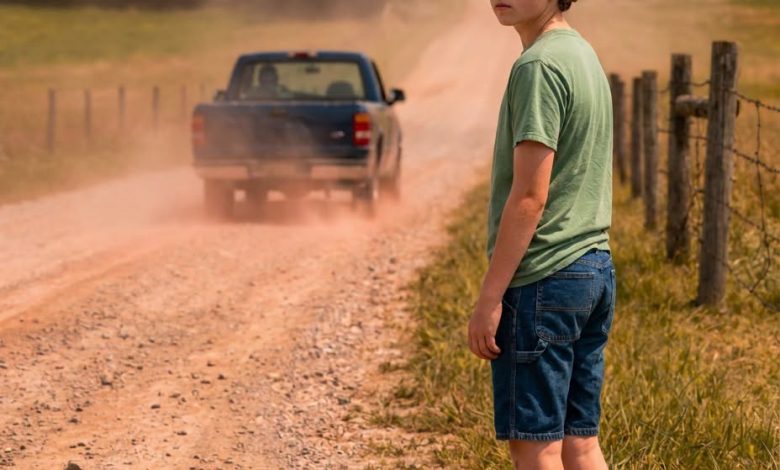
My father abandoned me on a deserted dirt road when I was thirteen, and for eighteen years he told everyone I’d run away. I never received a phone call, a birthday card, or an apology. I grew up believing he’d thrown me away because I wasn’t the son he wanted. Then, at thirty-one, I opened a wedding invitation from a half-sister I’d never met and discovered a letter my mother had written shortly before she died. Her handwriting was unmistakable, and what she’d written changed everything I thought I knew about my childhood. She had warned my aunt that my father was interested in a $140,000 trust established for me by my grandparents, a trust that paid monthly distributions to whoever was raising me. The invitation also revealed that my father was planning my half-sister’s wedding on lakefront property he didn’t own, even though the legal owner had already refused permission. He’d spent eighteen years lying about why I disappeared, and now he was building an expensive wedding pavilion on land intended to remain in my mother’s family. But when I began investigating, I discovered three trust payments he’d collected after abandoning me. This time, I wasn’t a frightened thirteen-year-old boy standing alone in the heat. I had the documents, the means, and the determination to stop him.
My name is Thomas Whitfield. I’m thirty-one years old, and I own a heating and cooling company with twelve employees, six service vans, and commercial customers across three counties. I started as an apprentice at sixteen, crawling through hot attics for nine dollars an hour. When I was twenty-two, my Aunt Diane co-signed a $38,400 loan so I could purchase my first service van. I paid it off in fourteen months, and she proudly kept the payoff letter on her refrigerator. Diane has been my real family since the day my father abandoned me. My mother Elaine died of ovarian cancer when I was eight. My father, Ray Whitfield, remarried two years later, and his new wife Cheryl treated me like an inconvenience. Dad believed that boys needed harsh discipline, while I was quiet, sensitive, and happiest with a book in my hands. He despised how kindly Aunt Diane treated me. One August afternoon, after I’d spent two weeks at her house, he drove me forty minutes into the countryside, stopped on a dirt road, and ordered me out of his truck. He threw my duffel bag into the gravel and said, “Walk home. Maybe it’ll toughen you up.” Then he drove away. I walked for nearly two hours before reaching a gas station, where a kind clerk let me telephone Diane. She came for me that evening and arranged emergency custody soon afterward. My father didn’t contest it. I never heard from him again. Eighteen years later, my half-sister Megan invited me to her October wedding and enclosed a letter she’d discovered in our father’s desk. Alongside my mother’s handwritten warning were old photographs, custody documents, and bank statements showing that Ray had received $725 monthly for my care. Three payments, totaling $2,175, arrived after I was already living with Diane. Megan had also discovered that the story she’d been told about me was false.
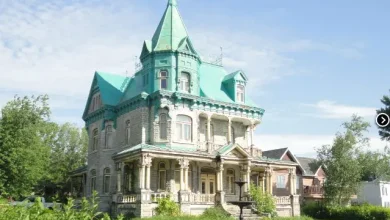
I called Diane after reading the letters, and she revealed something else I’d never known. My grandparents had left their lake house and the surrounding three acres entirely to her. Her name was the only one on the deed, and she’d already named me as the property’s future beneficiary. Months earlier, Cheryl had requested permission to hold Megan’s wedding there. Diane refused twice in writing. My father ignored her and hired workers to construct a large pavilion near the water. Megan, who had grown up believing I was a violent child who ran away, was shocked when I told her what actually happened. She’d sent me the invitation because she wanted to know her brother, not because she’d been part of her father’s scheme. I met her for coffee, and for the first time we talked about the family history we’d inherited. I promised not to blame her for things she’d been told as a child. Then I visited the lake property and found a half-built wooden pavilion, fresh concrete footings, construction materials scattered across the grass, and an unsafe electrical connection running from Diane’s cabin. I photographed everything and hired a real estate attorney, Sandra Reeves. She reviewed the deed, property taxes, and messages showing Diane’s refusals. She advised us to demand removal of the structure and restoration of the land. The insurance agent also warned that an unpermitted wedding venue could expose Diane to serious liability. We sent a formal cease-and-desist letter, and county officials later documented building and electrical violations. My father responded by accusing Diane of being confused and claiming the lake belonged to the entire family. Then my Uncle Pete admitted he’d actually been in the truck the day Dad abandoned me. He’d watched everything happen and said nothing for eighteen years. When Dad finally called, he insisted he had only been trying to toughen me up and accused me of holding a childish grudge. He also admitted he’d spent approximately $40,000 preparing the wedding. I refused to let him shift responsibility onto me. Eventually, after the county issued a removal notice and fines threatened to accumulate, I arranged a meeting at Diane’s house with my father, Cheryl, and our attorney. Sandra laid out the deed, photographs, enforcement documents, and bank records showing the extra trust payments. I told Dad the pavilion had to come down, but I also wanted him to admit what he’d done to me. He stared at the floor and insisted he’d returned to the dirt road after leaving me. Then he said something that made everyone in the room go silent: “I came back for you. Maybe ten or fifteen minutes later. But you were gone.” I leaned forward and asked, “And when you didn’t find your thirteen-year-old son, what did you do?” He looked away. Before he could answer, Diane spoke from her chair—
“At nine o’clock that night, I got a call from a gas station clerk,” Diane said. “Thomas was sitting on the floor behind her counter because he was afraid to wait outside in the dark. Every time a truck pulled into the parking lot, he stood up and looked through the window, hoping it was yours.” My father stared at the carpet. Diane continued, reminding him that he’d gone home without contacting the sheriff, calling her, or making any attempt to find out whether his son was safe. Then he’d allowed three more trust payments to arrive while Diane was buying my school clothes and feeding me from her own paycheck. For eighteen years, he’d told relatives that I ran away and that she kept me from returning home. Cheryl was crying. Uncle Pete’s earlier admission had already confirmed my account, and the bank records confirmed what happened financially. I told my father I wasn’t interested in revenge or ruining Megan’s wedding. I wanted the unauthorized pavilion removed, the property restored, the $2,175 returned to the trust, and the truth acknowledged to his daughter. Otherwise, Diane’s attorney would proceed with the legal action she’d prepared. My father didn’t apologize. He simply stood up and left, with Cheryl following behind him. But this time his silence didn’t frighten me. Within ten days, the pavilion was dismantled. A licensed electrician removed the unsafe wiring, the damaged ground was restored, and Ray’s attorney provided $3,860 toward the repairs along with a written acknowledgment that he couldn’t use the property without Diane’s permission. The county closed its enforcement file. Later, the trust department confirmed that Ray had repaid the $2,175. Megan and her fiancé Kyle found another wedding venue, a smaller restored barn with string lights and wooden tables. She told me she liked it better than the elaborate ceremony her parents had planned. I attended the wedding with Diane. When my father walked Megan down the aisle, our eyes met briefly, but neither of us spoke.
Megan and I have developed a real relationship since that wedding. We speak regularly, and I recently repaired the furnace in the apartment she shares with Kyle. I wouldn’t accept payment. She later told me that our father had finally admitted leaving me on the road and lying about what happened, although he still hadn’t acknowledged everything involving the trust. Cheryl sent me a short apology, saying she should have treated me better. I haven’t answered yet. Some relationships can’t be repaired with one message, and I don’t believe I’m obligated to pretend otherwise. Diane has since placed the lake property into a revocable living trust, naming me as successor trustee. She’s getting older and has heart problems, but she’s still the strongest person I know. She wants us to build a new dock together next spring, and I promised we would. Last week, I drove to the lake alone and sat on the old wooden dock my grandfather built. The grass had begun growing back where the unauthorized pavilion once stood. I took my mother’s letter from its protective sleeve and reread a sentence near the end that has stayed with me: “Diane, he’s going to be a gentle man. Don’t let anyone convince him that’s the same thing as a weak one.” My mother understood me before I was old enough to understand myself. She knew I needed kindness, not cruelty, and she trusted her sister to provide it. Diane kept that promise when she rescued me from the gas station, when she supported my education, when she co-signed my business loan, and when she stood up to my father eighteen years later. As the sunset turned the lake copper and gold, I remembered the boy who’d stood on a dirt road waiting for a truck to return. My father once told me that the walk would toughen me up. He was right about one thing: I did become strong. But I didn’t become strong because he abandoned me. I became strong because someone else loved me enough to come back.