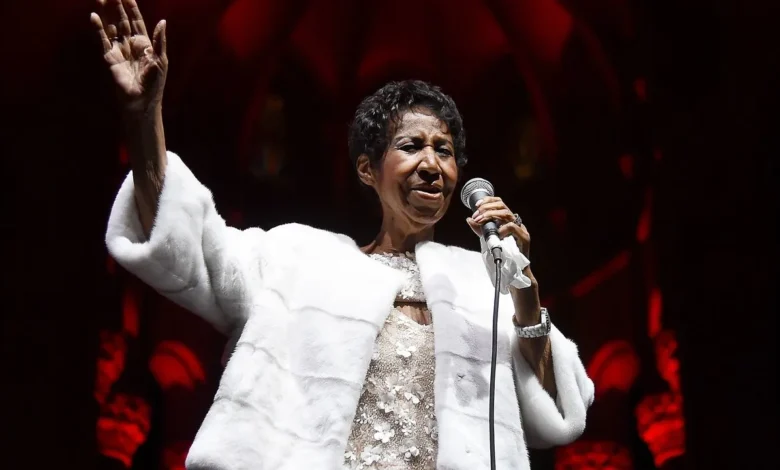
At six, her mother left. At nine, her mother died. By twelve, Aretha Franklin was a mother herself. By twenty-five, she was the Queen of Soul.Strength was never a choice. It was survival.Aretha Louise Franklin was born on March 25, 1942, in Memphis, Tennessee. Her father, C.L. Franklin, was a charismatic Baptist minister whose sermons drew thousands. Her mother, Barbara Vernice Siggers Franklin, was a gifted pianist and singer whom Mahalia Jackson called one of the finest gospel voices in the country.The family moved to Detroit, where C.L. became pastor of New Bethel Baptist Church. Their home became a gathering place for legends — Martin Luther King Jr., Sam Cooke, and Jackie Wilson were all visitors.
Music filled every corner of their lives.But the marriage was troubled. In 1948, when Aretha was six, her mother Barbara left Detroit and moved to Buffalo, New York.For decades, it was reported that Barbara had abandoned her children. Aretha always rejected that narrative. Her father’s biographer, Professor Nick Salvatore of Cornell University, later confirmed that Barbara regularly visited Detroit and that the children spent summers with her in Buffalo. Aretha spoke warmly of those summers, centered around her mother’s front porch.Barbara worked as a nurse’s aide and gave piano lessons. She built a life for herself while staying connected to her children despite the distance.On March 7, 1952, Barbara Franklin died of a heart attack in Buffalo at just thirty-four years old. Aretha was nine — eighteen days shy of her tenth birthday.
The loss changed her childhood forever.Shortly after her mother’s death, Aretha began singing solos at New Bethel Baptist Church. Her first song was “Jesus, Be a Fence Around Me.” Her voice, already powerful and full of ache, carried a grief no nine-year-old should have to bear.At twelve, Aretha became a mother. At fourteen, she recorded her first album. Her father took her on gospel caravan tours across the country. She was never allowed to simply be a child.She dropped out of high school, busy being a mother, a performer, and the daughter her father needed her to be.In 1960, at eighteen, she signed with Columbia Records.
The label didn’t know what to do with her. They tried turning her into a jazz singer and a pop singer — anything but the gospel powerhouse she truly was.In 1966, she signed with Atlantic Records. Producer Jerry Wexler understood what Columbia had missed. He let Aretha be Aretha.In 1967, she released “I Never Loved a Man the Way I Love You,” followed by “Respect,” “Chain of Fools,” and “Think.”By 1968, at just twenty-five, Aretha Franklin was crowned the Queen of Soul.Rolling Stone would later name her the greatest singer of all time — twice.
She sold more than seventy-five million records, won eighteen Grammy Awards, and became the first woman inducted into the Rock & Roll Hall of Fame.None of that erased what she had endured.She rarely spoke publicly about her mother. When she did, it was with tenderness and pain.Aretha Franklin died on August 16, 2018, at the age of seventy-six.The strength the world celebrated in Aretha was never something she chose. It was something life demanded of her. A child who was never allowed to be a child. A girl who learned to turn grief into gospel, pain into power, and loss into art.When Aretha sang “Respect,” she wasn’t only demanding it from a man or from society. She was demanding it for the little girl inside her who never got to be little — the girl who learned too early that strength was the only option when everything else had been taken away.
For those who were never allowed to simply be a child because life required more from you before you were ready, who turned grief into gospel and pain into power not once but every single day, who still carry the mother who left at six and died at nine in every performance — this story feels like recognition.Aretha Franklin’s voice was built as much on her mother’s front porch in Buffalo as it was on any stage. The strength the world celebrated was the survival the world never truly saw.Which losses have you carried into everything you have built? And what does it mean when the thing taken from you earliest becomes the deepest source of what you give?