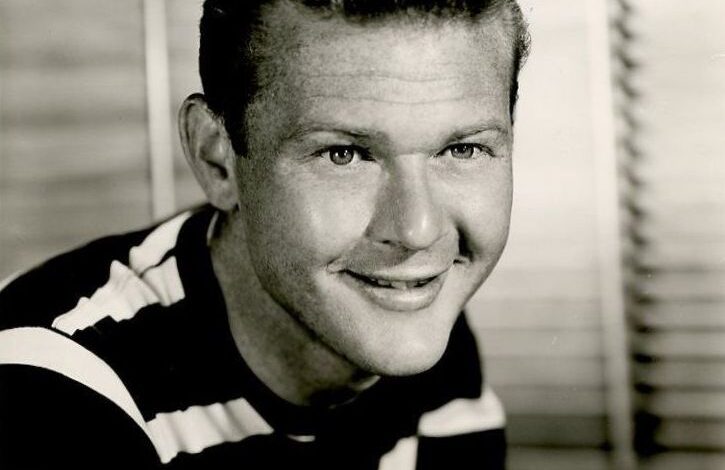
Martin Milner was competing in Hollywood during one of the most challenging eras for an “ordinary” actor.The 1950s were giving rise to a new generation of performers who redefined screen presence—Marlon Brando, James Dean, Paul Newman, Montgomery Clift. They brought intensity, emotional volatility, and an aura of danger that audiences craved and critics couldn’t stop praising.
The antihero was in ascendance; the brooding leading man was what the industry wanted.Milner offered something almost entirely the opposite.He was steady. He was calm. He projected reliability at a time when reliability was not what casting directors were seeking. He had been working steadily since his teens—born in Detroit in 1931 and raised in Los Angeles—but he was consistently overshadowed by the volatile energy the era rewarded.
The contrast made it hard for him to stand out in the way that mattered.Then, in 1960, television found the perfect use for exactly who he was.Adam-12 followed two Los Angeles police officers through the procedural reality of daily patrol work. It was not sensationalized crime drama or operatic violence, but the steady accumulation of calls, responses, and decisions that real police work entailed. The show needed actors who could carry that material without forcing drama where none existed.Milner was Pete Malloy, and he was perfect for the role.His natural steadiness—something that had limited him in an industry chasing volatility—became the show’s greatest asset. Viewers trusted him in the specific way audiences trust performers who don’t seem to be performing at all. He simply was present in the scene. Families welcomed him into their living rooms week after week for years.The timing was no accident.
The 1960s and early 1970s were turbulent, touching ordinary American life with assassinations, civil unrest, political upheaval, and the constant feeling that the ground was shifting beneath their feet. Adam-12 offered something genuinely rare in that climate: order, competence, and the quiet reassurance that problems could be identified and handled by people who knew what they were doing. Pete Malloy embodied a form of stability that a large portion of the audience was actively seeking.The show ran for seven seasons. Milner became one of the most recognizable faces in American television.And then the familiar paradox set in.The role that made him famous also made it difficult to be seen as anything else.
To audiences and producers alike, he was Pete Malloy. The very image that had elevated him narrowed the range of what people could imagine him doing next. He continued working—television guest spots and later projects—but he navigated the constraints with the same temperament that had defined his best work.He never appeared to chase reinvention or become bitter about being typecast. By most accounts, he seemed more interested in doing the work than in being celebrated for it. In an industry that often rewards those who crave attention above all else, that quiet quality made him unusual.He died in September 2015 at the age of eighty-three. He and his wife Judith—whom he met on a film set and married in 1955—had been together for sixty years.Their marriage outlasted most Hollywood careers.In a business built on drama, Martin Milner built his on steadiness. And it turned out that steadiness, offered consistently and without apology, was precisely what millions of viewers had been looking for all along.