Uncategorized

“She Copied Tax Records by Hand and Forced Chicago’s Richest Corporations to Pay Teachers – The Incredible True Story”
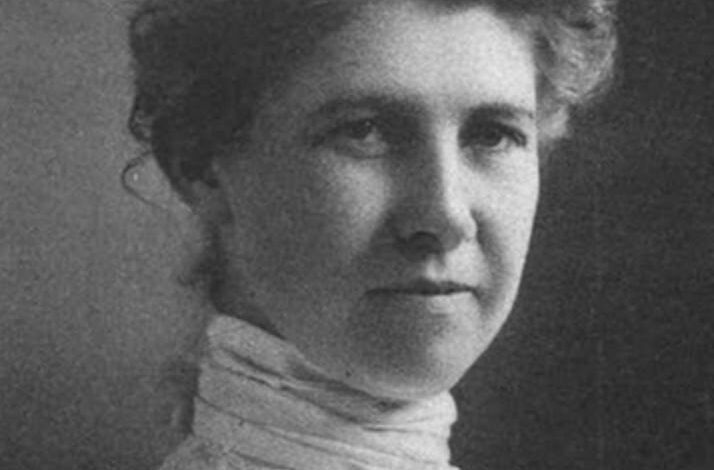
In 1900, a Chicago elementary school teacher named Margaret Haley walked into the county clerk’s office and asked to see the tax rolls. For weeks, she sat copying numbers by hand into a ledger. What she discovered was so straightforward that nobody at the State Board of Equalization had bothered to check it for years.Five of Chicago’s largest utility monopolies were being taxed only on their physical equipment. Illinois state law clearly required them to be taxed on the full value of their corporate franchises as well. They had not been — for decades.She used the discovery to win a landmark lawsuit in 1901, recover hundreds of thousands of dollars in back taxes, and force the city to finally pay its teachers their long-frozen wages.
That dramatic victory is what survives in textbooks.But the thirty-eight years that followed built the modern American teachers’ union.Born in Joliet, Illinois, in November 1861, the second of eight children in an Irish-Catholic family, Margaret Haley began teaching at just sixteen in rural Illinois schools. By the mid-1880s she was teaching at Hendricks Grammar School on Chicago’s near west side. By the late 1890s, she had become one of the most active members of the Chicago Teachers’ Federation, a small organization founded in 1897 by fellow teacher Catherine Goggin.At the time, the Federation was little more than a mutual-aid society — helping teachers through personal hardships and offering a modest voice in dealings with the city. It had only a few hundred members, nearly all women, nearly all elementary school teachers earning subsistence wages. Haley and Goggin decided to turn it into something far more powerful.
The tax case was their first major victory. It proved — to the country and to the teachers themselves — that a group of disenfranchised, low-paid women elementary school teachers could organize, investigate, sue the most powerful corporations in the state, and win.It also taught them a harder lesson: winning the lawsuit was not the same as getting paid. The school board tried to divert the recovered money to coal bills and sidewalk repairs. Only after Haley filed a second writ did the teachers finally receive their wages. The real lesson was clear — a single victory was not enough. What they needed was sustained institutional power.In 1902, Haley led the Chicago Teachers’ Federation to affiliate with the Chicago Federation of Labor. It was the first time in American history that a teachers’ organization had joined the broader trade union movement. The move was considered radical. Teachers were supposed to be “professionals,” and professionals did not unionize. The school administration was outraged. National education groups distanced themselves. Editorials condemned the decision.
Yet the teachers voted for it, because the alternative — remaining powerless professionals who could be fired or left unpaid at the city’s convenience — was exactly what they were fighting to change.In 1903, Haley traveled to Boston and delivered a speech at the National Education Association convention titled “Why Teachers Should Organize.” It became one of the most important and widely reprinted speeches in American labor history. Standing before an audience of administrators who largely disagreed with her, she argued that teachers could not protect themselves or their students without real institutional power. The speech made her a national figure.She and Catherine Goggin led the Federation together until Goggin was tragically killed by a delivery truck in 1916. By then, their model had begun spreading to other cities. In April 1916, eight local teachers’ organizations — with the Chicago Teachers’ Federation as a founding affiliate — created the American Federation of Teachers (AFT). Haley was one of the principal architects.
The AFT remains one of the two largest teachers’ unions in the United States today.The battles continued. In 1915, Chicago Board of Education president Jacob Loeb introduced the “Loeb Rule,” which banned teachers from union membership. Dozens of teachers, mostly women and Federation members, were fired. Haley led the fierce resistance. The rule was eventually struck down, and the long fight produced lasting gains: tenure protections, pension rights, and the legal foundation for collective bargaining for teachers in Illinois.Margaret Haley continued organizing until the end of her life. Chicago newspapers eventually called her the “Lady Labor Slugger” — a nickname that began as an insult but became a mark of respect.
She died in Chicago on January 5, 1939, at the age of seventy-seven.The 1901 tax case was the proof of concept. Everything that followed was the institution.There are now more than four million American public school teachers. Most belong to a union. The legal and institutional framework that makes that possible was built, in significant part, by a woman who walked into a county clerk’s office in 1900 with nothing but a notebook and the conviction that something was wrong with the numbers.She was right.And she spent the next thirty-eight years making sure no teacher would ever have to prove it alone again.