Uncategorized

“Born With a Sack of Cornmeal Instead of Money — Dolly Parton’s Incredible True Story”
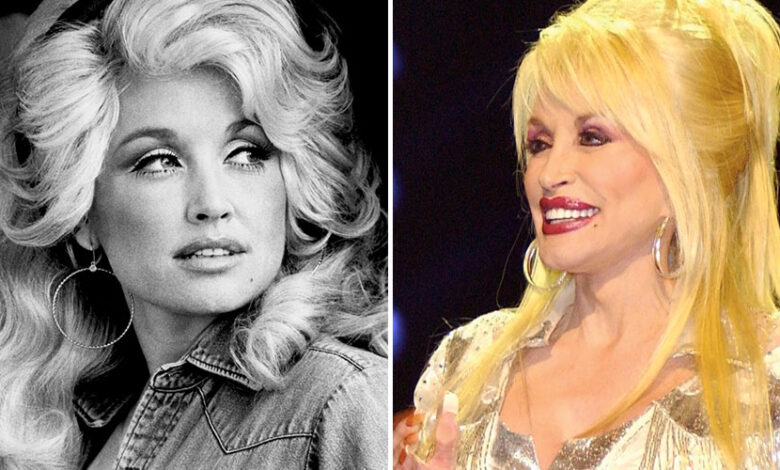
Her family paid the doctor who delivered her with a sack of cornmeal. She grew up to become one of the most successful musicians in history — and never once pretended her roots were anything other than exactly what they were.Dolly Rebecca Parton was born in 1946 in Sevier County, Tennessee — the fourth of twelve children raised in a one-room cabin deep in the Smoky Mountains.Her parents, Avie Lee and Robert Lee Parton, worked tirelessly to feed their large family, living mostly off the land. When Dolly arrived, there was no money to pay the doctor, so her father gave him a sack of cornmeal instead.She came into the world as a transaction involving grain.
She left it as one of the most beloved human beings on the planet.Growing up, the Parton family ate whatever they could find or catch — groundhogs, turtles, and whatever else the mountains provided. Twelve children in a one-room cabin meant there was never quite enough of anything.Except, as Dolly always says, love.”We were poor,” she has said, “but I didn’t know it. We were rich in the things that mattered.”She started singing in church, then on local radio by the age of ten. The day after she graduated high school in 1964, she boarded a bus to Nashville with nothing but her voice, her songs, and a deep understanding of hardship that no amount of success would ever let her forget.Nashville didn’t quite know what to do with her at first.
She was too country for pop, too pop for pure country, too funny to be taken seriously, and too serious beneath the humor to be dismissed.She kept writing anyway.She wrote constantly and compulsively, with the drive of someone who had grown up understanding that nothing was guaranteed and you had better create while you could.”Jolene.” “I Will Always Love You.” “Coat of Many Colors” — a song about the patchwork coat her mother made from rags, which Dolly wore to school and was mocked for. She transformed that painful memory into one of the most moving songs ever written about poverty and dignity.She wrote it so that children who grew up poor would know they weren’t less than anyone.She has never stopped thinking about those children.In 1995, she founded the Imagination Library — a program that mails free books every month to children from birth until they start school, regardless of their family’s income. What began in Sevier County, Tennessee, has now delivered over 200 million books to children across multiple countries.
The woman whose own childhood was shaped by poverty decided that no child should grow up without books simply because their family couldn’t afford them.In 1973, just before releasing Love Is Like a Butterfly, Dolly chose the butterfly as her personal emblem — a symbol of transformation, freedom, and grace.It was a perfect choice. Not just because butterflies are beautiful, but because a butterfly begins as something small and earthbound, then becomes something entirely different through patience, time, and the quiet work of transformation from within.Dolly Parton was born in a one-room cabin to parents who paid for her birth with cornmeal.
She became Dolly Parton through the same process: patience, relentless work, and a stubborn refusal to let hardship define the ceiling of what was possible.Jolene. 9 to 5. I Will Always Love You.Songs that became part of the permanent fabric of American music, written by a girl from the Smoky Mountains who never forgot where she came from — and turned that memory into empathy for everyone still there.She is one of the few genuinely beloved public figures of our time.
Not because she is perfect, but because she is real.She laughs at herself before anyone else can. She acknowledges her manufactured image while remaining entirely authentic beneath it. She uses her platform not to elevate herself, but to send books to children who can’t afford them.She paid for her birth in cornmeal.She paid it forward with two hundred million books.That’s not a rags-to-riches story. That’s something better.That’s a woman who remembered exactly where she came from — and spent her entire life making sure it meant something for the people still there.