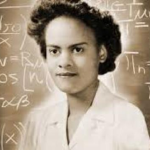
In 1949, only two Black women held doctoral degrees in mathematics in the United States.The first was Euphemia Lofton Haynes, who earned her PhD from Catholic University in 1943. The second was Evelyn Boyd Granville, who received her doctorate from Yale University in 1949 at the age of 25 — in a field where almost no one looked like her.She had grown up in Washington, D.C., attended Smith College on a scholarship, and completed advanced research in functional analysis.
Mathematics gave her something rare in the outside world: clarity, structure, and fairness.She was soon to discover how far that fairness actually extended.After graduation, she applied to universities and research institutions. Most rejected her. A Black woman with a Yale PhD in mathematics in 1949 was not what American academia was ready to accept. So she went where the work was available.She took a position at the Diamond Ordnance Fuze Laboratories and later joined IBM, where she worked on early computing, numerical analysis, and systems that would influence scientific research.Then came Sputnik.On October 4, 1957, the Soviet Union launched the first artificial satellite into orbit.
The United States panicked and urgently needed mathematicians who could calculate trajectories, model orbital mechanics, and determine precise maneuvers for spacecraft.Evelyn Boyd Granville was exactly what the moment demanded.She contributed to Project Vanguard, America’s first satellite program, and later worked on orbital computations connected to the Apollo program at IBM. These were not abstract calculations. They were the mathematics that decided whether a spacecraft could leave Earth, reach the Moon, and return safely. The margins for error were tiny; the consequences of mistakes were catastrophic.She did that work.When Apollo 11 landed on the Moon on July 20, 1969, and Neil Armstrong stepped onto the lunar surface, the world celebrated the astronauts and mission controllers.
The mathematicians who had spent years computing the trajectories received far less recognition. The Black women among them received the least of all.Like Katherine Johnson, Dorothy Vaughan, and Mary Jackson — whose stories later reached millions through the book and film Hidden Figures — Granville was part of that same hidden history of the Space Race.In 1967, she made a deliberate choice. She stepped away from aerospace work and moved into education. She taught at California State University, Los Angeles, and later at Texas College in Tyler, Texas. She wrote a mathematics textbook for teacher education and dedicated decades to mentoring students — especially Black students, women, and first-generation scholars — who rarely saw themselves reflected in advanced mathematics.She mentored.
She taught. She stayed.Evelyn Boyd Granville died on June 27, 2023, at the age of 99. She had continued working into her eighties and lived long enough to see doors open wider than they were when she graduated from Yale — though still not as wide as they should be.Her name is not widely known, but her work is not invisible. It lives in the precise orbital calculations that helped guide Apollo spacecraft to the Moon. It lives in the generations of students she inspired and taught. And it lives in the simple fact that the number of Black women with doctoral degrees in mathematics in the United States is no longer just two.She didn’t need the world to know her name. She needed the mathematics to be right. And it was.