The Horse That Saved Secretariat’s Life – And Never Forgot the Woman Who Believed in Him

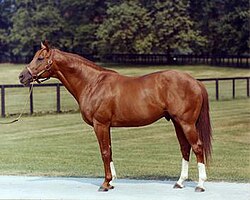
In the spring of 1971, Penny Chenery stood on the edge of ruin. Her father, Christopher Chenery, the man who had built Meadow Stable into something proud and respected, lay gravely ill in a hospital bed, his mind slipping further each day. Her siblings, impatient and pragmatic, were already circling like vultures, urging her to sell the Virginia farm, liquidate the horses, and cut the losses before the debts swallowed everything. Penny had no money left to fight them with. She had only her fierce, almost irrational stubbornness, a deep-rooted belief in her father’s dream, and the fragile hope that one of the foals still running in the fields might turn out to be more than ordinary.What pulled her back from the brink was not a sudden windfall or a generous investor. It was a rather plain-looking bay colt—shy around strangers, restless in his stall, and possessing a kind of raw, urgent speed that looked less like confidence and more like a desperate need to get away from everyone and everything. His name was Riva Ridge.The first time Penny watched him stretch out in a morning workout, she felt something shift inside her. He didn’t glide like some colts; he ran as though the other horses were chasing him, as though the very air behind him carried a threat he had to outrun.
That winter and spring of 1971, he proved it wasn’t an illusion. At two years old, Riva Ridge swept through his races with a quiet ferocity, winning the Flash Stakes, the Futurity, and then capping the season with the Eclipse Award as the outstanding two-year-old male of the year. Just like that, the numbers on the board changed. The farm’s immediate danger receded. Her siblings backed off. Meadow Stable would live to see another season.Here is the sentence that alters the entire arc of the story: without Riva Ridge, there would have been no Secretariat—at least not at Meadow Stable.Penny Chenery said it plainly years later: if Riva had failed, if the farm had been sold in 1971 or early 1972, the famous coin toss that delivered the big red colt (and his equally gifted stablemate) into her hands would have landed on someone else’s property. Riva Ridge didn’t merely save the farm financially; he bought time, he bought trust, he bought one more year for trainer Lucien Laurin to stay in the game.
Laurin, already in his late fifties and quietly contemplating retirement, looked at the bay colt’s steady courage and decided he had one more serious campaign left in him.And in the same barn, growing taller and broader by the month, was the chestnut son of Bold Ruler who would soon eclipse them all. The first time Laurin truly watched Secretariat move—really move—he reportedly stood silent for a long moment and then said something close to awe: the colt was almost too beautiful, too perfectly made, to be an actual racehorse. He looked more like a sculptor’s dream than flesh and blood.What binds these two horses together in the telling is everything they shared: the same blue-and-white checkered silks of Meadow Stable flashing down the stretch, the same patient, brilliant trainer in Lucien Laurin, the same unflappable jockey Ron Turcotte crouched low over their withers, and above all, the same woman who believed in them when almost no one else did. Yet she loved them in entirely different ways.Secretariat became legend—Triple Crown, impossible records, the blood-red coat on the covers of Time, Newsweek, and Sports Illustrated in the same week, a presence so mythic that even now, decades later, people speak his name as though he were half-deity. Riva Ridge carried a quieter glory. He won the Kentucky Derby in 1972 when almost no one expected it, then came back the next year to take the Belmont Stakes—the same Belmont that Secretariat would make immortal twelve months later.
He kept the lights on, the feed bills paid, the barn standing. He asked for no spotlight and received far less than he deserved.When both horses eventually retired to Claiborne Farm in Kentucky, Penny kept returning to visit them. Secretariat, overwhelmed year after year by crowds of admirers, cameras, and reaching hands, gradually withdrew. The great chestnut stopped lifting his head to look for her; the connection faded beneath the weight of fame. But Riva Ridge never forgot. Every single time she walked down the shedrow and called his name, the bay gelding would prick his ears, turn toward her voice, and walk straight to the fence. He would stretch his neck out, rest his head against her shoulder, and stand there quietly—as though no time had passed, as though she were still the only person in his world who mattered.Some stories are built on statistics, trophies, and blazing headlines. Others are carried in the small, private gestures that never make the record books: a horse who remembers, a woman who never stopped coming back, and the unspoken promise between them that neither one would ever have to wonder if they were still known and loved.Which of those two stories do you think lingers longer in the heart?