Her Lab Found Something Impossible in Breast Milk — Then She Uncovered a 200-Million-Year Biological Conversation No One Had Noticed

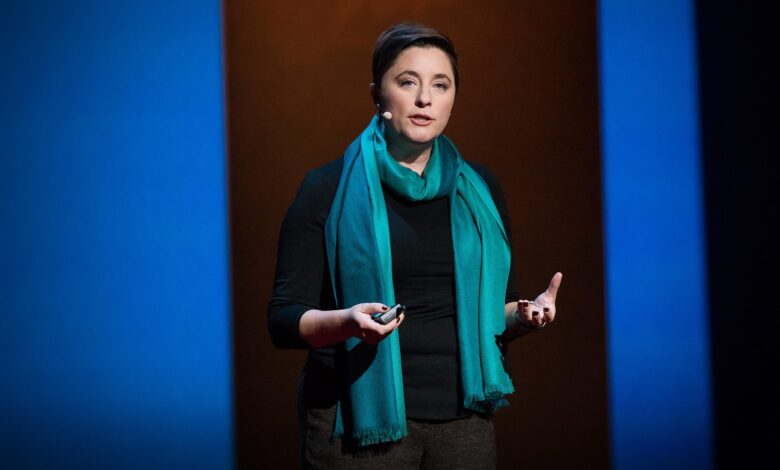
Katie Hinde was working in her laboratory one day, carefully sorting through breast milk samples, when she noticed something that according to established science simply shouldn’t exist.The data kept revealing the same surprising pattern again and again: breast milk was not uniform or constant. Its composition shifted and changed in response to specific factors. The scientific consensus at the time insisted this was impossible.
Breast milk had long been viewed as a standard, one-size-fits-all biological fuel — essentially the same from mother to mother and from feeding to feeding.When she shared her findings with colleagues, they were skeptical. They suggested it was probably measurement error, statistical noise, or contaminated samples. But Hinde refused to dismiss what she was seeing. She returned to the data, double-checked her methods, and the results remained consistent.So she kept digging. Over the next decade, her persistent research did far more than challenge an old assumption — it completely transformed our understanding of one of the most ancient and fundamental relationships in the history of life on Earth.What she discovered is that breast milk is not a passive substance. It is dynamic, responsive, and remarkably intelligent.When a baby nurses, tiny amounts of its saliva flow back into the mother’s breast tissue.
This backflow carries vital biological information about the infant’s immune status, stress levels, growth needs, and overall health. Within hours, the mother’s body reads these signals and adjusts the milk accordingly. If the baby is fighting an infection, the milk becomes enriched with targeted antibodies. During periods of rapid growth, it provides higher levels of fat and protein. When the baby is stressed, the milk contains calming compounds that help soothe and regulate the infant.This is not simply nutrition being delivered to a passive recipient. It is a sophisticated, real-time, two-way biochemical conversation between mother and child — a dialogue that has been taking place for approximately 200 million years of mammalian evolution.For decades, almost no one had been seriously studying this remarkable system.When Katie Hinde explored the existing scientific literature, she was shocked by what she found.
The entire field of lactation science was severely underfunded, largely overlooked by major journals, and often dismissed as a niche or “soft” area of research. The very biological process responsible for sustaining every human life had been quietly sidelined for years.This realization made her furious. Instead of accepting the status quo, she decided to take action.She launched a blog that was bold, irreverent, highly accessible, and deliberately provocative. Through it, she translated complex lactation science into clear language that ordinary people could understand. She highlighted the massive funding gaps and called for science to treat mothers’ bodies with the seriousness they deserve. The blog quickly went viral. Millions of readers who had never given much thought to breast milk research suddenly began asking the same important questions.Her continued research uncovered even more astonishing revelations.
Breast milk changes throughout the day according to circadian rhythms. It contains complex sugars (human milk oligosaccharides) that the baby cannot digest — they exist solely to feed beneficial bacteria in the infant’s gut, actively shaping a healthy microbiome from the earliest days of life. Every mother’s milk is uniquely tailored, moment by moment, to the specific needs of her own child.Today, Katie Hinde’s work is revolutionizing neonatal intensive care units (NICUs) around the world. Doctors now recognize that premature babies especially benefit from their own mother’s milk — not just for calories, but for the personalized immune protection, growth factors, and developmental signals that no infant formula can fully replicate. Formula companies are now attempting to reverse-engineer what evolution perfected over millions of years, often with humbling results.
Beyond the scientific and medical breakthroughs, Katie Hinde has given us something even more profound.She has shown that nourishment is an act of biological intelligence. A mother’s body possesses an extraordinary level of complexity and responsiveness that science had barely begun to understand. Her work also highlights a quiet but costly truth: when we systematically understudy and undervalue the biology of women’s bodies, we don’t just fail mothers — we fail entire generations.Her story raises important questions: How many other biological processes like this are still waiting to be discovered? How many everyday miracles are happening all around us, in plain sight, simply because science previously decided they weren’t worth serious attention?Sometimes the most remarkable discoveries are not found in distant galaxies or billion-dollar laboratories.Sometimes they occur millions of times every single day, in the most ordinary and intimate moments between mothers and their babies.Katie Hinde simply looked closely enough — and uncovered an entire universe.