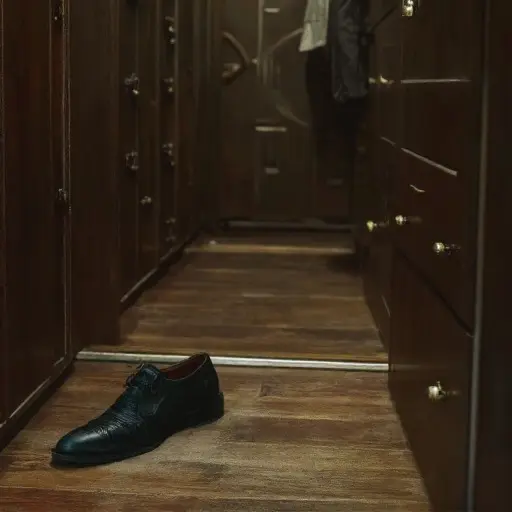
The Thorn-Wainscot, an imposing example of Queen Anne architecture, built in 1891, is characterized by its irregular shape, turrets, and extensive use of dark, carved wood. It sits deep in a valley, perpetually damp and shaded. To step inside is to be met by a tangible curtain of cold, wet air that clings to the heavy wallpaper and woodwork
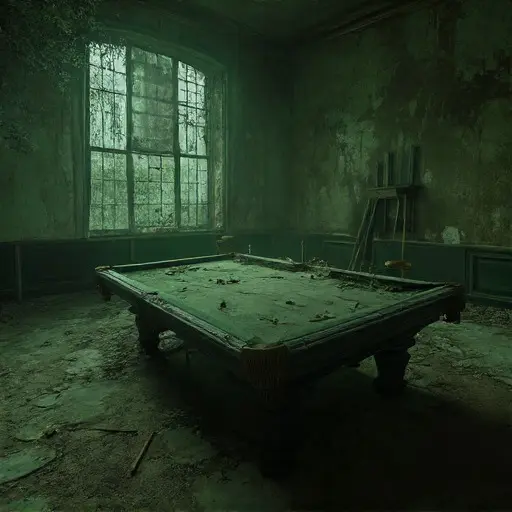
he Billiard Room, situated on the ground floor, is a vast, echoing space that encapsulates the mansion’s forgotten life. Every surface is caked in dust and mold, preserving the precise moment when the lights went out and the games stopped forever.
The Resigned Industrialist, Walter Penbrook
The mansion was built by Walter Penbrook (1850–1918), a self-made man whose profession was the operation of several massive, local lumber mills. His identity was tied to the constant, brutal rhythm of industrial labor. Socially, he was a tired, practical man who had achieved great wealth but felt little joy in it.
Walter married Agnes Hewitt in 1875. They had one child, a son named Henry. Walter’s personality was defined by a deep, weary resignation; he had worked relentlessly but found himself trapped by the financial demands of his own success. His daily routine was exhausting, but he reserved his evenings for quiet, solitary reflection, often finding brief respite in the Billiard Room, although he never invited guests. His ambition was simply to maintain the illusion of success; his greatest fear was returning to the poverty he had escaped.
The Billiard Room was his retreat, a concession to the image of the wealthy industrialist, but he used it as a private sanctuary, a place where he could momentarily forget the crushing burden of his mills.
The Strike in the Master Wardrobe
The downfall of the Penbrook family was sudden, external, and devastating: a consequence of industrial strife. In 1917, during a difficult period of labor unrest and wartime demand, a massive strike crippled Walter’s mills. Unable to meet his contracts, his immense debt was called in by the bank. The financial ruin was total and immediate.
The final, emotional fracture came from his son. Henry, who had been away at university, returned to find his father emotionally shattered. Henry, a staunch supporter of the labor movement, had a final, brutal argument with Walter, accusing him of callous disregard for his workers. Henry left the same day, abandoning his father and the house, refusing to be associated with the collapse.
The devastation destroyed Walter. He suffered a massive stroke in his Master Bedroom soon after, triggered by stress and the loss of his son. He passed away a month later in the cold, silent house.
His wife, Agnes, was left with nothing but the unsaleable house and the total stigma of her husband’s industrial failure and her son’s betrayal.