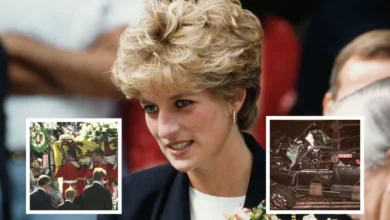
“From Housewife to Hero: How Susana Trimarco Became the Nightmare of Human Traffickers”

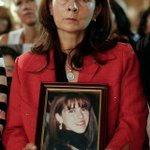
She was a housewife. She fussed over her family and paid little attention to the news.Then, on April 3, 2002, her twenty-three-year-old daughter Marita stepped out of their home in San Miguel de Tucumán, Argentina, heading to a medical appointment.She never came back.Marita left behind a three-year-old daughter named Micaela. Susana Trimarco took the little girl in and began raising her — while simultaneously embarking on the most dangerous investigation of her life.When she went to the police, they told her Marita had probably left voluntarily.
They claimed they had no official paper to take a report. They said they had no fuel to send officers to search. When witnesses began calling with the same story — a young woman pulled into a red car by several men — the police looked the other way.So Susana decided to look for herself.She tracked down names of known traffickers and pimps from whatever files she could access. A taxi driver told her that Marita had been delivered to a brothel and beaten.
Then, because no one else would do it, she disguised herself as a recruiter looking to buy women and walked alone into the brothels of northern Argentina.What she discovered inside those rooms broke her heart and hardened her resolve at the same time.She later said that for the first time, she truly understood what had happened to her daughter.She found women held against their will. She found girls trafficked from across Argentina and beyond. She found police officers who visited brothels not to make arrests, but to warn owners that a raid was coming. She found judges who delayed warrants long enough for the women to be relocated. She uncovered an entire system — criminal networks, law enforcement, and local government — working together to keep women invisible and trapped.She also found a witness who had seen Marita — drugged, with swollen eyes — inside a trafficker’s holding house. By the time Susana could act on the information, her daughter had already been moved again.She never stopped searching. And she never stopped rescuing the women she found along the way.Brothel by brothel and city by city, she gathered evidence and delivered it to whatever parts of the justice system were not corrupt. She was shot at during an undercover operation in La Rioja. Men threatened to cut off her head and throw it in a river. Someone set her house on fire. Drivers tried to run her over in the street.Still, she kept going.She once said that a mother’s desperation blinds you — and makes you fearless.Thanks to her tireless work, her efforts eventually forced Argentina’s government to act.
She personally rescued more than 150 women and girls from trafficking networks. In 2007, she founded the Fundación María de los Ángeles — named after her missing daughter — to formalize the rescue operations and push for legal change. In 2008, largely because of her relentless campaigning, Argentina passed its first federal law making human trafficking a crime. In the years that followed, more than 3,000 victims were rescued from trafficking networks.Human trafficking had been almost invisible as a public issue in Argentina before Marita’s disappearance. Susana made it impossible to ignore.In 2012, thirteen people — including police officers — went on trial for Marita’s kidnapping. The case had taken a decade to reach court. More than 130 witnesses testified, including women Susana had personally rescued. In December 2012, all thirteen defendants were unanimously acquitted. The courtroom erupted in outrage. Three judges faced impeachment proceedings, and the streets of Argentina filled with protesters.In December 2013, the Tucumán Supreme Court overturned the acquittals. Ten defendants were convicted and, in 2014, sentenced to between ten and twenty-two years in prison.Susana received the U.S. State Department’s International Women of Courage Award, was nominated for the Nobel Peace Prize, met heads of state, and testified before international bodies.
Yet every single day, she continued her search for her daughter.In 2023, witnesses testified in court that a folder of photographs exists — images of Marita’s body taken in 2004. Her mother received this news the same way she has received every piece of information about her daughter since 2002: with grief, but without surrender.She has said she always searched hoping Marita was alive — but that she also wanted to find her in any way possible. If her daughter was dead, she wanted to recover her remains, give her justice, and bring her flowers.Marita’s daughter Micaela — the three-year-old left behind in 2002 — is now in her mid-twenties, the same age her mother was when she disappeared. She grew up in her grandmother’s house, watching Susana walk into danger time and again in search of the daughter who never came home.Susana Trimarco is now in her seventies.
Her foundation continues to operate. It still acts as a legal plaintiff in trafficking cases and continues to rescue women from networks that the 2008 law was supposed to dismantle but could not entirely stop.She never found Marita.But she found more than 3,000 others.She has said that every woman she helps somehow helps María. They represent hope in this new life of hers.She left home as a simple housewife. For more than two decades, she returned — every single time — as something the traffickers, the corrupt officers, and the indifferent courts had never prepared themselves for:A mother with nothing left to lose and nothing left to fear.