Taylor Swift Goes Nuclear on Live TV: Calls Trump a “Vicious Old Bastard” Draining America’s Soul

In a stunning and unfiltered moment that has sent shockwaves through the entertainment and political worlds, global superstar Taylor Swift broke her long-held silence on live television, delivering a blistering critique of former President Donald Trump and his controversial endorsement of the newly enacted Born In America Act. The incident unfolded during a prime-time broadcast on a major network, where Swift appeared as a guest commentator amid discussions surrounding the midnight rollout of the legislation—a policy that has sparked fierce national debate over citizenship rights, immigration reform, and constitutional protections.The scene was set against the backdrop of a high-stakes news segment, with the studio lights dimming slightly as the conversation turned to the Act’s implementation. Swift, known for her meticulously curated public persona as a chart-topping pop icon, songwriter, and philanthropist, entered the fray without any prepared script, teleprompter cues, or lighthearted anecdotes to soften the blow. Instead, she channeled a raw, unyielding intensity that stripped away the glamour of her celebrity status, revealing a deeply passionate citizen unafraid to confront what she viewed as a profound injustice.
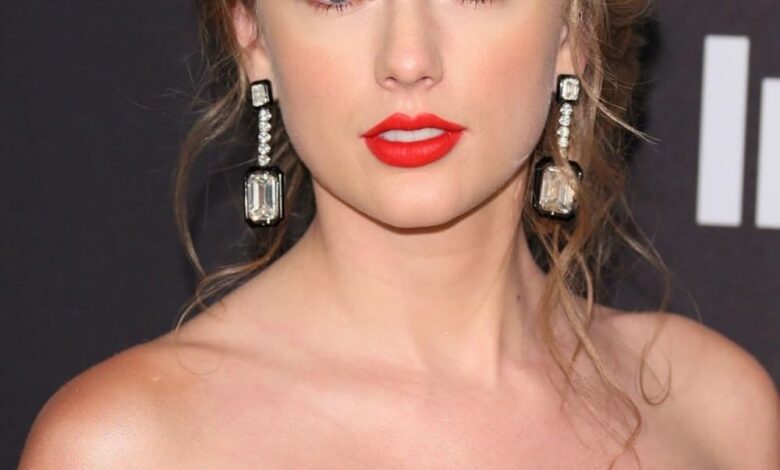
As the red light signaled the start of her segment, Swift wasted no time. Her voice, steady and resonant with controlled fury, cut through the air like a knife. “Let’s call it what it is,” she declared, her gaze piercing directly into the camera lens, commanding the attention of millions watching at home. “A vicious old bastard and his political circus have just turned millions of hardworking Americans into second-class citizens overnight, right on the soil they’ve called home for generations. Donald Trump isn’t protecting the Constitution—he’s wringing every last drop of integrity from it. He’s not leading this nation—he’s systematically draining every core value that’s held it together through centuries of trials and triumphs.”The studio audience and crew were left in palpable silence, the weight of her words hanging heavy in the room. No one dared interrupt; the usual buzz of a live broadcast gave way to an eerie quiet, amplifying the gravity of the moment. Swift, dressed simply in a black blouse and minimal jewelry—eschewing her typical stage sparkle—leaned forward slightly, her posture exuding unwavering resolve.
There was no hint of a smile, no comedic relief, no theatrical flourish to diffuse the tension. This was not the Taylor Swift of sold-out stadium tours or whimsical music videos; this was a woman drawing from personal conviction, speaking as if the fate of the country depended on her unvarnished truth.Building on her opening salvo, Swift delved deeper into the personal and societal implications of the Born In America Act, which critics argue discriminates based on ancestral origins rather than individual contributions to society. “I was born right here in this country,” she continued, her tone never faltering despite the emotional undercurrent. “My family was born here. We’ve poured our sweat and dreams into this land—we’ve worked tirelessly, paid our taxes without complaint, buried our loved ones in its earth, raised our children under its skies, and built vibrant communities that strengthen the fabric of America. We trusted that the law was blind to prejudice, that it applied equally to every one of us, regardless of background.”
She paused briefly, allowing the sentiment to resonate, before pressing on with unflinching clarity. “And yet, tonight, under the guise of some hateful political fantasy, all of that has been declared irrelevant simply because of where your grandparents or great-grandparents hailed from. This isn’t about fairness or security; it’s a calculated erasure of what makes America exceptional—the idea that anyone can belong, contribute, and thrive based on merit and heart, not bloodlines dictated by outdated notions.”Swift’s remarks culminated in a stark condemnation that left no room for ambiguity. “This is not ‘America First’ in any meaningful sense,” she stated flatly, her eyes narrowing with determination. “This is America being slowly suffocated by division and fear-mongering.
And I refuse to stand by silently while the Constitution—our nation’s sacred blueprint—is twisted into nothing more than a cheap stage prop for yet another power grab designed to consolidate control at the expense of the people.”What followed was a rare instance of dead air on live television—four agonizing seconds of absolute stillness, unbroken by laughter, applause, or even a hurried transition from the control room. The producers, caught off guard by the intensity and lack of pre-approval, scrambled to regain composure as the cameras pulled back to a wider shot, capturing the stunned reactions of co-hosts and panelists. But the damage—or rather, the impact—was already done; the moment had escaped the confines of the studio, becoming an unscripted, irreversible declaration that would redefine Swift’s public role.