Uncategorized

From Roller-Skating Romance to Racial Hate: The Tragic Story of Vivian Liberto and Johnny Cash
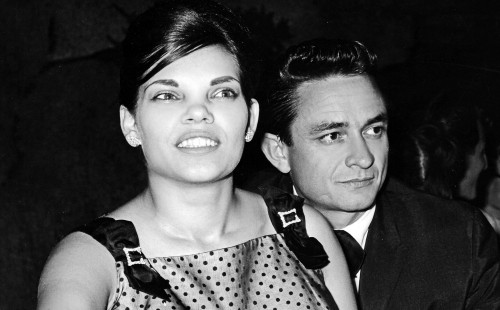
Vivian Liberto first met a young Johnny Cash at a roller-skating rink in San Antonio, Texas, in July 1951. He was 19 years old and stationed at Brooks Air Force Base as an airman in the U.S. Air Force. She was just 17, a devout Catholic girl raised by strict parents in a racially segregated Southern city.Their time together was brief — only three weeks — before Johnny was deployed overseas to Germany for three long years. While most summer romances fade away with the changing season, theirs was different. This young love managed to survive the vast distance across the Atlantic Ocean, kept alive through thousands of heartfelt letters filled with ink, hope, longing, and promises of a future together.When Johnny returned to the United States in July 1954, the couple didn’t wait long.
They were married within a month. In the years that followed, they welcomed four daughters into the world: Rosanne in 1955, Kathy in 1956, Cindy in 1958, and Tara in 1961.By that time, Johnny Cash had risen to become one of the biggest stars in country music. As his fame exploded, Vivian Liberto Cash suddenly found herself thrust into the public eye — and eventually became the target of vicious hate and racism.Vivian’s father, Thomas Peter Liberto, was the son of Sicilian immigrants from Cefalù, near Palermo, Sicily. His parents had arrived in New Orleans in 1895 before making their way to San Antonio, where they built a successful chain of Italian grocery stores. Her mother, Irene Robinson, carried German, Irish, and African American ancestry. That African American lineage traced directly back to Vivian’s maternal great-great-grandmother, Sarah Shields — a Black woman who had been born into slavery and was later freed along with her eight siblings by their white father.For many generations, this significant part of the family history remained hidden, downplayed, or simply forgotten. Many of Vivian’s descendants had no idea they carried any African American ancestry.Throughout her life, Vivian identified fully as white and Sicilian.
She attended white schools in segregated Texas and raised all four of her daughters as white children. However, her striking appearance — dark eyes, dark hair, and olive skin — often caused people to make assumptions about her racial background.In the tense racial climate of 1950s and 1960s America, the way society classified a person could quite literally determine their safety, their opportunities, and sometimes even whether they lived or died.The early years of their marriage were filled with both struggle and hope. While Johnny worked as a door-to-door vacuum cleaner salesman in Memphis and pursued his music career, success came surprisingly fast. Within their first year of marriage, he was already becoming a rising star in the country music scene. As his career took off, the family relocated — first to Hollywood for film opportunities, and later to a beautiful hilltop home in Casitas Springs, California, with sweeping views of the valley below.Success, however, also came with a heavy price. Johnny was constantly on the road — touring, recording, and chasing the next big hit. Vivian was left at home to raise their four young daughters mostly alone in a relatively isolated area with very few modern amenities. Her only real social circle consisted of Johnny’s parents, who operated a nearby trailer park.As Johnny’s stardom continued to grow, so did his personal battles with addiction to pills and alcohol, intensified by the exhausting demands of life on the road. Vivian helplessly watched her husband slowly disappear into his demons while she carried the full responsibility of raising their children by herself.
Then came the turbulent year of 1965.On October 4, 1965, Johnny Cash was arrested near the U.S.-Mexico border after purchasing amphetamines and sedatives from a dealer in Juárez and hiding them in his guitar case. Border agents discovered the drugs during a search. Vivian immediately left their daughters in California and rushed to El Paso to support her husband during his court arraignment. A photographer captured a now-famous image of the couple standing together outside the courthouse.That single photograph would dramatically change their lives forever.When the image appeared in newspapers across the country, white supremacist groups closely examined Vivian Liberto Cash and declared that she was Black. In 1965 America, interracial marriage was still illegal in 16 states. The Supreme Court would not overturn those discriminatory laws until the landmark case Loving v. Virginia in 1967.White supremacists immediately claimed that Johnny Cash’s marriage was illegal. They launched a brutal campaign of harassment, death threats, and boycotts against the couple. Tour dates throughout the Jim Crow South were canceled. The Ku Klux Klan issued direct threats, and the family was bombarded with hateful letters on a daily basis. Among the cruel accusations was the claim that Johnny Cash was spending his profits on “drugs and black women.”The attacks were terrifying and unrelenting.Johnny’s response unfortunately made the situation even worse. He issued a public statement directed at the KKK in which he tried to prove that Vivian was not Black. Years later, in her 2007 memoir I Walked the Line, Vivian reflected on this moment with regret, writing: “It didn’t help that Johnny issued a statement to the KKK informing them that I wasn’t black. To this day I hate when accusations and threats from people like that are dignified with any response at all.”She was absolutely right — you cannot reason with hate. Responding to it often only gives it more legitimacy and power.
However, by then the damage had already been done. The marriage, which was already severely strained by Johnny’s addiction, constant absences, and infidelity, could not withstand the overwhelming pressure of racial hatred and public scandal.Vivian filed for divorce in 1966, citing Johnny’s extramarital affairs and serious drug abuse. After 12 years of marriage, the courts officially granted the divorce.To add even more pain to an already difficult situation, the Catholic Church excommunicated Vivian following the divorce. Raised as a deeply devout Catholic — with an uncle who was a priest and had officiated their wedding Mass — she was devastated by the Church’s rejection. It was only after Johnny later wrote a letter to the archdiocese admitting his own failures as a husband that the Church eventually allowed her to return to communion.In 1968, Vivian married Dick Distin, a police officer from Ventura, California. She moved with her daughters to Ventura, leaving behind the Casitas Springs home she had once shared with Johnny.
There, she worked hard to build a quieter life, becoming an active member of her community. She served as president of her local garden club, volunteered at the hospital, and helped at a home for unwed mothers.She tried her best to step away from the lingering spotlight of being Johnny Cash’s ex-wife and simply live as Vivian Distin — a dedicated mother and respected community member.However, the release of the 2005 film Walk the Line brought painful public attention back into her life. In the movie, Vivian was portrayed quite negatively as the difficult, bitter wife who supposedly held Johnny back from his dreams and stood in the way of his legendary romance with June Carter Cash.Determined to correct the record and tell her own truth, Vivian began writing her memoir. She included many excerpts from the thousands of love letters Johnny had written to her while he was stationed in Germany — powerful proof of the deep love they once shared.She visited Johnny in 2003, shortly after June’s death, to tell him about the book she was writing.
Vivian passed away on May 24, 2005, at the age of 71, from complications following lung cancer surgery, before she could see the book published. Her memoir, I Walked the Line: My Life with Johnny, was released
posthumously in 2007.In February 2021, the renowned historian Henry Louis Gates Jr. featured Rosanne Cash on his PBS series Finding Your Roots. Through careful research using historical documents and DNA analysis, his team traced both sides of the family tree and confirmed what white supremacists had tried to weaponize against Vivian back in 1965: she did indeed have African American ancestry. Her maternal great-great-grandmother was Sarah Shields, a Black woman who had been born into slavery.As Gates explained, this is likely why many of her direct descendants to this day have no idea they carry any African American ancestry. For generations, that part of the family history had been deliberately buried, forgotten, or erased.Vivian Liberto Cash was a woman of Sicilian, German, Irish, and African American heritage. She fell in love with Johnny Cash long before he became famous. She married him, supported him, and gave him four daughters — one of whom, Rosanne Cash, would grow up to become a highly respected musician in her own right.She stood faithfully by his side through years of addiction, arrests, and public humiliation.
Yet when a single photograph led a racist society to question her appearance, she became the target of terrifying hate. White supremacists threatened her life, the KKK attacked her marriage, tour dates were canceled, and hate mail flooded in daily.Her husband’s attempt to defend her by proving to racists that she “wasn’t Black” only dignified the hatred that should have been completely ignored.In the end, the marriage collapsed. The Church rejected her. Popular history often reduced her to little more than a footnote or a villain in Johnny Cash’s legendary story.But Vivian Liberto Cash survived it all with remarkable resilience. She remarried, rebuilt her life, successfully raised her daughters, and eventually wrote her own truth.Decades after her death, DNA testing finally confirmed what 1965 America had cruelly weaponized against her: she carried the blood of a Black woman who had survived the horrors of slavery.In a different, more enlightened time, that rich and diverse ancestry could have been proudly celebrated. Instead, in the racially poisoned America of 1965, it nearly destroyed her life.