In the brutal winter of December 20, 1980, in the remote, snow-swept region of Lengby, northern Minnesota, 19-year-old Jean Hilliard experienced what doctors would later describe as one of the most remarkable hypothermia survival cases ever recorded.The night was merciless. Temperatures plummeted to around –22°F (–30°C), with wind chills making it feel even colder. Jean had been driving home from a friend’s house after a night out when her 1979 Ford LTD lost traction on an icy, unplowed rural road. The car veered off into a deep snowbank and became hopelessly stuck. With no coat, inadequate winter gear, and no cell phone (none existed for civilians then), she faced a grim choice: stay in the freezing vehicle and risk death by exposure, or attempt to walk the roughly two miles to the nearest help—her friend Wally Nelson’s farmhouse.Jean chose to walk.
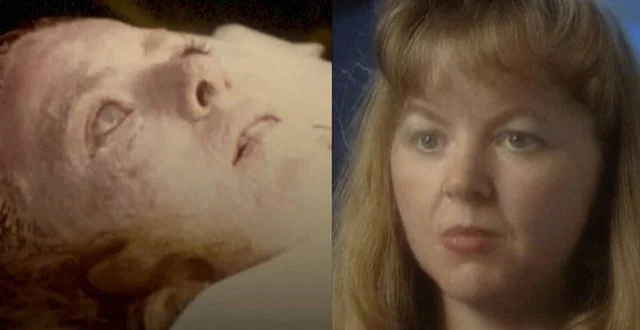
She trudged through knee-deep snow in thin clothing, the wind cutting through her like knives. Frostbite set in quickly. Her legs grew heavy, her thoughts foggy. She stumbled and fell multiple times. After what felt like an eternity, she finally spotted the lights of Wally’s house in the distance. She was so close—only about 15 feet from the door—when her body finally gave out. She collapsed face-down in the snow and lay there unconscious for approximately six hours as the deadly cold enveloped her completely.Around 7 a.m., Wally Nelson stepped outside to start his day and discovered Jean’s rigid, ice-covered form lying motionless in his yard. She appeared dead: her skin was grayish-white and rock-hard, her eyes frozen open, her limbs stiff and unmovable. Wally and his wife loaded her frozen body into their car and rushed her to Fosston Hospital, about 15 miles away. When emergency staff tried to start an IV line, they couldn’t pierce her skin—the needle simply bent. Her core body temperature was so low it was unreadable on standard thermometers. Her pulse registered at an almost imperceptible 12 beats per minute, and her breathing had virtually stopped.
The medical team, led by Dr. Ronald Stewart and others, refused to declare her dead. Instead, they initiated aggressive but cautious rewarming using heated blankets, warm intravenous fluids, and external heat sources. The process was slow and deliberate—rapid rewarming can cause fatal heart arrhythmias or organ shock in severe hypothermia cases. Miraculously, as her temperature gradually climbed, Jean’s heart began to beat more strongly. Her lungs started working again. Brain activity returned. Against every medical expectation, her organs resumed function without the catastrophic damage—such as massive cell rupture or kidney failure—that typically follows prolonged freezing.Jean spent several weeks in the hospital recovering from severe frostbite, especially to her legs and feet. She underwent skin grafts and physical therapy, but remarkably, she suffered no permanent brain damage, no amputations, and no lasting neurological impairment. Within months, she was walking again and returned to a normal life. She later married, had children, and lived for decades after the incident.
Jean Hilliard’s survival stunned the medical community and became a landmark case study in hypothermia research. It demonstrated the “mammalian diving reflex” and the protective effects of extreme cold: metabolism slows dramatically, oxygen demand plummets, and the brain and vital organs enter a state of suspended animation that can preserve life far longer than in normothermic conditions. Her story directly influenced modern protocols for treating cold-water drowning victims, avalanche survivors, and other extreme hypothermia cases—emphasizing slow, controlled rewarming and never giving up on a “frozen” patient who appears lifeless.Decades later, doctors and survival experts still cite Jean’s ordeal as proof of the human body’s astonishing resilience. What should have been a fatal night in the Minnesota wilderness instead became one of the most inspiring examples of how, under the right (or wrong) circumstances, life can cling on against odds that seem impossible. Her recovery remains a powerful testament to both the lethal power of nature and the extraordinary capacity of the human spirit—and physiology—to endure.