“At 56, Meryl Streep Walked Away From $1 Million – Then Forced Hollywood to Pay Her Double”

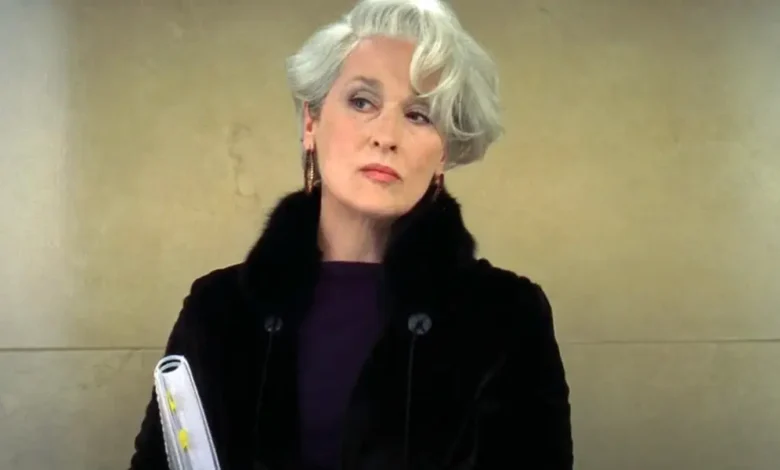
In 2005, Meryl Streep was 56 years old and one of the most decorated actresses in Hollywood history — with two Academy Awards, thirteen Oscar nominations, and decades of critically acclaimed performances.Yet Hollywood was starting to forget she existed.At 56, the roles for women in film narrow dramatically. The ingénue parts are gone. The romantic leads disappear. What remains are mothers, mentors, and — if you’re lucky — the occasional character with real depth.Fox 2000 Pictures was adapting The Devil Wears Prada, a novel centered on a tyrannical fashion magazine editor who terrorizes her assistant. They wanted Meryl Streep for the role of Miranda Priestly, the ice-cold editor-in-chief loosely based on Vogue’s Anna Wintour.They offered her $1 million.Meryl Streep said no.Not “let me think about it.” Not “can we negotiate?” Just no.At an age when most actresses feel grateful for any substantial role, when the industry expects compliance and gratitude, Streep walked away from a million dollars.
The studio was stunned. This wasn’t a prestige drama or an Oscar contender — it was a movie based on a beach-read novel about fashion magazines. They weren’t expecting a negotiation battle.But Streep saw the project differently. She understood that the entire film rested on Miranda Priestly. If the character didn’t work — if she became a cartoonish villain, a shouty caricature, or simply miscast — the movie would fall apart. The story was simple: a demanding boss torments her young assistant. Everything depended on making that boss compelling enough to hold audiences for two hours.She knew her value. So instead of accepting the offer, she demanded double — $2 million upfront, before filming even began.This was 2005.
The film had a modest $35 million budget. Streep was asking for nearly 6% of the entire budget for what the industry viewed as a supporting role in a “chick flick.”Most actresses, especially those over 50, would never dare make such a demand. The risk of being replaced or labeled “difficult” was simply too high.Streep made the demand anyway.And the studio paid.Only after they met her price did she sign on. Then she did something even more important than the negotiation: she completely reimagined the character.Every previous draft called for Miranda Priestly to be loud — big gestures, raised voice, dramatic outbursts. Streep did the opposite.She made Miranda quiet.Low voice. Slow delivery. Controlled stillness. Almost a whisper at times. Every word felt like a surgical strike rather than a tantrum. When she dismissed someone with “That’s all,” it was barely audible. When she tore apart an employee’s work, her voice didn’t rise — it grew colder.
The most famous scene in the film, the “cerulean sweater” monologue, perfectly illustrates this. In anyone else’s hands, it would have been shouting and theatrical cruelty. Streep delivered it as a calm, clinical lecture — devastating precisely because it was so restrained.She understood a crucial truth: real power doesn’t need to be loud. True authority speaks softly, and everyone listens.The Devil Wears Prada premiered in June 2006 and became a massive commercial hit, earning $326.7 million worldwide on a $35 million budget. It turned into a cultural phenomenon.
Lines from the film entered everyday language: “That’s all,” “Florals for spring? Groundbreaking.”Miranda Priestly became one of the most quoted, referenced, and parodied characters in modern cinema — not because she was likable, but because she was magnetic.Meryl Streep earned her 14th Oscar nomination for the role.
More importantly, she proved that a 56-year-old woman could be the undeniable center of a major commercial success.Before The Devil Wears Prada, Hollywood believed women over 50 couldn’t open movies or drive box office numbers. Streep shattered that myth in a $326 million global blockbuster.She didn’t wait for the industry to validate her worth. She forced the system to pay her as if she had already proven it — and then she delivered.At 56, when Hollywood typically discards women, Meryl Streep made them double her price, whispered her way to a massive hit, and changed the game forever.