Uncategorized

“From ‘I Want to Kill My Parents’ at Age 6 to Saving Newborns: The Shocking Transformation of Beth Thomas”
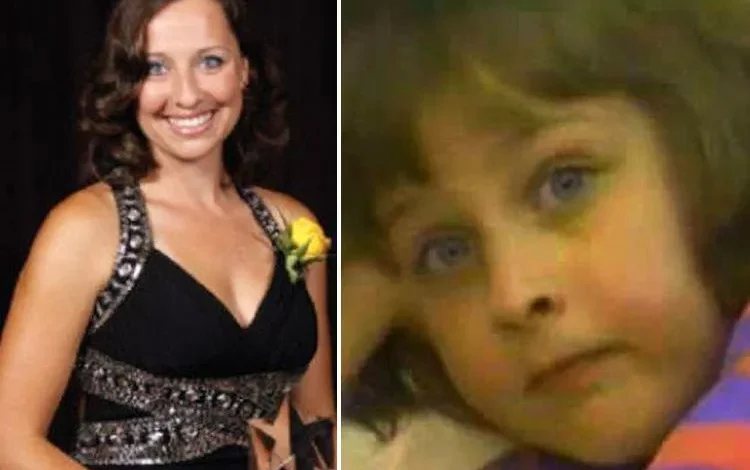
Somewhere tonight, in a neonatal unit, a nurse walks quietly among the incubators of premature babies.She checks monitors, adjusts equipment, and stays alert for the tiniest, most critical changes in her fragile patients. She carries the quiet confidence that only experienced nurses possess — the kind that takes years to develop and cannot be pretended.Her name is Beth Thomas.If you watched HBO in 1990, you’ve seen her before. She was the six-year-old girl sitting calmly in a therapist’s office, describing in a flat, matter-of-fact voice how she wanted to hurt the people looking after her.The nation watched and reached one clear conclusion:
This child was beyond saving.That conclusion was understandable. It was also wrong.To truly understand who Beth is today, you have to go back to where she came from — not just what she did, but what was done to her first, before she was old enough to understand or protect herself.Beth’s biological father began abusing her when she was still an infant. At nineteen months old — an age when children are just learning to walk steadily, speak their first words, and reach out with natural trust — that trust was never given a chance to form.In the earliest months of life, beneath all the visible milestones, a child’s brain is busy building the neurological foundation that will shape how they see the world for the rest of their life. It silently asks questions it has no words for yet: Are the people around me safe? Will my needs be met? Is the world a place where I can be vulnerable?For Beth, the answers imprinted into her developing brain were devastating.By the time child protective services stepped in and Beth and her younger brother Jonathan were adopted by Tim and Julie, the damage had already been wired deep. Love could not simply overwrite it.
A safe home could not easily replace it.What followed was something Tim and Julie were completely unprepared for. Beth showed no emotional attachment. The violence — directed at her brother, the family dog, and even her adoptive parents — was not random. It was the logical behavior of a brain wired entirely around threat and survival.Every night, they locked her bedroom door — not as punishment, but for protection. They were genuinely afraid of their own six-year-old daughter.In 1989, psychologist Dr. Ken Magid recorded therapy sessions with Beth. That footage became the HBO documentary Child of Rage, exposing the American public to a level of trauma most had never seen or understood.The public watched and judged. They decided she was hopeless.They were wrong.Beth was diagnosed with Reactive Attachment Disorder (RAD), a condition caused when a child’s earliest attachment bonds — the foundation for trust, empathy, and human connection — are severely damaged or missing.She was later placed with Nancy Thomas, a specialized therapeutic foster parent who had designed her home specifically for children with extreme emotional needs. The environment was highly structured, consistent, and intentional.Every single day, Nancy worked with Beth on things most children learn naturally: how to tolerate closeness, how to accept comfort, and how to slowly begin trusting again — despite every instinct telling her not to.Beth resisted for a long time.Nancy never gave up.
The healing was slow and undramatic — the kind that doesn’t make for good television. It was made up of thousands of small, consistent moments where Nancy chose to stay present even when Beth pushed her away.Over time, the walls began to crack. Beth started responding to affection. She began showing real remorse. Beneath the armor was a wounded, frightened child who had simply never felt safe enough to be anything else.She healed — not perfectly, but meaningfully. Beth has always been honest that some scars from early trauma remain. But enough was restored for her to trust, to love, and to build a life with purpose.She chose to become a nurse — specifically a neonatal nurse, caring for premature and critically ill newborns. The most vulnerable babies in the hospital.It’s hard to imagine a more meaningful choice.The girl who was abused before she could speak now protects babies who cannot speak.
The person whose first days were filled with neglect and danger now ensures that other children’s earliest days are filled with care and attention.She does this knowing the old documentary still exists and still circulates online. She knows people still watch that six-year-old version of her and make harsh judgments.Yet she keeps showing up anyway.Because Beth understands what most viewers in 1990 did not: the child in that footage was not who she truly was. She was what had been done to her.“I was a sick child,” she has said in later interviews, “but I wasn’t born that way. I was made that way.”Her brother Jonathan received intensive therapy and now lives a healthy, stable life. Tim and Julie eventually reconnected with Beth. Nancy Thomas continues her work through Families by Design. Beth’s story remains one of the most powerful examples in clinical literature of what dedicated, expert intervention can achieve.Somewhere tonight, Beth is back in the neonatal unit, focused on her tiny patients. She is not thinking about 1990. She is thinking about the monitors, the babies, and the responsibility in front of her.She knows what it feels like to be small and completely dependent on others. She knows the terrible price when that trust is broken. And she knows — better than almost anyone — what becomes possible when someone refuses to give up and chooses to show up instead.The real question her story asks is this:Who has the world been too quick to write off in your life — and what would it take for you to refuse to agree with that judgment?