“How One Swedish Cassette Tape in a Student’s Luggage Conquered America… Then a Brain Tumor Tried to End It All”

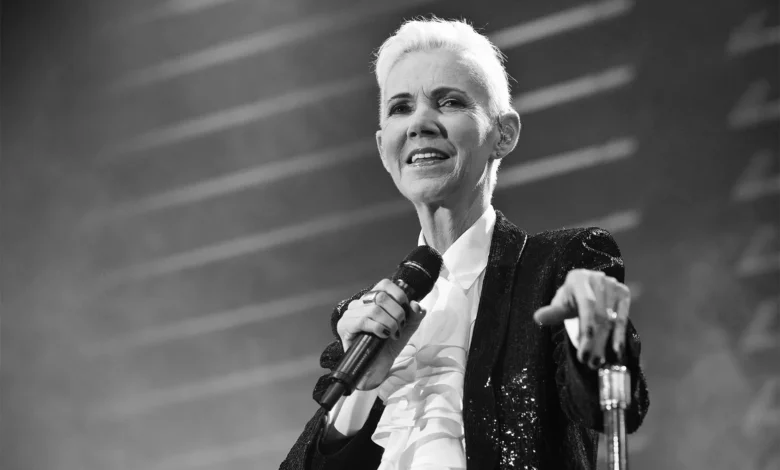
A college student smuggled a Swedish cassette tape into America in his luggage. Within months, the two unknowns on that tape were selling out arenas worldwide—until a brain tumor tried to take it all away.Marie Fredriksson was born on May 30, 1958, in Össjö, Sweden—the youngest of five children in a working-class family where money was tight but music was abundant.Her voice found her early. Raspy, powerful, and emotionally vast in a way that couldn’t be taught, it was already turning heads in local bands by her late teens.
She built a successful solo career in Sweden through the early 1980s.But she wanted more. She didn’t know yet that “more” would come from an unlikely direction.In 1986, she met Per Gessle—a Swedish pop-rock songwriter with a gift for melodies that lodged themselves permanently in the human brain. Together, they formed Roxette.Record labels were skeptical. Swedish pop duos didn’t conquer the world. The music industry had rules about these things.Then came Dean Cushman.In 1988, Cushman, a Minneapolis exchange student studying in Sweden, picked up a copy of Roxette’s album Look Sharp!. He brought the cassette home in his luggage—not as a calculated industry move, but simply because he loved it.He convinced a local radio station, KDWB, to play it.The phones lit up immediately.Within weeks, “The Look” was climbing the American charts. By April 1989, it had reached number one on the Billboard Hot 100. “Listen to Your Heart” followed. Look Sharp! sold over nine million copies worldwide.A college student with a cassette tape had done what no record label had managed: broken a Swedish duo into the American market.
Then came Pretty Woman.In 1990, director Garry Marshall needed a song that could capture heartbreak and longing for his new romantic comedy. Someone suggested “It Must Have Been Love”—originally recorded by Roxette in 1987 as a tender Swedish Christmas ballad about love lost in the winter.It was re-recorded and adapted for the film.Marie’s voice, draped over Per’s melody, did something that surprised even those who already loved her. In that recording, she found something devastating and beautiful in equal measure—the specific ache of a love that was real but couldn’t last.The song reached number one in more than twenty-five countries.Roxette became a global phenomenon, eventually selling over 75 million records worldwide.Marie married musician Mikael Bolyos in 1994. They had two children. She was living the life she had worked toward since those early gigs in Swedish clubs.Then, in September 2002, she went for a morning jog and collapsed.The diagnosis was a brain tumor.Surgery saved her life.
So did radiation and chemotherapy. But the treatment left her with damaged sight, damaged hearing, compromised balance, and a voice that had been altered in ways she couldn’t fully predict.The instrument she had built her entire life around had been changed by forces she couldn’t control.For seven years, Marie fought privately. She didn’t perform. She didn’t make public appearances. She worked quietly and relentlessly on rebuilding herself—relearning how to use a voice that now worked differently, relearning balance, adapting to a body that had survived something enormous.Then, in 2009, she walked back onto a stage.The shows were modified. She often performed seated. The voice audiences heard wasn’t the same one they remembered from 1989 or 1990.It was something else. Something that made people cry in ways they hadn’t expected.Because what came through every note wasn’t just talent. It was evidence.Evidence of seven years of fighting. Of refusing to disappear.
Of choosing to show up anyway with whatever remained.When Marie sang “It Must Have Been Love” during those comeback performances, audiences heard both the song and the story behind the woman singing it—fragility and resilience in the same breath, loss and survival in the same voice.Roxette toured until 2016, playing to millions across the world.Marie Fredriksson passed away on December 9, 2019, at the age of 61.She had spent seventeen years after her diagnosis continuing to create, continuing to perform, and continuing to give audiences the gift of her voice in whatever form it could take.She never pretended the tumor hadn’t changed her
. She never tried to perform as if nothing had happened.She simply showed up with what she had—and what she had turned out to be more than enough.A cassette tape in a college student’s luggage. A voice that found its way across an ocean. A brain tumor that tried to silence it, and failed for seventeen more years.Marie Fredriksson didn’t just sing through the pain. She made the pain part of the music.And somehow, that made everything she sang more true.