Uncategorized

He Sang Total Nonsense and It Became a Massive European Hit – The Crazy Story of Prisencolinensinainciusol
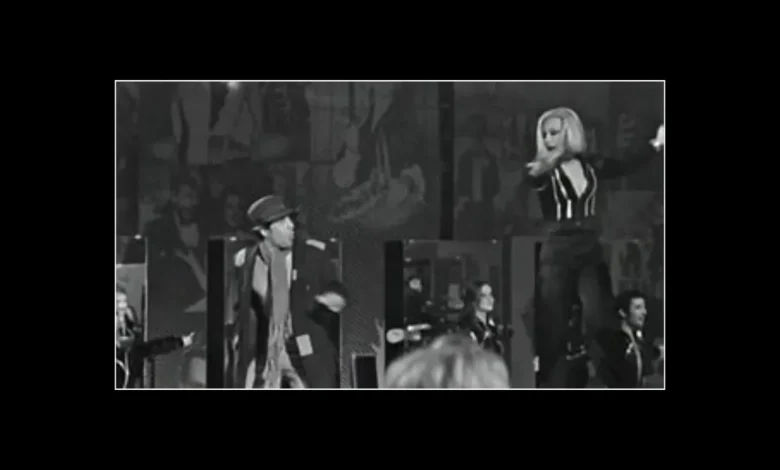
In the early 1970s, Adriano Celentano was already one of Italy’s most beloved and influential entertainers. A talented singer, actor, and cultural icon, he was often described as a unique blend of Elvis Presley’s charisma, Jerry Lewis’s comedic energy, and Tom Jones’s stage presence. At the height of his popularity, he released a truly unconventional song in 1972 that would go on to become one of the most fascinating musical experiments of its time.
The song, titled Prisencolinensinainciusol, was composed entirely of gibberish lyrics designed to sound like American English. Celentano created it as a clever response to the overwhelming dominance of English-language pop music on global charts. He wanted to capture how English sounded to people who didn’t actually speak the language — that familiar rhythm and flow without any real meaning. Through this track, he also aimed to highlight the broader difficulties of communication across different languages and cultures.Musically, Celentano built the song around a simple loop of just four drumbeats. Over this minimal rhythm, he improvised a series of nonsense syllables, delivering them with a rhythmic, spoken-word style that many critics later recognized as having an almost proto-rap quality — years before hip-hop truly emerged as a genre.When Prisencolinensinainciusol was first released, it received relatively little attention. However, everything changed when Celentano performed the song live on Italian television.
The performance captivated audiences, and the track quickly became a major hit not only in Italy but across Europe, charting strongly in countries like France, Germany, Belgium, and the Netherlands. Remarkably, many listeners took years to realize that the lyrics contained no actual English words at all — they had been completely fooled by how convincingly the gibberish mimicked real language.Celentano later explained that he deliberately sang the song in an “angry tone” to strengthen its central message about the breakdown of communication. He drew a parallel to the biblical story of the Tower of Babel, where humanity’s languages were suddenly confused and divided. Decades later, the song experienced multiple revivals.
It went viral again during the 2000s and 2010s, gaining new generations of fans through the internet. It has been featured in popular TV shows such as Fargo and Ted Lasso, and linguists have studied it for its remarkable ability to imitate the natural prosody, stress, and intonation of English speech.Today, Prisencolinensinainciusol is remembered not just as a novelty track, but as a brilliant social experiment and a groundbreaking musical oddity that managed to both fool and fascinate the world.