Uncategorized

She Was Only 20 Months Old When Her Dad Died – How Frances Bean Cobain Escaped Kurt Cobain’s Legacy
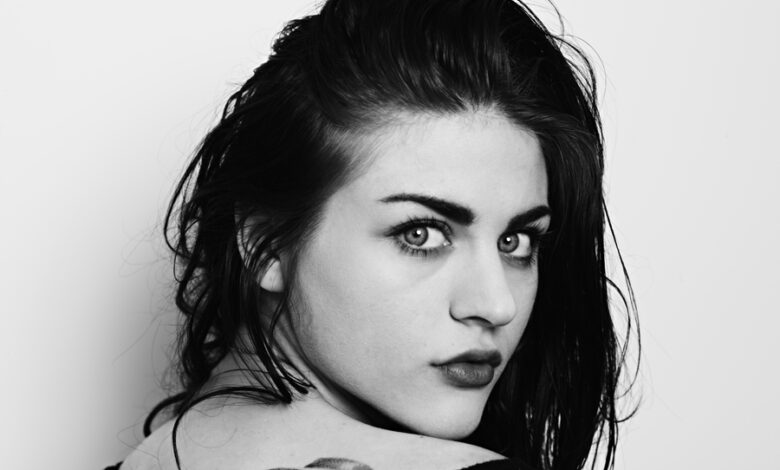
She was only two weeks old when child protective services took her into temporary custody. Twenty months old when her father, Kurt Cobain, died. From the moment she entered the world, the public expected her to forever remain Kurt Cobain’s daughter. Instead, she chose to simply become Frances.Born on August 18, 1992, in a Los Angeles hospital room at Cedars-Sinai Medical Center, Frances Bean Cobain arrived into a life already surrounded by intense fame and media attention.
As the only child of Nirvana frontman Kurt Cobain and musician Courtney Love, two of the most prominent figures in American rock music, her birth was immediately thrust into the spotlight. Public scrutiny began even before she left the hospital.Just weeks after her arrival, serious allegations published in a major national magazine triggered an investigation by child welfare authorities. At just two weeks old, Frances was temporarily removed from her parents’ care while the claims were thoroughly examined. Though she was far too young to understand what was happening, this early event set the tone for much of her life — one where personal moments would often be interpreted, judged, and replayed in the public eye.In April 1994, when Frances was only twenty months old, her father tragically passed away. While his death became one of the most defining and discussed events in modern music history, for Frances it represented a deep personal absence — one she had no conscious memory of. She grew up in a world where her father’s music, image, and story were constantly revisited through albums, documentaries, interviews, and cultural commentary.
Nirvana’s legacy continued to grow and evolve, keeping Kurt Cobain’s presence very much alive in popular culture.As she matured, the weight of public attention followed her everywhere. Her identity was frequently defined in relation to her famous father. Adolescence brought even more challenges. At seventeen, legal proceedings resulted in guardianship being transferred away from her mother, with many private details becoming public knowledge and further feeding media narratives.When she turned eighteen, Frances gained control over significant portions of her father’s estate, including rights related to his name, image, and likeness. This inheritance brought both financial security and a heavy cultural responsibility — a connection to a monumental legacy she had not chosen but could never entirely escape.Rather than leaning into public expectations, Frances responded with quiet independence. She pursued her passion as a visual artist, initially exhibiting her work under a pseudonym.
This deliberate choice allowed her art to be judged on its own merit, free from the automatic association with her famous last name. When her identity eventually became known, she made it clear that she did not want to be defined solely by her family connections.Her engagement with her father’s legacy has always been thoughtful and selective. In 2015, she served as an executive producer for the documentary Cobain: Montage of Heck, which aimed to present a more intimate and complete picture of her father’s life. The film used personal materials to offer deeper context rather than perpetuate myths. While it did not end public fascination with Kurt Cobain, it helped shape how that interest was channeled.Throughout her life, Frances has fiercely protected her privacy — something rare for someone born into such a high-profile family. In 2023, she married Riley Hawk in an intimate, low-key ceremony.
The event was acknowledged publicly, but personal details remained limited. In 2024, she welcomed a son, quietly sharing the news before retreating once again into private life.Her journey reveals a consistent pattern: she has neither fully embraced nor completely rejected the enormous legacy attached to her name. Instead, she has carefully set boundaries, choosing when to engage and when to step back. She has continued building her own career and identity on her own terms, separate from the expectations placed upon her since birth.Frances Bean Cobain’s story highlights the lasting impact of intense public attention from such a young age. At the same time, it demonstrates the power of forging one’s own path despite that pressure.
The narrative written for her at birth has never fully disappeared — it still colors how the world sees and introduces her. Yet she has refused to let it completely define her direction.She was born into a tragedy that became public property. She grew up surrounded by strangers who often believed they understood her story better than she did. For over thirty years, she has quietly proven that inheriting a legendary name does not mean surrendering your life to it.The world wanted her to be a symbol — a continuation, a keeper of the flame. Instead, she became an artist who showed her work under a fake name so people would judge it honestly. She became a daughter who honored her father’s memory selectively — producing one powerful documentary before stepping back. She became a wife and a mother who shares only what she chooses, then returns to her private world.Frances Bean Cobain is not her father’s sequel. She is her own story — and she has been writing it quietly, deliberately, and courageously on her own terms.