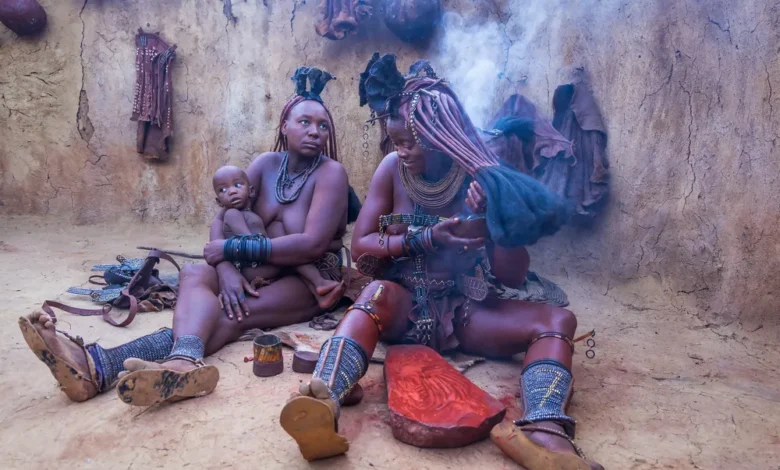
The Himba tribe, one of the most fascinating indigenous communities in northern Namibia, is renowned worldwide for its unique and highly distinctive hygiene traditions. Surprisingly, these traditions have nothing to do with superstition or mystical beliefs, but rather represent a practical and intelligent adaptation to one of the harshest desert environments on Earth.Living in the arid Kunene region, where water is extremely scarce and considered a precious resource, Himba women traditionally do not use water for bathing or daily washing. Instead, they maintain their personal hygiene through an ancient and effective method known as the smoke bath.
This involves placing smouldering pieces of charcoal into a small bowl filled with a blend of aromatic herbs. The women then bow over the rising fragrant smoke, allowing their bodies to perspire deeply. This process cleanses the skin, removes impurities, and leaves them feeling refreshed without wasting a single drop of water.In addition to the smoke bath, Himba women follow a daily skincare ritual by applying a special mixture of ground red ochre and butter fat to their skin and hair. This traditional paste, often called “otjize,” serves multiple important purposes: it protects their skin from the intense desert sun, repels insects, and possesses natural antibacterial properties that help keep them healthy in a challenging environment.
There is only one notable exception to this water-free hygiene practice. On their wedding day, Himba women do bathe with water, turning the occasion into a rare, symbolic, and deeply meaningful ritual that marks one of the most important moments in their lives.It is important to clarify a common misconception that frequently circulates online. Contrary to popular claims, Himba women are not “forbidden to touch water” in any way. In fact, they regularly carry water as part of their everyday responsibilities and daily work.
The avoidance of water for bathing is simply a centuries-old cultural adaptation driven by the extreme scarcity of this vital resource in their desert homeland, not a superstitious taboo.Today, the Himba people, who number around 50,000, continue to live as one of the last remaining semi-nomadic communities in Namibia. Their unique customs and traditions reflect a profound and harmonious relationship with the land they have inhabited for many centuries, demonstrating remarkable resilience and ingenuity in the face of one of the planet’s most unforgiving environments.