Your Phone Is Quietly Breaking Your Child’s Heart — Here’s Why Phubbing Hurts More Than You Think

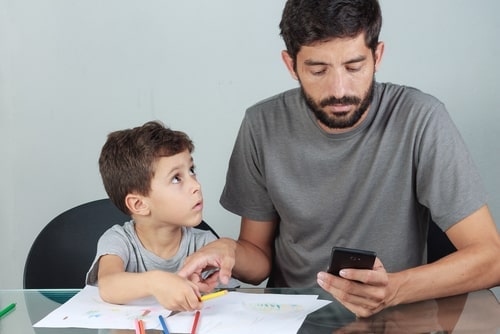
A parent can sit right next to their child, sharing the same physical space, yet remain worlds apart emotionally and mentally. In today’s hyper-connected world, this quiet disconnection often stems from something as simple—and as pervasive—as a smartphone. When a parent’s attention repeatedly drifts to notifications, texts, social media feeds, or endless scrolling, children can experience what experts describe as a subtle but powerful form of emotional absence.Researchers have given this behavior a name: phubbing, a portmanteau of “phone” and “snubbing.” It refers to the act of ignoring or disengaging from a person in favor of one’s phone during face-to-face interaction. What might feel like a momentary distraction to an adult—checking a quick message, glancing at an email, or liking a post—can register very differently in a child’s developing mind.
Young children’s brains are wired to seek and interpret social cues with remarkable sensitivity. Eye contact, facial expressions, responsive vocal tones, timely smiles, and attuned body language serve as critical building blocks for emotional regulation, trust, and secure attachment. These nonverbal signals communicate safety, love, and value in ways words alone cannot. When a parent’s gaze shifts to a screen, even briefly, the child’s brain registers the interruption. The expected rhythm of interaction—call and response, presence and reciprocity—gets disrupted. Over time, repeated phubbing can create a pattern where attention feels inconsistent and unpredictable.For a child, unpredictability in caregiving attention is not neutral; it can mimic the emotional sting of rejection or abandonment, even when the parent’s intention is entirely benign. Studies in developmental psychology and attachment theory show that children interpret these micro-disconnections as cues about their own worthiness of love and focus. They may begin to internalize questions like: “Am I interesting enough?” “Do I matter right now?” or “Why am I not enough to hold their attention?” These subtle doubts, when accumulated day after day, can erode a child’s sense of emotional security and influence how they approach relationships later in life.
The effects are not always dramatic or immediate. Some children become more clingy or demanding of attention as a way to compete with the device. Others may withdraw, learning early that their needs come second to a glowing screen. Still others might mimic the behavior themselves, turning to their own devices for comfort or distraction, perpetuating a cycle of fragmented connection within the family.Importantly, this does not mean parents need to banish technology from their lives or feel guilty every time they pick up their phone. Smartphones are essential tools for work, communication, emergencies, navigation, and staying connected to loved ones far away. The key lies in intentional boundaries and mindful presence rather than total elimination.Simple, consistent habits can restore the balance and protect the emotional health of the relationship:Designate phone-free zones and times: meals, bedtime routines, playtime, car rides, or family conversations. Practice full attention during key interactions: put the phone face-down or in another room, make eye contact, respond promptly, and show genuine engagement. Model healthy tech use: explain to children why you’re checking your phone (“I need to answer this work message quickly”) and then return focus to them right away. Prioritize quality micro-moments: even five uninterrupted minutes of undivided attention—reading together, talking about their day, or just sitting side by side—can carry more emotional weight than hours of distracted togetherness.
Children do not gauge love solely by grand gestures, verbal affirmations, or material gifts. At the deepest level, they measure it through the quality and consistency of attention they receive. When a parent chooses to be fully present—even for short, intentional stretches—it sends a powerful, unspoken message: “You are seen. You are valued. You are worthy of my focus right now.”In an era where digital distractions are constant and socially normalized, reclaiming these moments of genuine, screen-free connection is one of the most meaningful gifts a parent can give. It strengthens emotional bonds, fosters secure attachment, builds trust in relationships, and teaches children by example that real human connection is worth protecting above all else. Awareness is the first step; small, deliberate choices every day can make all the difference.