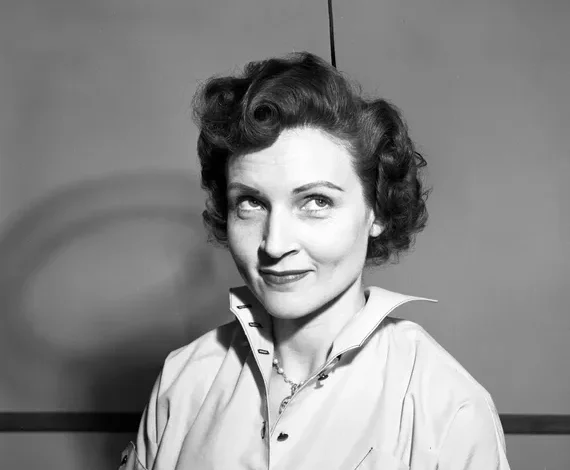
In 1954, sponsors and network affiliates warned Betty White that if she didn’t remove her Black co-star from her show, there would be serious consequences. She listened politely, nodded, smiled—and then gave him even more airtime.Betty White was hosting The Betty White Show, a live daytime variety program on NBC where she didn’t just perform—she helped produce it, shape the content, and make key creative decisions. This was an era when women were seldom granted real authority in television; they were expected to be charming on camera and compliant behind the scenes. White broke that mold early on.One of the show’s regular performers was Arthur Duncan, a talented tap dancer whose energetic routines lit up the stage and delighted audiences. When the program went national, complaints poured in—particularly from Southern viewers and stations. Letters demanded his removal.
Sponsors, wary of backlash and boycotts, echoed the pressure. The network passed along the message in diplomatic terms, but the intent was clear: let him go, or jeopardize the show’s future.This was 1954. Jim Crow laws still enforced segregation across much of the United States. Standing firm on principle could—and often did—end careers.White refused.She didn’t quietly reduce Duncan’s appearances or sideline him to dodge controversy. Instead, she reportedly increased his visibility, giving him more segments and spotlight. Her response, when pressed, was straightforward and unapologetic: “I’m sorry, but he stays. Live with it.” Not long afterward, the show was canceled—officially due to scheduling issues and sponsor pullouts, but the racial pressure played a significant role in the commercial fallout.White never portrayed the episode as an act of grand heroism. She didn’t seek praise or dwell on it publicly. Decades later, she reflected on her approach with characteristic simplicity: you don’t quit when a door closes—you find another one.And she kept finding them.In the 1970s, she reinvented herself brilliantly on The Mary Tyler Moore Show as Sue Ann Nivens, the seemingly saccharine “Happy Homemaker” whose sugary exterior hid a wickedly sharp tongue. The role earned her multiple Emmy Awards and showed that audiences loved women portrayed as intelligent, multifaceted, and unafraid to bite back.Then came The Golden Girls in 1985. A sitcom about four women over 50 sharing a home in Miami was viewed as a risky proposition—executives questioned whether viewers would tune in for stories about older women’s friendships, romances, and everyday lives. The series defied expectations, becoming a massive hit and cultural touchstone.
As the sweet, occasionally naive Rose Nylund, White mastered comic timing, turning gentle innocence into razor-sharp punchlines that landed perfectly every time.Her career spanned live television’s earliest days through the digital age. In 2010, at age 88, she became the oldest person ever to host Saturday Night Live, charming a new generation with the same wit, warmth, and professionalism that had carried her for over six decades.When Betty White passed away on December 31, 2021—just weeks before her 100th birthday—the world celebrated her humor, kindness, and extraordinary longevity. But her legacy runs deeper than laughter alone. She quietly claimed creative control in an industry that limited women’s power. She stood against racism when compliance would have been simpler and safer. She grew older in a youth-obsessed business and not only stayed relevant but became more beloved with time.Her example shows that true kindness doesn’t mean yielding to pressure, that a warm smile can coexist with unbreakable resolve, and that holding to your principles might cost you a job—or even a show—but it builds something far more lasting: respect, integrity, and a legacy that endures.