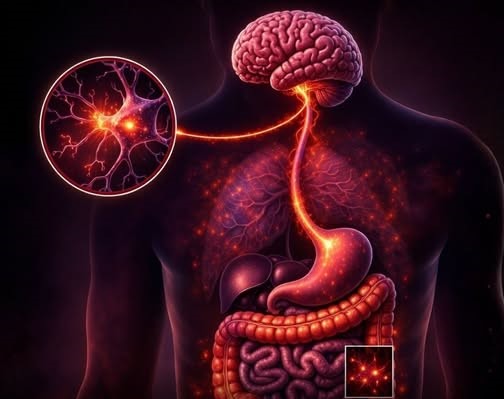
- Coordinating rhythmic peristaltic waves (muscle contractions that propel food forward)
- Regulating enzyme and mucus secretion from glands
- Modulating local blood flow to the gut wall for nutrient absorption
- Monitoring and responding to chemical, mechanical, and microbial stimuli in the lumen
This self-sufficiency explains why basic digestion continues in cases of spinal cord injury or vagus nerve disruption—the gut doesn’t “need” constant brain oversight for routine operations.However, the ENS doesn’t function in isolation. It maintains robust bidirectional communication with the brain via the gut-brain axis, a sophisticated network involving:
- The vagus nerve (the primary parasympathetic pathway for sensory and motor signals)
- Hormonal messengers (e.g., gut-derived peptides like cholecystokinin or GLP-1)
- Immune signaling (cytokines and other mediators)
- Direct microbial influences through metabolites
A particularly striking aspect is the gut’s role in neurotransmitter production. The ENS and associated enterochromaffin cells in the intestinal lining produce the vast majority—approximately 90–95%—of the body’s serotonin (5-HT), a key monoamine best known for mood regulation in the brain. While most gut serotonin acts locally (influencing motility, secretion, and sensation), it also contributes to systemic signaling. Certain gut microbes can directly or indirectly stimulate serotonin synthesis by enterochromaffin cells, or produce precursor molecules that affect tryptophan metabolism. This microbial modulation ties into broader effects on mood, anxiety, stress responses, and even conditions like depression or irritable bowel syndrome (IBS).The ENS also integrates with the immune system, constantly sampling the gut environment and modulating inflammation, barrier integrity, and pathogen responses. Disruptions in this “second brain”—from dysbiosis, chronic stress, poor diet, or infections—can manifest as gastrointestinal issues, altered mood, heightened stress sensitivity (“gut-wrenching” anxiety), or even contribute to neurodevelopmental and neurodegenerative disorders through long-term axis dysregulation.Importantly, the ENS does not generate conscious thoughts, emotions, or self-awareness like the central brain. It lacks the higher cortical structures for cognition. Instead, its influence is more subtle and visceral: shaping “gut feelings,” stress-induced digestive changes (e.g., butterflies in the stomach or nausea from nerves), and emotional states via feedback loops to the brain.This growing understanding reframes the interplay between mental and digestive health.