Uncategorized

Tiny Magnetic “Cellbots” Just Doubled Neuron Growth – Could This Finally Cure Alzheimer’s?
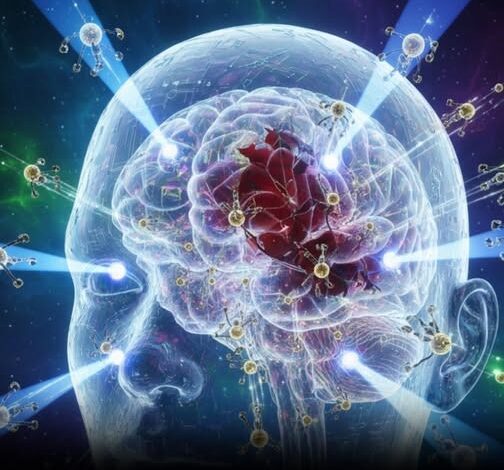
Researchers have developed an innovative hybrid approach that combines magnetic microrobots (referred to as “Cellbots”) with focused ultrasound stimulation to improve the precision and effectiveness of stem cell delivery and differentiation in the brain. This method addresses two major challenges in stem cell-based therapies for neurological disorders: accurately guiding cells to damaged or diseased areas and ensuring those cells properly mature into functional neurons rather than staying undifferentiated or becoming inactive.
The core of the technology involves engineering Cellbots by loading stem cells (such as SH-SY5Y neuroblastoma cells or other compatible lines) with superparamagnetic iron oxide nanoparticles (SPIONs), often coated with poly-L-lysine for better internalization and biocompatibility. These nanoparticles make the cells magnetically responsive, allowing external rotating magnetic fields (e.g., around 20 millitesla) to steer them precisely to target brain regions. In experiments, the Cellbots achieved navigation speeds of approximately 36.9–37 micrometers per second without compromising cell viability or health.
Once the Cellbots reach the intended location, a compact piezoelectric micromachined ultrasound transducer (pMUT) array delivers localized, gentle ultrasound waves. This non-invasive stimulation promotes neural differentiation by encouraging the cells to extend neurites — long projections essential for forming neural connections and synaptic networks. Lab results showed a significant enhancement: ultrasound-treated cells developed neurites averaging 119.9 ± 34.3 micrometers in length, compared to only 63.2 ± 17.3 micrometers in unstimulated controls — representing roughly a 90% increase in neurite outgrowth. This indicates stronger potential for rebuilding functional neural circuits.The pMUT array enables selective, channel-by-channel activation to focus stimulation precisely on the delivered cells while minimizing overlap or off-target effects. The integration of magnetic guidance for delivery and ultrasound for differentiation creates a sequential, synergistic process that overcomes limitations of earlier magnetic-only or ultrasound-only methods.
While much of the work has been demonstrated in vitro and through targeted delivery systems (with some related earlier studies showing intranasal administration in mouse models to bypass the blood-brain barrier), the current breakthrough emphasizes controlled in-lab differentiation. Researchers stress that additional long-term studies are essential to evaluate safety, integration, and efficacy in living organisms — particularly for human applications.This advancement represents a promising step forward in neural engineering and regenerative medicine. If successfully translated, it could help restore lost neural function in devastating conditions such as Parkinson’s disease, Alzheimer’s disease, stroke-related damage, or other neurodegenerative disorders by enabling more reliable reconstruction of neural networks.The research, led by teams including those at Daegu Gyeongbuk Institute of Science and Technology (DGIST), was published in journals like Microsystems & Nanoengineering (2025), highlighting the potential of combining these microrobotic and acoustic tools for next-generation brain therapies.
24 web pages