“The Heartwarming Story of the Girl Who Failed Her Cinderella Audition… and Got the Role Anyway”

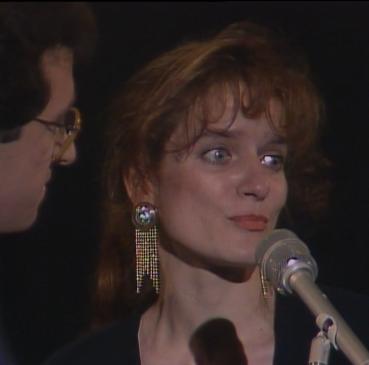
In 1964, seventeen-year-old Lesley Ann Warren walked into a theater to audition for the role of a lifetime. She was already performing on Broadway in 110 in the Shade and had just become the youngest person ever accepted into the prestigious Actors Studio at age 17, studying under the legendary Lee Strasberg.But none of that seemed to matter when she stood in front of Richard Rodgers — one half of the greatest songwriting duo in Broadway history, the man behind The Sound of Music, South Pacific, The King and I, and Oklahoma!She was auditioning for the lead role of Cinderella in a new television production of Rodgers and Hammerstein’s beloved musical.
The original 1957 version starring Julie Andrews had been watched by 107 million people — an astonishing 60% of the entire American population at the time.This new version needed a fresh young face who could carry the magic.On paper, Lesley Ann Warren was perfect. She was a trained ballet dancer who had studied at the School of American Ballet under George Balanchine. She possessed a beautiful soprano voice and already had solid Broadway experience. She had everything the role required.Everything except confidence in that moment.Standing before Richard Rodgers, choreographer Eugene Loring, and musical supervisor Johnny Green, surrounded by the powerful creative team, Lesley froze.“I was so terrified,” she later recalled. “I was only 17 years old. I was really terrible. I was awful! I was completely frozen.”She couldn’t sing. She couldn’t move.
The fear paralyzed her. Everything she had trained for vanished under the pressure of the moment.Richard Rodgers watched her struggle, then made his decision.“No, she’s not right. She’s not really ready.”The audition was over. Lesley walked out knowing she had blown her big chance. The role of Cinderella — the opportunity that could have defined her career — was gone.She had failed in front of one of the greatest composers in American history, and in show business, there were rarely second chances.But one person in the room saw something the others had missed.Director Charles S. Dubin had seen Lesley perform on Broadway. He had watched her win the Theatre World Award for Most Promising Newcomer. He knew what she was truly capable of when she wasn’t overcome by fear.He refused to let Richard Rodgers give up on her.“You gotta give her another chance,” Dubin insisted. “She’s just 18. She was really afraid and insecure.
Please bring her back.”It was an extraordinary request. Richard Rodgers rarely gave second auditions. When he said no, it was usually final.But Dubin kept pushing. He believed in the young actress and refused to let her fear destroy her future.Finally, Rodgers agreed.A few days later, Lesley returned — this time to Richard Rodgers’ own apartment. The choreographer, musical director, and Charles Dubin were all there. Richard Rodgers himself sat at the piano.Then Rodgers did something unexpected. He asked everyone to leave the room, leaving just him and the frightened seventeen-year-old girl.He invited her to sit beside him on the piano bench and began to play “My Funny Valentine,” one of his most beautiful and delicate songs.“Sing it the way I want it to be sung,” he told her gently. “The way it was written.”In that moment, the pressure lifted.
The fear disappeared. It was no longer an audition — it had become a music lesson between two artists.Lesley sang.And Richard Rodgers finally heard what Charles Dubin had seen all along: a young woman with extraordinary talent who simply needed someone to believe in her.She got the role.On February 22, 1965, Rodgers and Hammerstein’s Cinderella aired on CBS. Eighteen-year-old Lesley Ann Warren starred opposite an all-star cast including Ginger Rogers, Walter Pidgeon, Celeste Holm, and Jo Van Fleet.Richard Rodgers became her mentor. He arranged opera lessons to improve her breath control and confidence, personally guided her through rehearsals, and stayed on set until early morning hours. He even once went out in the middle of the night to buy her peanut brittle when she craved it.The man who had first rejected her became her greatest champion.
The broadcast was watched by an estimated 42 million people and became the highest-rated non-sports special in CBS history — a record that stood for 44 years until 2009.For an entire generation, Lesley Ann Warren was Cinderella.Her luminous performance launched a remarkable six-decade career that included an Oscar nomination for Victor/Victoria, a Golden Globe win, and beloved roles in Mission: Impossible, Clue, and many more.But she never forgot that quiet moment on the piano bench with Richard Rodgers.Sometimes the fairy tale isn’t about magic wands or glass slippers. It’s about the people who believe in you when you’ve lost belief in yourself. It’s about the second chance you thought you’d never get.She froze. She failed. She was rejected by a legend.But because one director fought for her and one composer gave her another chance, she became the Cinderella that millions of children would never forget.