Uncategorized

She Lost Her Entire Family to Fever, Then Watched Everything Burn—What She Did Next Made Her America’s Most Dangerous Woman
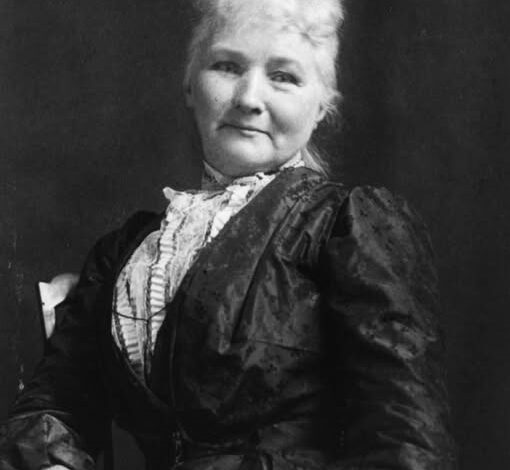
She lost her husband and every last one of her four young children in a single, merciless yellow fever epidemic that tore through Memphis in 1867. Then, just four years later, the Great Chicago Fire of 1871 swept in and devoured her newly rebuilt home, her small dressmaking shop, her tools, her possessions—everything she had painstakingly pieced back together after the first catastrophe. Most people, hammered by back-to-back losses like that, would have collapsed into endless grief, retreated from the world, and faded away in silence. Mary Harris Jones did the opposite.
She transformed her unimaginable pain into unbreakable resolve and became something entirely different: Mother Jones, one of the most relentless, courageous, and genuinely terrifying labor activists the United States has ever produced. Born Mary Harris (baptized August 1, 1837) in Cork, Ireland, she grew up in a world already battered by deep poverty and constant uncertainty. The Great Famine loomed over her childhood, forcing her family—like tens of thousands of other Irish—to flee for survival, first to Canada and eventually to the United States. She carried those early hardships with her into adulthood, but she lived quietly at first: training and working as a teacher, then shifting to dressmaking, one of the only respectable trades open to poor and working-class women in that era. Her life was modest, practical, built on sheer necessity rather than any grand personal ambition. In Memphis, Tennessee, she met George E. Jones, a skilled iron molder who was also a committed union supporter. They married, started building a life together, and for a short, precious window, everything felt solid. Four children came along—three girls and a boy—all still very young, under eight years old. They had a home. A routine. A fragile sense of security. Then, in the summer of 1867, yellow fever struck without pity or pause. It spread like wildfire through the crowded, poor neighborhoods of Memphis, claiming lives by the hundreds every day. There was no warning, no real escape for working families. One by one, Mary’s children sickened, suffered, and died. She washed their tiny bodies with her own hands, dressed them for burial, and sat through night after night of crushing sorrow while death carts rattled past outside.
Then the fever took her husband too. At thirty years old, she was left completely alone in a city drowning in loss—no comfort, no visitors, because every household nearby was reeling from the same horror. That level of devastation breaks most people beyond repair. This could easily have been the end for Mary. Instead, she refused to stay broken. She packed what little remained of her spirit and moved to Chicago, carrying nothing but grief and an iron will to keep going. Slowly, doggedly, she started over: reopening a small dressmaking business, sewing late into the night, working punishing hours just to eat and keep a roof overhead. For a brief time, life edged toward something functional again—not joyful, but at least survivable. Then October 1871 arrived. The Great Chicago Fire erupted and raged unchecked for days, reducing vast swaths of the city to smoldering ruins. Mary’s home vanished in the flames. Her shop and all her sewing supplies turned to ash. Every hard-won piece of stability she had rebuilt was gone in hours. Standing amid the charred wreckage, something fundamental inside her changed forever. She later wrote that she realized, in that moment of total ruin, she truly had nothing left to lose. That realization didn’t crush her further. It liberated her. When fear has no more leverage—no family to protect, no possessions to guard—it loses its hold. And without fear, a person becomes unstoppable. In the decades that followed, Mary began showing up at meetings of early labor organizations like the Knights of Labor. What she witnessed there redirected her entire existence. She saw grown men crippled by brutal factory and mine work before they reached forty. Families locked into company-owned housing, trapped in debt through company scrip that could only be spent at overpriced company stores. Children—some barely old enough to walk steadily—sent into mills, factories, and coal breakers, their small hands mangled by machines, their bodies worn down by endless shifts instead of play or school. Mary had already buried her own four children. She could not stand by and watch a nation sacrifice other mothers’ sons and daughters to the same indifferent machinery of profit. By the 1890s, she had fully become Mother Jones—not just a nickname, but a deliberate, powerful persona.
She dressed in simple black matronly clothes, spoke with the authority of a grieving yet fierce mother figure, and claimed the entire working class as her own. She called striking workers “my boys,” and in return, they gave her something deeper than respect: they treated her like family, like the mother many of them had lost or never truly had. Yet there was nothing gentle or sentimental about her approach. She was razor-sharp, blunt, fearless. She marched straight into strike zones patrolled by armed company guards and militias. She faced down crowds with plain, unvarnished truth about exploitation and greed. She ridiculed corrupt politicians, confronted wealthy industrialists head-on, and never backed down from threats or violence. The powerful soon had a name for her: “the most dangerous woman in America.” Not because she wielded guns or bombs. Because her words and her presence could ignite thousands, organize the disorganized, and force change where others failed. In 1902, she threw herself into one of the largest coal strikes in U.S. history—over 140,000 Pennsylvania miners locked out for months. She became a fixture on the picket lines, rallying spirits, distributing food and encouragement, refusing to let morale collapse even as hunger and winter set in. But what haunted her deepest wasn’t only the exhausted men. It was the children she saw everywhere—maimed, exhausted, robbed of any real childhood by industrial greed. By 1900, an estimated two million American kids labored in horrific conditions, some starting as young as six. In the summer of 1903, at age sixty-six, she took radical action to make the invisible visible. She organized the famous March of the Mill Children: gathering child workers from textile mills and breaking factories in Kensington, Philadelphia, and leading them on a grueling 120+ mile trek toward New York City—ultimately heading for President Theodore Roosevelt’s summer home in Oyster Bay. The children marched in their ragged work clothes; some displayed missing fingers from machinery accidents, others carried scars and deformities from years of toil. Their handmade signs pleaded for the basics most took for granted: Time to play. Time to learn. A real childhood. At every town along the route, Mother Jones stopped the march to speak—not in flowery speeches, but in raw, heartbreaking truth drawn from what she had witnessed and lived. Newspapers sent reporters to cover the spectacle. Crowds gathered. Photographs circulated.
For the first time on a national scale, ordinary Americans were forced to confront the human cost hidden behind cheap goods and industrial “progress.” President Roosevelt never agreed to meet them—he was “not available.” But the march succeeded anyway. The images and stories could not be erased. Public awareness grew. Pressure mounted. Child labor laws began to tighten in the years that followed, and the conversation she forced never fully died down. Mother Jones never stopped. She was arrested dozens of times, thrown in jail, threatened with violence, even confined under military guard during strikes. None of it deterred her. She kept showing up—through her seventies, into her eighties—walking into danger zones where younger organizers hesitated. She never accumulated wealth. She built no personal empire or comfortable retirement. What she built instead was relentless pressure on an unjust system—shifting how workers were valued, how children were protected, how ordinary people could challenge concentrated power. When she died on November 30, 1930, at the age of 93, she left behind no fortune, no grand estate, no biological family. But she left an enduring legacy: a nation that had been forced to look at its cruelties and, slowly, begin to change them. One of her most famous lines captures it perfectly: “Pray for the dead and fight like hell for the living.” She had already buried her dead. So she spent the rest of her extraordinary life fighting—for everyone else’s living. 15 web pages