Blind No More? Scientists Implant World’s First Brain-Direct Bionic Eye — Human Trials Incoming!

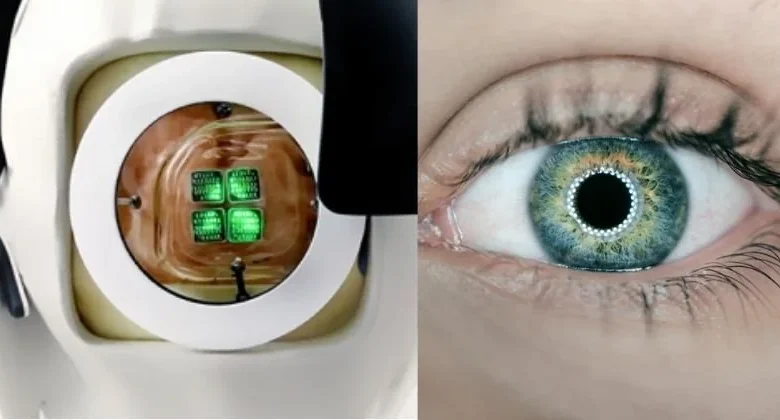
Here is a longer, more detailed version of the text in English, expanded with additional context while keeping the core content accurate and up-to-date:Scientists in Australia are making significant strides in developing cutting-edge bionic eye technologies aimed at restoring a form of functional vision to individuals affected by certain types of profound blindness. Among the most promising initiatives is the work led by the Monash Vision Group (MVG) at Monash University in Melbourne, in collaboration with Alfred Health and other partners.
Their flagship project, the Gennaris Bionic Vision System, represents a groundbreaking approach often described as the world’s first fully implantable cortical visual prosthesis designed for long-term use.The Gennaris system works by completely bypassing damaged or non-functional parts of the eye and optic nerve—such as those affected by severe retinal degeneration, glaucoma, optic nerve trauma, or other conditions that render traditional retinal implants ineffective. Instead, it delivers visual information directly to the brain’s visual cortex.The technology begins with a miniature camera mounted on custom headgear or glasses worn by the user. This camera captures real-time images from the environment. The captured visual data is then transmitted wirelessly to a compact vision processor unit (typically worn on a belt or integrated nearby), which uses advanced signal-processing algorithms to extract key features, simplify the scene, and convert the information into patterns suitable for neural stimulation.
These processed signals are sent to up to 11 tiny, wireless implantable devices—each about the size of a small tile and containing 43 hair-thin microelectrodes. Surgeons place these “tiles” on the surface of the primary visual cortex at the back of the brain using standard neurosurgical techniques. The electrodes deliver precise, low-level electrical pulses that stimulate clusters of neurons, producing patterns of perceived light known as phosphenes—small flashes or spots that users can learn to interpret over time as basic visual information.In preclinical studies, including successful long-term implantation in animal models (such as sheep), the system demonstrated safety with minimal tissue damage or adverse effects, even after extended periods of stimulation. Simulations developed by the team, including an iPhone-based app that mimics what recipients might see, have allowed researchers to test and refine the technology.
These simulations suggest that users could potentially recognize simple objects on tables, detect moving people or large gestures in a room, identify basic shapes and outlines, avoid obstacles while navigating spaces, and experience a wide field of view (around 100 degrees in early designs) for a more natural perception compared to narrower systems.While the Gennaris Bionic Vision System remains in the development phase and has not yet completed widespread human use, the project has received Breakthrough Device designation from the United States FDA, highlighting its potential impact. The Monash Vision Group is actively seeking funding and preparing for first-in-human clinical trials in a small number of participants with complete bilateral blindness. These trials, planned to take place in Melbourne (with procedures at The Alfred Hospital), aim to evaluate the device’s safety, effectiveness, and ability to provide meaningful visual restoration.Early insights from related bionic vision research and the team’s simulations indicate that participants may perceive flashes of light, rudimentary patterns, shapes, and motion—enough to assist with basic orientation, mobility, and object recognition in everyday environments.
Although the restored vision is not equivalent to natural sight (it resembles a pixelated or low-resolution map of lights rather than full-color, high-definition vision), even limited improvements could dramatically enhance independence, safety, and quality of life for those who currently have no viable treatment options.Researchers emphasize that this cortical approach complements rather than competes with existing retinal implants, as it targets a broader range of blindness causes where the optic nerve or retina is irreparably damaged. With continued progress, systems like Gennaris hold the promise of transforming the lives of millions worldwide affected by untreatable visual impairment, marking a major milestone in neuroprosthetics and neural engineering. 22 web pages Explain phosphenes in detail