Uncategorized

Scientists Just Found Plague DNA in 5,000-Year-Old Skeletons – It Was Spreading WAY Earlier Than We Thought
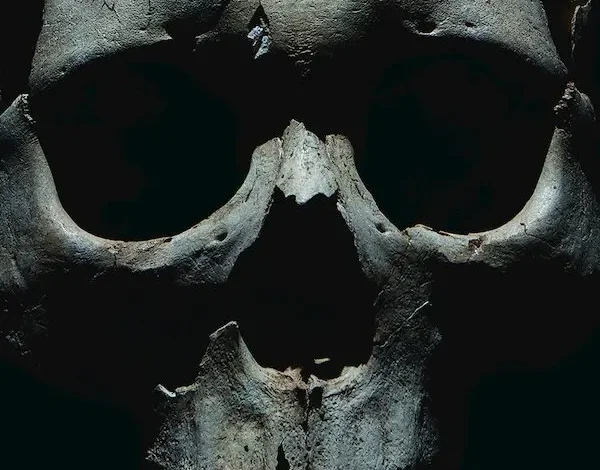
Here’s a longer, more detailed and engaging version of the text in English, expanded with additional scientific context, evolutionary details, implications for human history, and broader insights while preserving the original content and facts exactly:A groundbreaking new ancient DNA study has dramatically reshaped our understanding of plague’s deep history by pinpointing the likely human carriers of the world’s earliest confirmed form of the disease, pushing the timeline of Yersinia pestis infections in humans back thousands of years into prehistory. By meticulously extracting and sequencing genetic material from ancient human skeletal remains—primarily teeth, which preserve blood-borne pathogens exceptionally well—researchers recovered traces of plague-related DNA dating to the third millennium BCE (roughly 3000–2000 BCE). This evidence directly links Yersinia pestis, the bacterium infamous for causing later catastrophic pandemics like the Justinianic Plague and the Black Death, to individuals who lived during the Late Neolithic to Early Bronze Age transition in Central Eurasia.
A groundbreaking new ancient DNA study has dramatically reshaped our understanding of plague’s deep history by pinpointing the likely human carriers of the world’s earliest confirmed form of the disease, pushing the timeline of Yersinia pestis infections in humans back thousands of years into prehistory. By meticulously extracting and sequencing genetic material from ancient human skeletal remains—primarily teeth, which preserve blood-borne pathogens exceptionally well—researchers recovered traces of plague-related DNA dating to the third millennium BCE (roughly 3000–2000 BCE). This evidence directly links Yersinia pestis, the bacterium infamous for causing later catastrophic pandemics like the Justinianic Plague and the Black Death, to individuals who lived during the Late Neolithic to Early Bronze Age transition in Central Eurasia.These findings reveal that plague was circulating in human populations far earlier than the major historical outbreaks documented in written records. The ancient strains identified belong to an early lineage known as the Late Neolithic Bronze Age (LNBA) branch of Y. pestis. Genetic analysis shows that these prehistoric versions of the bacterium lacked critical mutations—such as those enhancing flea-to-human transmission efficiency—that later transformed the pathogen into the highly virulent, bubonic form responsible for massive die-offs in medieval times. Without flea-based vectors, this early plague likely spread through less efficient means, possibly direct contact, respiratory droplets in close-knit communities, or zoonotic jumps from animal reservoirs amid the growing interactions between humans and domesticated livestock.
The study highlights the pivotal role of early pastoralist societies—mobile herders and early farmers who roamed the vast steppes of Central Eurasia—in facilitating the pathogen’s dispersal. As these groups expanded their territories, engaged in long-distance trade networks (exchanging goods like metals, animals, and ideas), and migrated with herds across regions from the Pontic-Caspian steppe to parts of Europe and Asia, they inadvertently carried the bacterium with them. This created a pattern of quiet, persistent circulation rather than explosive pandemics: the disease simmered in small, scattered populations for centuries, occasionally causing localized outbreaks but never reaching the scale of later horrors.By integrating paleogenomics with archaeological evidence of mobility, migration waves (including the Yamnaya-related steppe expansions), and shifting lifestyles during the Bronze Age, scientists are uncovering how human movements intertwined with pathogen evolution. The LNBA lineage persisted for over 2,000 years across a wide geographic swath before eventually giving way to more adapted strains. This prolonged presence suggests plague acted as a selective pressure on ancient populations, potentially contributing to demographic shifts, cultural changes, or even declines in certain regions—though not as dramatically as the flea-transmitted versions that followed millennia later.
These insights into ancient transmission pathways are invaluable for modern epidemiology and evolutionary biology. They illustrate how infectious diseases emerge, adapt, and spread in tandem with human societal developments—from the rise of pastoralism and trade routes to increased population density and animal domestication. Rather than viewing plague solely through the lens of sudden, devastating events like the Black Death (which killed up to half of Europe’s population in the 14th century), this research paints a picture of a pathogen that co-evolved quietly alongside humanity for thousands of years, gradually acquiring traits that made it more dangerous. Understanding these prehistoric dynamics helps build a more comprehensive model of disease emergence, informs predictions about future zoonotic threats, and underscores how interconnected human history has always been with the microscopic world of pathogens—long before recorded history began.