Tiny Particles Just Declared War on Cancer – They Generate Killer Oxygen Inside Tumors Only

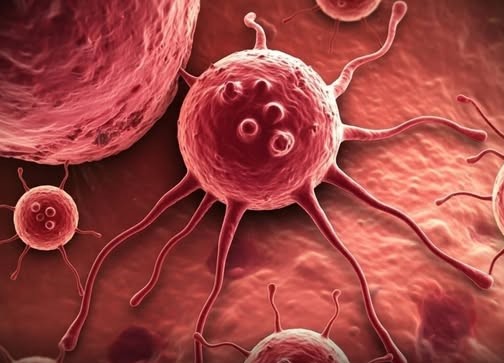
- In cancer cells, the MOF acts as a superior catalyst, triggering two simultaneous reactions:
- Fenton/Fenton-like reaction: Generates highly reactive hydroxyl radicals (•OH) from H₂O₂.
- Production of singlet oxygen (¹O₂), a potent ROS with a different electron configuration for added destructive power.
- These ROS overwhelm the cancer cells’ antioxidant defenses, causing oxidative damage to DNA, proteins, lipids (peroxidation), and other structures → leading to cell death (apoptosis/necrosis).
- Healthy cells, with lower H₂O₂ and better redox balance, experience minimal impact—providing the sought-after selectivity and reduced side effects compared to traditional chemo or radiation.
Key advantages over prior CDT designs:
- Dual ROS generation (•OH + ¹O₂) for amplified potency.
- Superior catalytic efficiency and stability.
- Tumor accumulation and activation in the tumor microenvironment.
Lab results (in vitro across multiple cancer cell lines and likely in vivo models) showed strong cytotoxicity to cancer cells, negligible harm to normal cells, and promising tumor reduction/safety profiles. While still preclinical, this positions the nanomaterial as a candidate for standalone CDT or combination therapies (e.g., with immunotherapy, drug delivery, or other modalities).This builds on the broader field of ROS-based nanomedicines, where nanomaterials (metal-based like iron/copper NPs, organic carriers) generate or amplify ROS selectively in tumors via CDT, photodynamic therapy (PDT), sonodynamic therapy (SDT), or smart drug release. The OSU work highlights how precise molecular/nanoscale engineering—optimizing particle size, structure, and catalytic properties—can turn the tumor’s own chemistry against it.Broader implications:
- Potential for targeted, low-toxicity cancer treatments with fewer side effects.
- Opens avenues for nanomaterials in drug delivery, imaging, and even regenerative applications by harnessing controlled biological interactions.
- Reinforces the nanoscale revolution: tiny engineered particles delivering outsized therapeutic impact.
Challenges remain: scaling production, long-term biocompatibility/safety, tumor penetration in humans, and clinical translation. But this dual-ROS MOF represents a step toward smarter, more precise oncology—where science at the atomic level fights cancer more effectively and humanely. For visuals, scientific illustrations often depict MOF structures, ROS generation pathways, and selective cell damage in tumor vs. normal tissue.