Uncategorized

Scientists Just Found Hidden “Organs” in Your Body That Have Been There All Along – And They’re Game-Changers
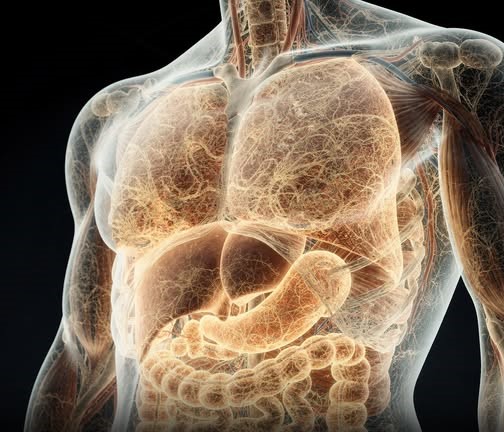
For centuries, human anatomy was considered fully explored and completely understood. This long-held belief has gradually shifted as advances in imaging technology—such as high-resolution MRI, CT scans, confocal microscopy, and other precise visualization tools—have allowed scientists to examine tissues in far greater detail than ever before. These discoveries haven’t occurred because the human body has somehow changed over time; rather, they stem from our improved ability to observe and interpret what was already there. Structures once dismissed as mere “empty space,” insignificant filler, or fragmented tissues have revealed themselves to possess organized architecture, distinct boundaries, and previously unrecognized physiological roles.
One prominent example is the interstitium, a vast, body-wide network of fluid-filled spaces situated within connective tissues. Previously viewed as simple supportive packing or dense, unstructured material beneath the skin and around organs, advanced imaging revealed it as an interconnected system of channels supported by a flexible mesh of collagen and other proteins. These spaces facilitate the movement of fluids, may act as shock absorbers to protect tissues during organ motion (such as in the gut or lungs), and could play roles in immune cell transport and even disease progression, including potential pathways for cancer spread. While debates continue over whether it fully qualifies as a distinct “organ,” its recognition has reshaped views on how tissues interact and maintain homeostasis.Another key re-examination involves the mesentery, the fold of tissue that attaches the intestines to the abdominal wall. For generations, anatomists described it as a collection of separate, discontinuous structures. Detailed studies, particularly those led by researchers like J. Calvin Coffey, demonstrated that it is actually a single, continuous organ-like unit with a defined structure and functions beyond mere anchorage—such as supporting blood vessels, lymphatics, and nerves, while contributing to immune surveillance in the gut. This led to its reclassification in major textbooks like Gray’s Anatomy, sparking the emergence of “mesenteric science” as a potential new field to explore its implications for digestive disorders and abdominal surgeries.
More recently, in 2020, a team of Dutch researchers identified what may be a previously overlooked pair of major salivary glands—dubbed the tubarial glands—deep in the head, located where the nasal cavity meets the throat (nasopharynx). These glands, roughly 1.5 inches long, were spotted during advanced scans of cancer patients and confirmed through cadaver dissections. They appear similar to other large salivary glands (parotid, submandibular, and sublingual) and produce saliva, which could have implications for conditions like dry mouth (xerostomia) caused by head and neck radiation therapy. While some experts debate whether they represent truly “new” major glands or a variant of known minor ones, their consistent presence in scans and tissues highlights how even well-studied regions can hide surprises when examined with modern tools.These examples illustrate a broader truth: human anatomy is not a static, completed map but an evolving field shaped by technological progress and renewed scrutiny. As imaging, microscopy, and analytical methods continue to improve, previously familiar areas—once thought fully understood—are still yielding layers of overlooked complexity, function, and interconnectedness. The body remains an active frontier of exploration, reminding us that even after millennia of study, there may be more to discover right beneath the surface.