Uncategorized

“Maggie Smith Was Secretly Dying of Cancer While Filming Harry Potter — The Truth Will Shock You”
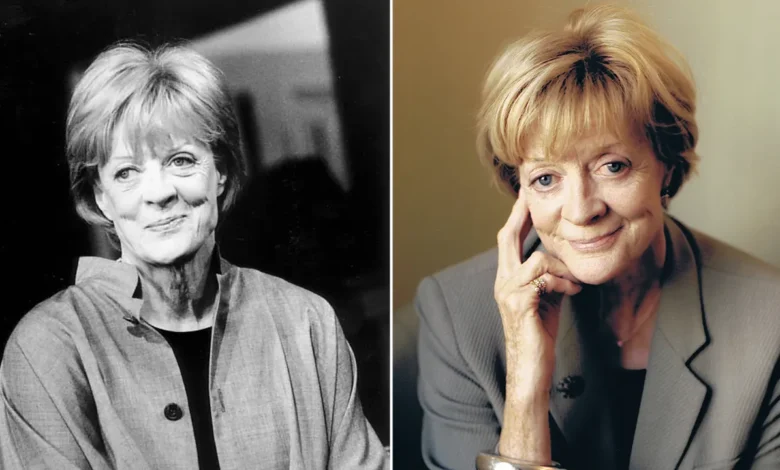
Dame Maggie Smith was bald beneath her wig. She felt so ill between takes that she thought she might die. At seventy-two years old and undergoing chemotherapy for breast cancer, not a single person on the Harry Potter set knew. The wig was fastened tightly enough to conceal her chemo-induced hair loss. There had been no hair underneath for months. Across the world, millions of children sat in darkened cinemas, watching Professor McGonagall protect her students at Hogwarts. Meanwhile, the actress portraying her was privately fighting to stay alive.
She had faced a similar scare years earlier when she discovered a lump in her breast that turned out to be benign. So in 2007, when she found another, she entered the doctor’s office expecting the same outcome. She was seventy-two and in the midst of filming Harry Potter and the Half-Blood Prince, the sixth film in the series that had turned her strict, formidable Professor McGonagall into a hero for an entire generation of young fans.This time, the diagnosis was different. It was cancer. The treatment would be harsh. The filming schedule, however, could not be changed. Millions of fans were waiting, and the cast and crew were already deep into production. Daniel Radcliffe, Emma Watson, and Rupert Grint — the three young actors who had grown up on set with her — still had a full year of work ahead.Maggie Smith made a choice few people would have. She would undergo chemotherapy. She would continue filming. She would do both at the same time.
And she would tell no one on the production.Chemotherapy did what it does. It drained her completely. It caused her hair to fall out entirely. It left her feeling, in her own words, as though she wouldn’t have minded dying. Yet she continued showing up. The tight grey bun wig she wore as Professor McGonagall unintentionally hid her bald head. Most of the cast simply assumed it was part of the costume. They had no idea what she was going through.“I was like a boiled egg,” she later said with her characteristic dry wit. The joke masked a body that was suffering. Between takes, she would sit in her trailer feeling ghastly. Then her cue would come, she would step onto the set, deliver McGonagall’s sharp, precise lines in that unmistakable voice, and return to her trailer trying not to be sick.Daniel Radcliffe, who later said the word “legend” is overused but perfectly described her, never knew. Emma Watson didn’t know. Rupert Grint didn’t know.
Most of the crew remained unaware. The filmmakers, who would have rearranged the entire schedule for her if they had been told, were never informed.She completed Half-Blood Prince. Then she signed on for the final two films, Harry Potter and the Deathly Hallows Parts 1 and 2. Most people in her condition would have stepped away. She chose to push forward. She told herself she would stagger through, and she did.During the filming of the last movie, her already weakened immune system failed again. She developed shingles. She kept filming anyway.For two full years, she carried the secret alone. There was no press release, no emotional interview, and no attempt to turn her illness into part of her public legend. She simply went to work, did her job, and suffered in private.It was not until 2009, after filming had wrapped and her treatment was complete, that she finally spoke about it in an interview with the Daily Telegraph. The world, which had watched Professor McGonagall calmly defend Hogwarts, suddenly learned that the actress had been quietly battling for her own life the entire time.“The cancer was hideous,” she said. “It takes the wind out of your sails. It leaves you flattened.”The experience changed her relationship with acting. Though she had been one of the greatest theatre actresses of the twentieth century, with a reputation built on live stages in London and New York, she admitted after chemotherapy that she was afraid to return to the stage. “It knocks you sideways,” she said. “You are not as resilient.”She never went back to theatre. Instead, at the age of seventy-five, she took on the role of Violet Crawley, the Dowager Countess of Grantham, in the British period drama Downton Abbey.That part brought her a level of global fame that even two Academy Awards, a Tony, and decades of acclaimed stage work had not.
Her sharp one-liners as the Dowager went viral. Her withering looks became internet shorthand. She won three Emmy Awards across six seasons.Despite being one of the most decorated actresses of her generation, she remarked with amused disbelief, “I’d led a perfectly normal life until Downton Abbey. Nobody knew who the hell I was.”She continued working. She returned as Violet in two Downton Abbey films in 2019 and 2022. In 2023, at eighty-eight, she starred in The Miracle Club. She kept showing up.On September 27, 2024, Dame Maggie Smith passed away in a London hospital, just three months before her ninetieth birthday. Her sons released a statement highlighting that she had remained intensely private until the end. King Charles described her as a national treasure. Daniel Radcliffe once again said the word “legend,” though often overused, applied to her without question.She had lived fifteen years on borrowed time after a diagnosis that could have ended her career. In every one of those years, she kept working, kept performing, and kept being Maggie Smith.The performance the world remembers is Professor McGonagall. The greater performance was Maggie Smith simply showing up.