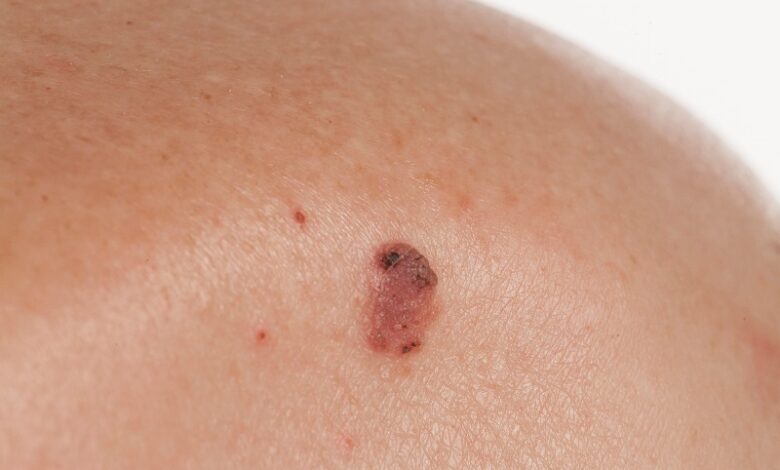
- Basal cell carcinoma (BCC) — The most frequent type, accounting for the majority of diagnoses. It often appears as a pearly, flesh-colored bump, a pinkish patch, or a sore that bleeds and crusts but doesn’t heal properly. BCC grows slowly and rarely spreads, but it can cause significant local damage if ignored.
- Squamous cell carcinoma (SCC) — The second most common. It typically shows up as a firm red bump, a scaly rough patch, or an open sore that heals and reopens. SCC can grow deeper and, in rare cases, spread to other parts of the body if not treated promptly.
- Melanoma — Less common than the others but by far the most dangerous and potentially deadly. It often develops from an existing mole or appears as a new spot. Melanoma can spread quickly to lymph nodes and organs, making early detection critical for survival.
Key warning signs to watch for (perform regular skin self-exams monthly):Use the ABCDE rule specifically for spotting potential melanoma:
- Asymmetry: One half of the mole or spot doesn’t match the other half.
- Border: Edges are irregular, ragged, notched, or blurred.
- Color: Varied shades (brown, black, tan, red, white, blue) within the same spot.
- Diameter: Usually larger than 6mm (about the size of a pencil eraser), though smaller ones can still be concerning.
- Evolving: Any change in size, shape, color, or symptoms like itching, bleeding, or pain.
Other red flags include:
- A new growth or sore that doesn’t heal within a few weeks.
- A spot that itches, hurts, or bleeds.
- A rough, scaly patch (could be actinic keratosis, a precancerous lesion).
- Dark streaks under fingernails or toenails that widen or change.
The #1 prevention tip dermatologists say not to skip: Daily use of broad-spectrum sunscreen with SPF 30 or higher—even on cloudy days, indoors near windows, or in winter. UV rays cause the vast majority of skin cancers, and consistent sunscreen application (generously, reapplying every 2 hours outdoors or after swimming/sweating) dramatically cuts risk. Pair it with seeking shade (especially 10 a.m.–4 p.m.), wearing protective clothing, wide-brimmed hats, UV-blocking sunglasses, and avoiding tanning beds entirely.Bonus habits: Get annual full-body skin checks from a dermatologist (more often if you have risk factors like fair skin, family history, many moles, or past sunburns). Early detection saves lives—skin cancer caught early is almost always curable.Stay vigilant, protect your skin year-round, and don’t hesitate to get any suspicious spot checked. Your future self will thank you