Shocking Anatomy Fact: There Are NO Muscles in Your Fingers (And That’s Why They’re So Damn Dexterous)

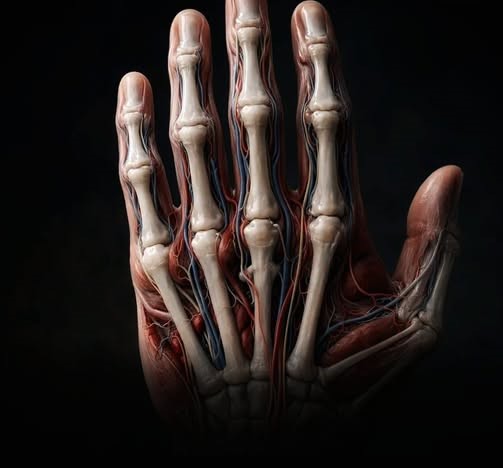
- The flexor digitorum profundus and flexor digitorum superficialis muscles in the anterior (front) compartment of the forearm send tendons that allow you to curl your fingers tightly—essential for making a fist, holding a tool, or climbing.
- On the opposite side, the extensor digitorum and other extensor muscles in the posterior forearm pull tendons along the back of the hand to straighten your fingers quickly and forcefully, as when you open your hand or flick something away.
This “remote control” setup offers several key advantages. By keeping the bulky muscle bellies out of the fingers themselves, your digits remain slim, lightweight, and highly maneuverable—perfect for delicate tasks like threading a needle, playing piano keys, or typing on a smartphone. If muscles were packed into the fingers, they’d make them thicker and stiffer, limiting fine motor skills and dexterity. The tendon system also allows for longer muscle fibers in the forearm, which can generate more force over greater distances, giving your grip surprising strength despite the slender appearance of your fingers.But the story doesn’t end there. While the major bending and straightening come from these extrinsic forearm muscles, smaller intrinsic muscles located entirely within the hand (in the palm region) fine-tune the movements. Groups like the lumbricals, interossei, thenar (thumb base), and hypothenar (pinky base) muscles handle subtle adjustments—such as spreading fingers apart, bringing them together, or coordinating precise opposition of the thumb for pinching and grasping small objects. These intrinsic muscles attach directly to the finger bones or to the tendons themselves, adding layers of control without adding bulk to the fingers.In essence, your fingers function like beautifully engineered mechanical extensions—cable-operated tools driven by powerful motors in the forearm and wrist. This elegant division of labor between extrinsic powerhouses and intrinsic precision tuners is one of the many marvels of human anatomy, enabling everything from brute-force gripping to the feather-light touch needed for surgery, artistry, or simply buttoning a shirt. Next time you wiggle your fingers, remember: the real action is happening much farther up your arm than you might think!