Uncategorized

Your Mouth Could Be Secretly Destroying Your Memory – This Bacteria Is Linked to Alzheimer’s Risk!
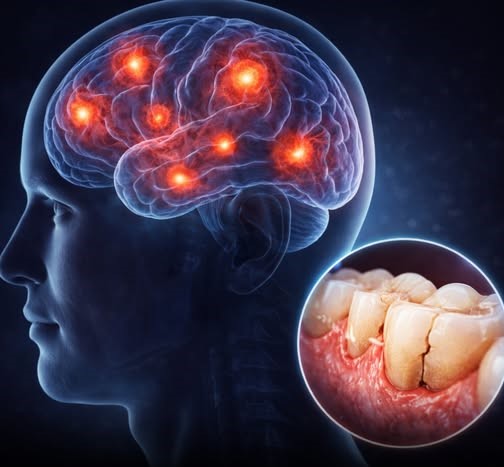
A groundbreaking 2025 study published in PNAS Nexus has uncovered intriguing links between the composition of the oral microbiome and cognitive performance in older adults, suggesting that the bacteria in your mouth could play a surprising role in brain health and potentially influence the risk of conditions like mild cognitive impairment (MCI) and Alzheimer’s disease.Led by researchers from the University of Exeter and collaborators, the research analyzed saliva rinse samples from 115 participants (aged around 60–80+), including 55 individuals diagnosed with MCI and others who were cognitively healthy. Some carried the APOE4 allele—a well-established genetic risk factor that significantly elevates the likelihood of developing Alzheimer’s disease.
Key findings highlighted stark differences in bacterial profiles:
- Harmful bacteria associations: Higher abundances of bacteria from the genus Porphyromonas (commonly linked to gum disease and periodontitis) strongly predicted MCI status. These participants tended to score lower on memory and cognitive tests. Similarly, elevated levels of Prevotella intermedia were a significant predictor of APOE4-carrier status, suggesting a possible interaction where genetic predisposition and specific oral microbes amplify vulnerability to cognitive decline.
- Beneficial bacteria associations: In contrast, greater presence of Neisseria (especially in healthy controls) correlated with stronger working memory performance. Participants with higher levels of Neisseria and Haemophilus (including Haemophilus parainfluenzae) demonstrated better overall brain function, including improved attention, executive function, and the ability to handle complex tasks. These “good” bacteria were also tied to higher oral nitrite levels—a molecule involved in nitric oxide production, which supports vascular health and may protect the brain through anti-inflammatory and blood-flow-enhancing effects.
The researchers propose several biological pathways for these connections:
- Harmful oral pathogens like Porphyromonas may contribute to systemic inflammation by producing virulence factors (e.g., gingipains or lipopolysaccharides) that travel via the bloodstream or nerves, potentially crossing the blood-brain barrier to trigger neuroinflammation, amyloid-beta aggregation, or tau pathology—hallmarks of Alzheimer’s.
- Beneficial bacteria may promote healthier nitrite/nitric oxide pathways, reducing inflammation and supporting better cerebral blood flow and neuronal function.
- Genetic factors (APOE4) could modify the oral microbiome composition, creating a feedback loop that exacerbates risks in susceptible individuals.
While the study controlled for factors like age, diet, and periodontal health, it remains observational—meaning it shows associations rather than direct causation. The oral microbiome’s influence likely involves complex interactions with the gut-brain axis, immune responses, and metabolic byproducts.Experts emphasize that these results underscore the value of proactive oral hygiene: regular brushing, flossing, dental check-ups, and managing gum disease could help maintain a balanced microbiome and potentially support long-term cognitive resilience. Emerging research is exploring whether targeted interventions (e.g., probiotics, prebiotics, or antimicrobial therapies) might one day modulate the oral microbiome to protect brain health.Important disclaimer: This summary is for educational and informational purposes only. It is not medical advice, a diagnosis, or a treatment recommendation. Oral health and cognitive concerns should always be discussed with qualified healthcare professionals, such as dentists, neurologists, or physicians. More longitudinal and interventional studies are needed to confirm these links and translate them into practical prevention strategies.The accompanying image is AI-generated for illustrative purposes, depicting a conceptual view of oral bacteria interacting with brain pathways.