Uncategorized

From blocking hair-loss hormones to smoothing frizz, research shows a coffee rinse really can help hair.
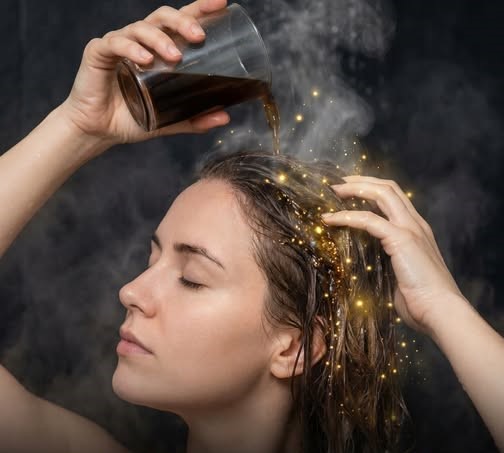
While coffee is best known as a daily boost for energy and focus, its topical use—especially as a simple rinse—has gained popularity as a natural, science-supported option for improving hair health and combating thinning.
The key player here is caffeine, the active compound in coffee, which has been studied for its effects on hair follicles.
Scientific research, including in vitro (lab-based) studies on human hair follicles, shows that caffeine can effectively counteract the damaging effects of dihydrotestosterone (DHT)—the hormone most responsible for androgenetic alopecia (pattern hair loss) in both men and women. DHT binds to receptors in hair follicles, shortening the growth phase and causing miniaturization over time.
Caffeine appears to block or reverse some of these suppressive effects by inhibiting phosphodiesterase, raising cyclic AMP (cAMP) levels, and stimulating cell metabolism and proliferation in the follicles.
Studies have found that low concentrations of caffeine (around 0.001% to 0.005%) can reverse testosterone/DHT-induced suppression, leading to longer hair shaft elongation, wider roots, and prolonged anagen (the active growth phase of the hair cycle).
One notable study even showed topical caffeine formulations performing comparably to 5% minoxidil in increasing the proportion of anagen hairs over six months in men with pattern baldness, with improvements around 10-11%.In addition to promoting growth and reducing shedding, caffeine boosts scalp blood circulation, delivering more oxygen and nutrients to the follicles.
This helps create stronger, thicker strands and a fuller appearance overall. Many of these findings come from ex vivo human follicle cultures and clinical trials, where caffeine has demonstrated good penetration into the hair follicles (even via shampoos or rinses), making it a practical topical option.Beyond growth stimulation, coffee acts as a natural conditioner due to its rich content of antioxidant flavonoids (such as chlorogenic acid and other polyphenols).
These compounds help smooth the hair cuticle, seal in moisture, and protect against environmental damage like UV rays or pollution.
The result? Reduced frizz, softer texture, improved shine, and hair that’s much easier to detangle and manage. Unlike some synthetic products that strip natural oils, coffee rinses tend to preserve the hair’s natural hydration and sheen while providing these conditioning benefits
.For people with darker hair looking for a gentle, chemical-free way to refresh their color, strong coffee brews (especially espresso or dark roasts) offer another perk: the natural dark pigments can act as a temporary stain. This subtly masks gray or white strands, adding a richer, more uniform tone that lasts 1-2 weeks with repeated use—perfect for brunettes or those wanting to avoid harsh dyes. Note that results are more noticeable on lighter or graying hair and tend to be subtler and shorter-lived than permanent color treatments.How to try a coffee rinse at home:
Brew a strong pot of coffee (the stronger, the better for caffeine and pigment content), let it cool completely to avoid scalding your scalp, then pour it over wet, clean hair after shampooing.
Brew a strong pot of coffee (the stronger, the better for caffeine and pigment content), let it cool completely to avoid scalding your scalp, then pour it over wet, clean hair after shampooing.
Massage it into the scalp and lengths, let it sit for 15-20 minutes (or longer for deeper conditioning/color), and rinse thoroughly with cool water
. For extra benefits, some people mix in a bit of conditioner or used coffee grounds as a gentle exfoliant. Use 2-3 times a week for best results, and always do a patch test first to rule out any sensitivity.While more large-scale human trials are needed for definitive long-term claims, the available research—from follicle studies to comparisons with established treatments—suggests coffee rinses offer a low-risk, affordable way to support healthier, fuller, shinier hair. It’s a simple kitchen hack worth trying if you’re dealing with thinning, frizz, or dullness!