Uncategorized

As people get older, many notice that remembering where they left something or navigating a new route becomes noticeably harder than it used to be.
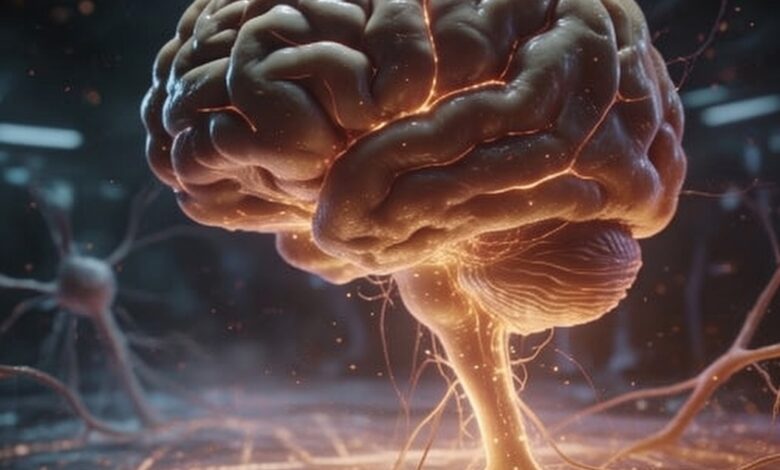
As people get older, many notice that remembering where they left something or navigating a new route becomes noticeably harder than it used to be.Research shows this isn’t simply general forgetfulness — it is closely tied to specific changes in the brain circuits responsible for building and maintaining internal spatial maps. These circuits, located deep in regions such as the hippocampus and surrounding memory networks, allow us to remember locations, directions, and the spatial relationships between objects.When these systems function well, we navigate our environment effortlessly and recall where things are with ease. With aging, however, the neurons in these networks begin to change the way they fire and communicate with one another.Scientists studying age-related changes in spatial memory have discovered that the timing and coordination of neuronal signals become less precise. This weakens and makes the brain’s internal representation of space less reliable.In younger adults and animals, neurons called place cells activate in reliable patterns that correspond to specific locations, effectively forming a mental map. As we age, these patterns become disrupted and less distinct — the clear signals that once marked familiar places grow hazy, making memories of routes and locations blurrier.Importantly, this process occurs even in the absence of major diseases like Alzheimer’s. “Normal” aging alone can impair spatial memory through subtle alterations in the dynamics of brain networks.Understanding these changes provides researchers with clear targets for potential interventions — whether through lifestyle habits, cognitive training, or therapies designed to preserve the precision of spatial coding for as long as possible.It also helps explain why many older adults increasingly rely on external landmarks or familiar routines rather than navigating freely: the brain’s internal “mapmakers” gradually lose their sharpness over time.Let me know if you’d like it shorter, more detailed, or adjusted in any other way!