“The Bizarre 1924 ‘Pedestrian Catcher’ – Paris’ Failed Attempt to Scoop Up Accident Victims”

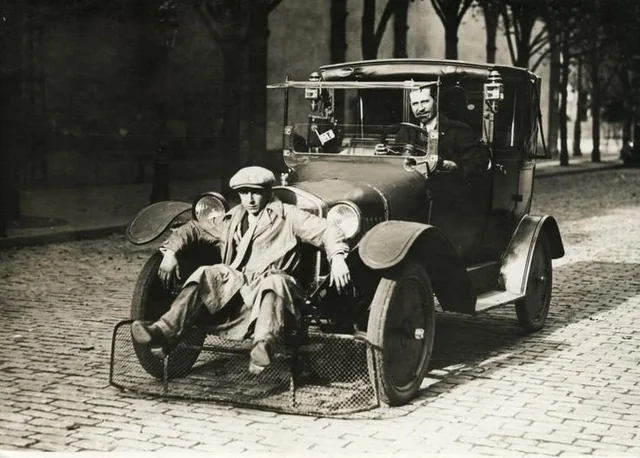
When automobiles first started filling city streets in the 1920s, pedestrian accidents skyrocketed. People were simply not used to sharing the road with fast-moving, heavy metal machines that could reach dangerous speeds. In those early days, drivers had little experience, roads were poorly designed for cars, and pedestrians often treated streets like they still belonged only to people and horses.Desperate for a solution, inventors came up with what they thought was a brilliant idea: the “Pedestrian Catcher.” Invented in Paris in 1924, this strange device was a massive canvas and metal shovel attached to the front bumper of a car. The concept was simple — and quite dramatic. If the driver saw they were about to hit a pedestrian, they would quickly pull a lever inside the car.
This would drop the large scoop down to the ground, supposedly catching the unlucky person like a bug in a net and saving them from being run over.In theory, it sounded humane and innovative. In reality, it was far less graceful and much more dangerous. If a car was traveling at even 30 mph (about 48 km/h), being violently scooped up into a rigid metal frame didn’t prevent serious injury. Instead, it often broke the victim’s legs in new and painful ways before flinging them straight into the windshield or onto the hood of the car.
To make matters worse, the mechanism was unreliable. The scoops would frequently deploy by accident when the car drove over potholes or bumps in the road, suddenly dropping the heavy shovel and causing the vehicle itself to lose control and crash. Drivers quickly grew frustrated with the clumsy invention, and it became a frequent target of jokes and mockery in newspapers and among the public.Eventually, the Pedestrian Catcher was laughed out of existence. Its failure helped clear the path for more practical — though much less exciting — solutions like better brakes, traffic lights, speed limits, and improved road safety rules that we still rely on today.