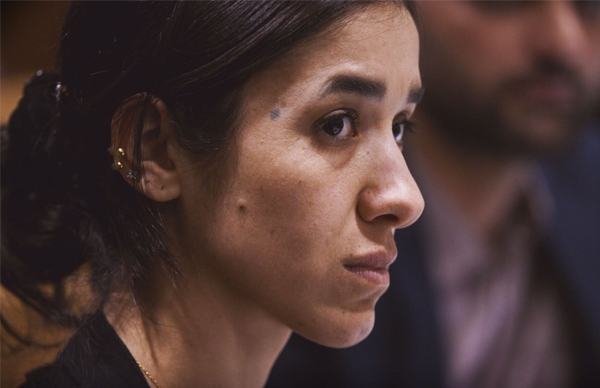
In August 2014, ISIS attacked her Yazidi village of Kocho in the Sinjar region of northern Iraq as part of a systematic genocide against the Yazidi people (whom ISIS labeled “infidels” and targeted for extermination or enslavement). Militants killed her mother and six of her brothers (along with hundreds of other men and elderly women in the village). At age 21, Nadia was among thousands of Yazidi women and girls abducted, sold into sexual slavery, beaten, and repeatedly raped by ISIS fighters.
She was held for about three months before escaping (she fled when a door was left unlocked, was hidden by a sympathetic Muslim family, and eventually reached safety in Kurdish-controlled areas). Rather than retreating into silence, she began speaking out publicly in 2015—first under a pseudonym, then openly—sharing her testimony before the UN Security Council and other international bodies. Her voice helped shine a global spotlight on the use of sexual violence as a weapon of war and the specific genocide against the Yazidis. In 2018, at age 25, she was awarded the Nobel Peace Prize jointly with Congolese gynecologist Dr. Denis Mukwege “for their efforts to end the use of sexual violence as a weapon of war and armed conflict.” She became the first Iraqi, first Yazidi, and one of the youngest recipients ever. en.wikipedia.org She also authored the bestselling memoir The Last Girl (2017), which details her experiences and fight for justice.Her Ongoing WorkNadia didn’t stop after the Nobel.
Through her organization, Nadia’s Initiative, she continues advocating for:Survivors of genocide and sexual violence Accountability for ISIS crimes Rebuilding the Yazidi homeland in Sinjar (including projects like a hospital for survivors and efforts toward a new university focused on sustainable agriculture) As of 2025–2026, she’s still actively pushing for justice, women’s leadership, and community recovery—recently announcing a new memoir, I Choose My Beginning, set for publication in fall 2026.Stories like hers remind us that even after profound evil and loss, one person’s refusal to stay silent can shift global awareness and policy.
Turning personal trauma into a platform for systemic change is extraordinarily rare and valuable.What aspect of her story or work stands out most to you, or would you like to know more about (her escape details, the Yazidi situation today, her advocacy efforts, etc.)?