“Never Walk Barefoot Again: How Tiny Hookworms Invade Your Feet, Travel to Your Lungs, and Cause Severe Anemia”

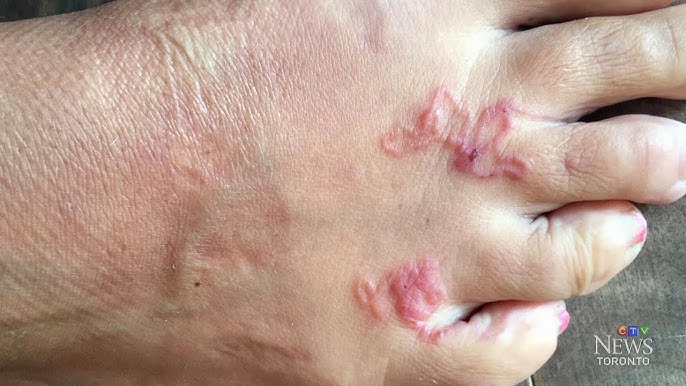
Beware when walking barefoot — especially in warm, tropical, or rural areas — because microscopic hookworms are highly active hunters that can silently invade your body from the ground up.Beneath the surface of warm, moist soil, tiny hookworm larvae lie in wait, ready to detect the slightest vibrations caused by a passing human foot. These sophisticated parasites don’t simply rely on random chance; they actively sense the presence of a potential host and rapidly burrow through the bare skin, most commonly on the feet.
This initial penetration often leaves behind a distinctive itchy, red rash commonly known as “ground itch.”Once they successfully breach the skin barrier, the larvae embark on an extraordinary and invasive journey inside the body. They enter the bloodstream, travel through the circulatory system to the lungs, and eventually make their way up the respiratory tract. There, they are coughed up and swallowed, eventually reaching the small intestine where they mature into adult worms.In the small intestine, the adult hookworms firmly latch onto the intestinal walls using their sharp mouthparts and begin feeding on the host’s blood.
This constant blood loss can lead to serious iron deficiency, protein malnutrition, and debilitating anemia. While a light infection may cause few noticeable symptoms, a heavier infestation often results in chronic fatigue, weakness, pale skin, and significant health complications — particularly dangerous for pregnant women and young children, who are already more vulnerable to the effects of anemia.Fortunately, modern medicine offers highly effective treatments that can completely clear hookworm infections.
The simplest and most powerful form of prevention remains wearing sturdy, closed-toe shoes or sandals when walking in potentially contaminated soil in high-risk areas. This small daily habit continues to be the best defense against this ancient and widespread parasitic threat.Source: Centers for Disease Control and Prevention (CDC). (2024). Hookworm. Global Health, Division of Parasitic Diseases and Malaria.