Japan Airlines Just Ended the High-Heel Nightmare for Flight Attendants – Sneakers Are Now Allowed and Crew Is Over the Moon!

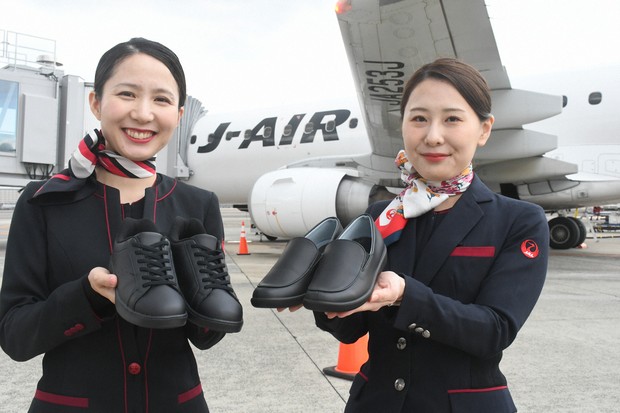
Japan Airlines has rolled out a long-awaited policy change that’s bringing relief to thousands of its frontline workers: cabin crew and airport staff can now swap their traditional high heels for comfortable sneakers on the job. The update took effect on November 13, 2025, and applies to flight attendants across all six JAL Group airlines as well as roughly 14,000 airport service employees working at 56 domestic and 40 overseas airports (including partner companies). For decades, female cabin crew and ground staff were required to wear medium-heeled pumps or formal black leather shoes as part of the official uniform.
These shoes, while stylish, often caused significant physical strain during long shifts that involve hours of standing, walking through terminals, resetting cabins, and assisting passengers.Many employees reported chronic foot pain, back issues, and fatigue from the constant pressure of heels. Now, the airline has officially added plain, solid black sneakers to the approved uniform options. Staff can choose to wear them instead of pumps or leather shoes (platform styles are still not permitted), and employees are responsible for providing their own pairs to match the professional look.Workers who have already made the switch are praising the difference. One flight attendant shared that her feet and lower back feel noticeably less tired after full shifts, while others say the extra cushioning and support have reduced the risk of injuries and made their daily routines far more manageable.
The change builds on an earlier 2020 policy that first made heels optional, but sneakers represent a much bigger step toward practicality.JAL described the move in its official announcement as a way to “support employee well-being” so that crew members can deliver even more attentive and approachable service throughout their shifts. It reflects a growing shift in workplace culture across the aviation industry—one that increasingly prioritizes health, comfort, and sustainability over rigid, outdated appearance rules. The airline hopes the new flexibility will help retain talented staff for the long term and create a more inclusive environment where people don’t have to sacrifice their physical health for the job.In the end, this story shows that real progress doesn’t always require massive overhauls. Sometimes it’s the small, thoughtful decisions—like letting hardworking employees trade painful heels for supportive sneakers—that quietly make everyday life better for thousands of people. A simple change in footwear, but one that’s already earning smiles (and fewer sore feet) at airports across Japan and beyond.