Uncategorized

Harvey Weinstein Breaks Silence: “I Was Punched Bloody in Rikers – It’s a Jungle in Here!”
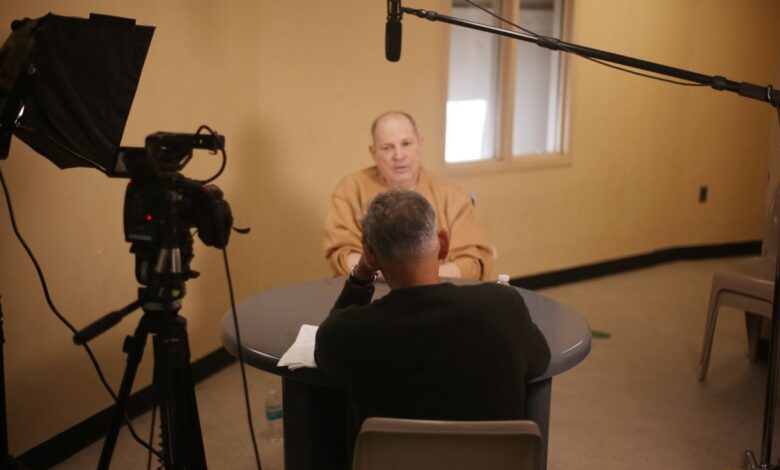
In a bombshell exclusive published by The Hollywood Reporter on March 10, 2026, disgraced former film mogul Harvey Weinstein broke his long silence from behind bars, granting his first major sit-down interview since his initial incarceration six years ago. Now 73 and battling chronic myeloid leukemia, among other serious health issues including spinal stenosis that keeps him mostly in a wheelchair, Weinstein described his current existence at New York City’s notorious Rikers Island jail as pure “hell”—a stark, brutal contrast to the opulent, power-filled life he once led in Hollywood.Weinstein explained that safety concerns have forced him into near-total isolation in the jail’s medical unit. He spends 23 hours a day locked alone in his cell, with virtually no contact beyond brief interactions with guards and nurses.
He has no meaningful socializing with other inmates, insisting his high-profile status makes mixing in general population far too dangerous. “Here at Rikers, it hurts me because it forces me into isolation,” he told interviewer Maer Roshan during the hour-long session conducted inside the facility. “It’s too dangerous for me to be around anyone else. Other inmates are constantly threatening and deriding me, demanding money or lawyers from me.”One particularly violent incident stood out in his account: while waiting his turn to use a shared phone, Weinstein asked the man ahead of him if he was finished. The response was immediate and savage—the inmate turned, punched him hard in the face, and knocked him to the floor, leaving him bleeding profusely. “I was hurt really badly,” Weinstein recalled. Despite the assault, he refused to identify his attacker when questioned by corrections officers, invoking what he called “the law of the jungle” inside the prison walls. He portrayed the environment as one of constant siege, where his celebrity works against him rather than offering any protection or perks.
The interview, which took place on January 26, 2026, amid a major snowstorm that nearly derailed it, comes as Weinstein awaits a retrial on remaining New York sexual assault charges (his earlier NYC conviction was overturned on appeal in 2024). He remains adamant about his innocence, insisting he will be “proven innocent” and framing his past behavior as that of an “oversexed schmuck” who overstepped boundaries but never committed rape. He also expressed deep fear of dying in prison, a terror amplified by his declining health and the isolating, punishing conditions at Rikers compared to his earlier time in upstate New York state facilities, where he claims he had more daily human interaction.The piece has reignited fierce online debate, with many viewing it as a calculated attempt at sympathy or legacy rehabilitation ahead of court dates, while others see it as a raw glimpse into the harsh realities even powerful figures face behind bars.
Far removed from the red carpets, private jets, and Oscar-winning empire he once commanded, Weinstein’s account paints a picture of vulnerability, regret mixed with defiance, and a daily grind defined by loneliness, threats, and physical frailty. This rare jailhouse voice—his first public words in years—serves as a dramatic reminder of how dramatically fortunes can reverse, turning one of Hollywood’s most feared producers into a isolated, ailing inmate counting down to his next legal battle.