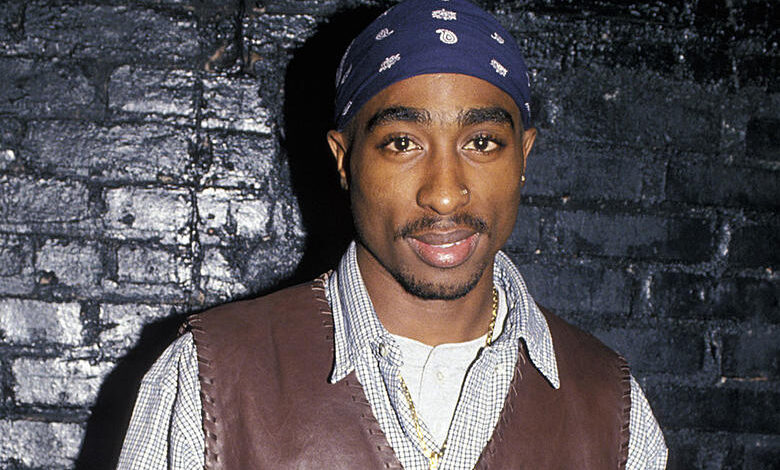
One powerful line from a rapper, written over three decades ago, still rings truer and more painfully relevant than the vast majority of today’s news headlines and political soundbites.In the spring of 1993, a 22-year-old Tupac Amaru Shakur released his groundbreaking album Strictly 4 My N.I.G.G.A.Z… on Interscope Records. Tucked inside the emotionally charged track “Keep Ya Head Up”—a song dedicated to women, single mothers, and the struggle for dignity amid systemic oppression—lies one of the most iconic, endlessly quoted, and bitterly prophetic lines in the entire history of hip-hop: “They got money for wars, but can’t feed the poor.”With those nine simple words, Tupac exposed a glaring, infuriating hypocrisy that has defined global priorities for generations: governments and world powers consistently find trillions to fund armies, weapons, invasions, and endless cycles of destruction, yet somehow the same systems claim they lack the resources to feed starving children, house the homeless, or provide basic healthcare and education to millions living in desperate poverty.Tupac was not offering armchair philosophy or second-hand outrage. His words came straight from the marrow of lived experience.
Born in East Harlem in 1971 to Afeni Shakur—a fierce Black Panther activist who herself had been acquitted of serious bombing charges while pregnant with him—Tupac was raised almost entirely by his mother in conditions of extreme hardship. The family moved constantly between cramped apartments, welfare hotels, homeless shelters, and low-income neighborhoods across New York City and later Baltimore. Hunger, instability, police harassment, gun violence in the streets, and the constant stress of survival were not occasional visitors—they were the backdrop of his childhood and adolescence.By the age of 22, when he laid down that verse, Tupac had already buried friends to street violence, watched loved ones cycle through addiction and incarceration, felt the sting of racism and class discrimination up close, and internalized the way society seemed to discard entire communities while lavishing money on mechanisms of control and war. He spoke not as an observer, but as someone who had lived every layer of the inequality he described.More than thirty years later—well into the 2020s—that single line from 1993 continues to echo louder with each passing news cycle. It resurfaces organically on social media, in viral protest videos, during congressional budget debates, and in the comments sections beneath articles about record military spending alongside reports of food banks turning people away or children going to school hungry.The numbers tell the same story Tupac told, only now on a vastly larger scale.
According to the authoritative Stockholm International Peace Research Institute (SIPRI), worldwide military expenditure reached an all-time high of $2.718 trillion in 2024—a staggering sum that rose sharply year after year, fueled by major-power rivalries, regional wars, arms races, and massive defense contracts. That figure equates to roughly $340 million spent on military purposes every single hour of the year.Meanwhile, reliable United Nations estimates, World Food Programme analyses, and reports from organizations like Action Against Hunger and the International Food Policy Research Institute have consistently placed the annual cost of ending chronic global hunger—lifting roughly 700–800 million people out of severe undernourishment and building sustainable food systems—at somewhere between $40 billion and $100 billion per year, with many credible mid-range figures hovering around $45–65 billion annually for meaningful, long-term progress toward zero hunger.The contrast is almost obscene in its clarity: the world routinely spends more than 40–60 times more on preparing for and waging war than it would take to eliminate one of humanity’s oldest and most preventable tragedies.
The raw mathematics that Tupac highlighted back in 1993 has not shifted in any fundamental way. Resources exist. Choices are made. Priorities are set. And the same imbalance persists.In an era of drone warfare, trillion-dollar defense budgets, proxy conflicts, nuclear modernization programs, and rising militarization—even as famines loom in conflict zones, climate-driven food shortages worsen, and inequality reaches historic extremes—Tupac’s observation feels less like a line from an old rap song and more like an unflinching diagnosis of the world we still live in. Three decades on, it remains one of the clearest, most honest statements ever made about where our collective values truly lie.