Japan Built a 400-KM Tsunami Wall Taller Than a 4-Story Building — And Planted 9 Million Trees to Back It Up!

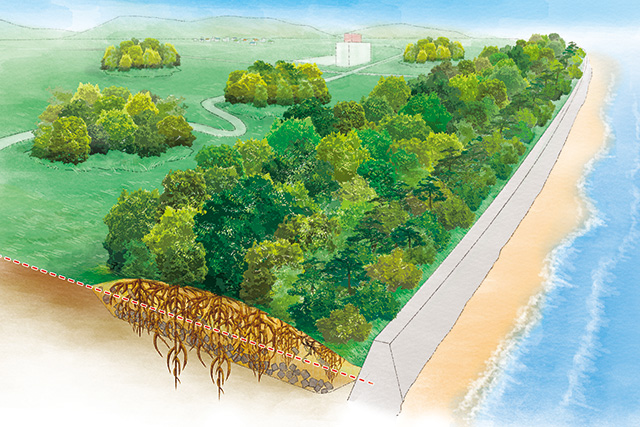
Following the catastrophic Great East Japan Earthquake and the ensuing massive tsunami on March 11, 2011—one of the most destructive natural disasters in modern history—Japan embarked on an unprecedented, multi-decade reconstruction and resilience-building initiative along its ravaged northeastern coastline in the Tohoku region. This effort, spearheaded and heavily funded by the Government of Japan through billions in investment, has resulted in one of the most ambitious coastal defense systems ever undertaken worldwide.
A cornerstone of the strategy involved the construction and reinforcement of approximately 395 kilometers (around 245 miles) of advanced, reinforced concrete seawalls and tsunami barriers. These structures vary in design and height—reaching up to 14.7 meters (about 48 feet) in some high-risk zones—with deep foundations engineered to resist both powerful wave impacts and seismic shaking. Built across hundreds of sites in prefectures like Iwate, Miyagi, and Fukushima, the seawalls aim to significantly reduce inundation from future tsunamis, storm surges, and even the effects of rising sea levels, while providing critical extra evacuation time for residents in over 400 vulnerable coastal communities.
Complementing these “hard” engineering solutions is a large-scale ecological restoration component focused on reviving and expanding coastal forests, traditionally dominated by resilient Japanese black pine trees (Pinus thunbergii) and other salt-tolerant species like oaks. These once-thriving “green belts” were largely obliterated by the 2011 tsunami, which uprooted centuries-old stands and stripped protective vegetation from the landscape. In response, authorities and organizations— including local governments, NGOs such as OISCA International, and community volunteers—have planted millions of trees (with reports citing figures around 9 million across restoration sites). These renewed forests serve multiple vital functions: their dense root systems stabilize sandy soils against erosion, absorb and dissipate wave energy before it reaches inland areas, trap floating debris during surges, and create natural buffers that work in tandem with the seawalls to create layered, multi-defense protection. In places like Natori City in Miyagi Prefecture, survivor-led initiatives have successfully reforested hundreds of hectares, turning devastated land back into living shields for farmland, homes, and infrastructure.
This integrated approach exemplifies Japan’s forward-thinking philosophy of disaster resilience: rather than relying solely on massive concrete barriers, the nation combines cutting-edge civil engineering with nature-based solutions, community involvement, and long-term environmental planning. The project also incorporates modern elements such as early warning systems, elevated evacuation routes, green levees (hills built from disaster debris and planted with trees), and public education to foster a culture of preparedness. While some sections of the seawalls have sparked local debate over aesthetics, access to beaches, and views of the sea, the overall system is widely regarded as a model for balancing human safety with ecological sustainability in tsunami-prone regions.By early 2026, major phases of this monumental effort have reached completion or advanced maturity, transforming Japan’s vulnerable northeastern shores into a more fortified and adaptive landscape. The reconstruction not only safeguards lives and property against the unpredictable forces of nature but also stands as a powerful testament to resilience, innovation, and the harmonious blending of technology and the natural world in the face of unprecedented adversity. 31 web pages